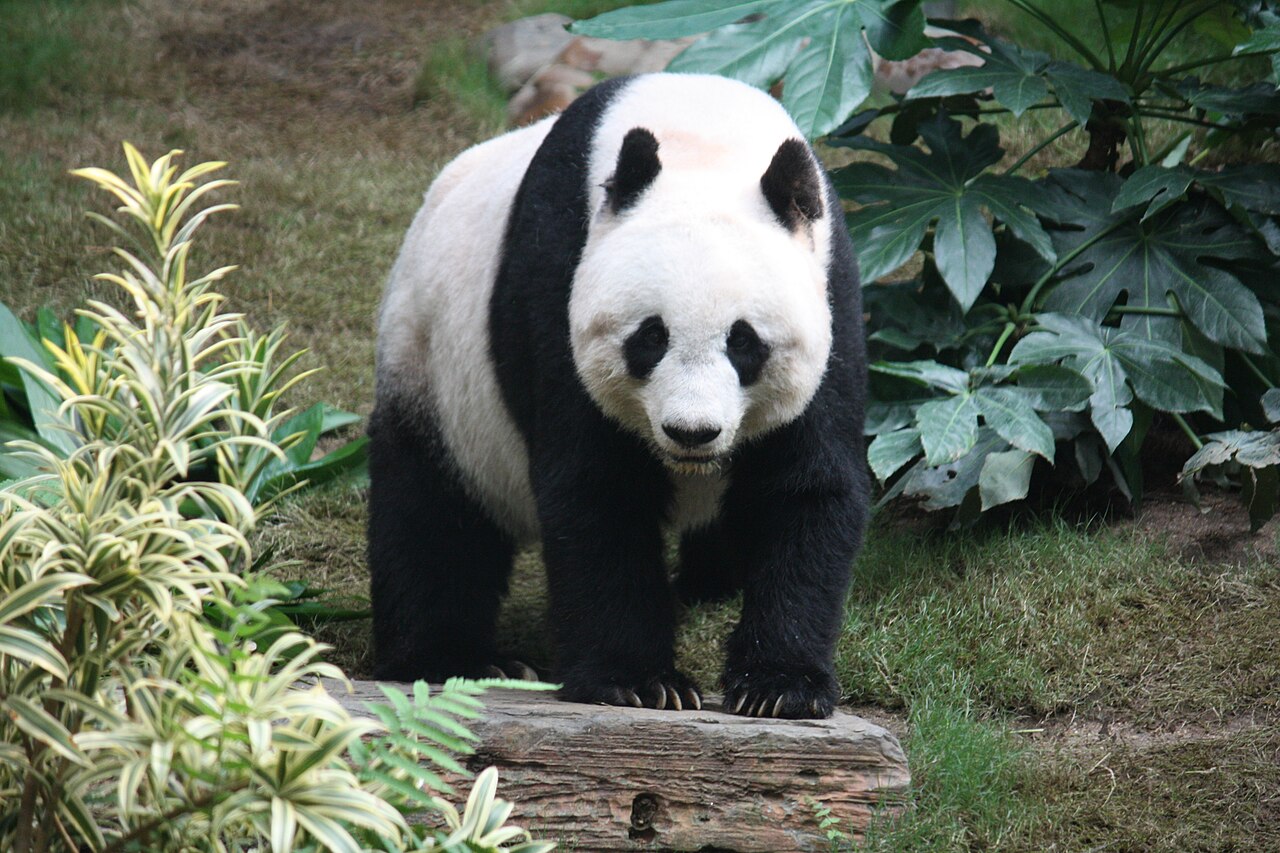
The Sichuan Giant Panda Sanctuaries, inscribed by UNESCO in 2006, protect the largest contiguous habitat of the giant panda (Ailuropoda melanoleuca) remaining on earth: 924,500 hectares of mountain forest in the Qionglai and Jiajin mountain ranges of Sichuan Province, encompassing seven nature reserves and nine scenic areas, including the Wolong National Nature Reserve (the flagship panda reserve and the base of the China Conservation and Research Centre for the Giant Panda), the Mount Siguniang Scenic Area, and the Jiajin Mountain Nature Reserve. The sanctuaries hold more than 30% of the world’s wild giant panda population — estimated at approximately 1,864 individuals in the 2015 survey — in a bamboo forest habitat stretching across altitudinal ranges from subtropical valley floors at 900 metres through temperate mixed forest to subalpine conifer forest and alpine meadow at 6,250 metres on the highest peaks. The panda sanctuaries’ Outstanding Universal Value combines the giant panda’s status as the world’s most recognised endangered species symbol with the extraordinary botanical richness of its habitat: the inscribed area supports more than 5,000 plant species (the most diverse temperate bamboo flora in the world — 30+ bamboo species in the sanctuaries) and approximately 365 vertebrate species including the red panda (Ailurus fulgens), the snow leopard (Panthera uncia), the clouded leopard (Neofelis nebulosa), and more than 300 bird species.
Central Sichuan: the Chengdu Basin and the western mountain frontier Mount Qingcheng Dujiangyan · Chengdu City · Leshan Giant Buddha — 45 to 180 km
Forty-Five Kilometres west of Chengdu (approximately 1 hour from Chengdu West Bus Station to the Wolong Nature Reserve main entrance, or approximately 1 hour 15 minutes to the Bifengxia Giant Panda Base in Ya’an City), the Mount Qingcheng and the Dujiangyan Irrigation System (inscribed 2000) is the most immediately accessible UNESCO companion site to the Sichuan Giant Panda Sanctuaries, located within the same mountain front zone where the Qionglai Mountains’ forested eastern slopes descend to the Chengdu Plain. The Wolong Nature Reserve — the largest single component of the Sichuan Giant Panda Sanctuaries inscription at 200,000 hectares — is located approximately 35 kilometres west of the Dujiangyan Irrigation System along the Pitiao River valley and the G350 national highway. The two sites form a natural pairing for visitors using Chengdu as a base: the Dujiangyan system (constructed 256 BCE by the Qin engineer Li Bing, still operational after 2,270 years, irrigating 668,000 hectares of the Chengdu Plain, the irrigation engineering achievement that enabled the Sichuan Basin’s agricultural productivity and the civilisation that produced Mount Qingcheng’s Taoist heritage) is the most substantial work of ancient hydraulic engineering in China; and the Wolong reserve, 35 kilometres further into the mountains, is the world’s primary centre for giant panda captive breeding and research. From Chengdu, the Dujiangyan-Qingcheng Mountain HSR Branch Line (opened 2010) connects Chengdu Xipu Station to Dujiangyan Station in approximately 40 minutes; the Wolong panda reserve is accessible by bus from Dujiangyan Station (approximately 2 hours on the G350 mountain road) or by direct tourist bus from Chengdu Chadianzi Bus Terminal (approximately 3 hours).
One Hundred and Eighty Kilometres south of the Sichuan Giant Panda Sanctuaries’ Qionglai Mountain section by road (approximately 2.5 hours from Chengdu South Bus Station to Leshan on the Chengdu-Leshan Expressway or by HSR from Chengdu East to Leshan on the Chengdu-Guiyang HSR, approximately 50 minutes), the Leshan Giant Buddha — included in the Mount Emei Scenic Area and Leshan Giant Buddha Scenic Area joint inscription (1996) — is the world’s largest pre-modern sculptural figure: a 71-metre seated stone Buddha carved between 713 CE and 803 CE into the red sandstone cliff at the confluence of the Min, Qingyi, and Dadu rivers at Leshan by the Tang monk Haitong and his successors, requiring 90 years and tens of thousands of Tang-dynasty stone carvers to complete. The Giant Buddha is a Tang-period monument to the same Buddhist cultural wave that, during the same century, produced the Tang carvings at Longmen Grottoes (Henan, inscribed 2000) and Yungang Grottoes (Shanxi, inscribed 2001) — but at Leshan, the Tang period’s capacity for large-scale sculptural ambition reached its absolute physical limit: the seated Buddha’s head alone is 14.7 metres high, and at its feet (accessible by a switchback stone staircase cut into the cliff face beside the figure) the three rivers’ confluence provides a natural scale reference that makes the sculpture’s scale viscerally apparent. From Leshan, the adjacent Mount Emei (3,099 metres, the highest of China’s Four Sacred Buddhist Mountains, covered by the same 1996 inscription) is accessible by cable car and hiking trail from Baoguo Temple at the mountain’s base.
One Hundred and Eighty Kilometres north of the Sichuan Giant Panda Sanctuaries’ Jiajin Mountain section (approximately 2.5 hours from Ya’an City on the Sichuan provincial road network or approximately 3.5 hours from Chengdu by road via Ya’an to the Mount Siguniang Scenic Area in Xiaojin County), Mount Siguniang (Sì Gū Niáng Shān, “Four Sisters Mountain”) is the highest and most dramatic landscape feature within the Sichuan Giant Panda Sanctuaries inscription. The four peaks (Yaomei, 6,250 metres; San’ao, 5,664 metres; Erao, 5,454 metres; Daao, 5,355 metres) rise from a valley floor at approximately 3,100 metres, producing a 3,000-metre vertical relief visible from the Changping Valley walking trail at the mountain’s base. The area’s inscribed value combines its panda habitat function (giant pandas use the Siguniang high-altitude meadow as a seasonal movement corridor between the Qionglai and Jiajin mountain sections of the sanctuaries) with its alpine scenery: the Haizigou Valley, one of three day-hiking valleys in the Siguniang National Park, contains approximately 1,000 alpine lakes (hai, “sea”) and waterfalls in a 5-kilometre high-mountain cirque terrain. From Chengdu, Mount Siguniang is most efficiently reached by day-trip with an early departure from Chengdu Chadianzi Bus Terminal (approximately 4.5 hours on the G350 via Wolong — this route passes through the Wolong Panda Reserve, enabling a combined panda-and-mountain day if starting before 7 am) or by overnight stay in Rilong Town at the mountain’s base.
Forty-Five Kilometres north of Chengdu by metro and light rail (approximately 40 minutes from Tianfu Square on Metro Line 3 to the Chengdu Research Base of Giant Panda Breeding in the Chenghua District), the Chengdu Research Base of Giant Panda Breeding (Chengdu Daxiongmao Fanyu Yanjiu Jidi, commonly called “the Panda Base”) is the most visitor-accessible giant panda facility in China and the primary first contact for most international visitors to the Sichuan Giant Panda Sanctuaries region. The base (92 hectares, opened 1987, 30 minutes by Metro Line 3+Line 1 from Chengdu Railway Station) houses approximately 200 giant pandas and 70 red pandas in large enclosures with bamboo-forest planting, and its breeding programme has been the primary reason that the global captive giant panda population has grown from approximately 100 individuals in 1980 to approximately 600 individuals in 2024. The morning feeding hours (8:00–10:00 am) are the recommended visiting window; after midday the pandas are typically sleeping. The base is not within the inscribed UNESCO sanctuary boundary but is the practical visitor infrastructure complement to the Wolong mountain reserve: most visitors to Sichuan visit both, using the Chengdu base as the introduction to panda biology and conservation, then the Wolong or Bifengxia reserves (in the inscribed area) for the mountain habitat experience.
Sichuan’s heritage ring: Tibetan borderland, Song poetry, and Buddhist mountain circuits Three Parallel Rivers Yunnan · Dazu Rock Carvings · Mount Wutai Shanxi — 300 to 1200 km
Three Hundred Kilometres southwest of the Sichuan Giant Panda Sanctuaries via the Sichuan-Tibet Highway (G318, approximately 4 hours from Chengdu to the Kangding / Luding area in western Sichuan, the start of the Tibetan cultural zone) and approximately 600 kilometres south to Lijiang by road (approximately 8 hours from Chengdu via the Sichuan-Yunnan border, or approximately 3 hours by flight from Chengdu Shuangliu International Airport to Lijiang Sanyi Airport), the Three Parallel Rivers of Yunnan Protected Areas (inscribed 2003) represent the Hengduan Mountain biodiversity zone that extends the Sichuan Giant Panda Sanctuaries’ habitat corridor southward into Yunnan Province. The giant panda’s historical range extended into the Hengduan Mountain zone of northern Yunnan (fossil evidence), and palaeoecologists believe that the Three Parallel Rivers’ gorge system served as the primary Pleistocene refugium that maintained the panda’s bamboo forest habitat while the surrounding mountains were glaciated — making the Three Parallel Rivers inscription the ecological backstory to the Sichuan Giant Panda Sanctuaries inscription. From Chengdu, the Three Parallel Rivers area is accessed via Lijiang in Yunnan (flight approximately 1.5 hours, then road to Tiger Leaping Gorge and Shangri-La).
One Hundred and Fifty Kilometres southeast of the Sichuan Giant Panda Sanctuaries by road (approximately 2 hours from Chengdu South Bus Station to Dazu County in Chongqing Municipality via the G75 Expressway), the Dazu Rock Carvings (inscribed 1999) represent the Song dynasty (960–1279 CE) Buddhist and Taoist sculptural tradition at its most encyclopaedic: 50,000 carved figures across six major sites — primarily Beishan Hill, Baoding Mountain, Nanshan Hill, Shimenshan Hill, and Shizhuan Hill — carved between the late Tang period (9th century) and the Southern Song period (13th century). The Baoding Mountain site (the largest and most visited, approximately 15 km northeast of Dazu County town) contains the most ambitious single sculptural composition in the Dazu corpus: the Great Reclining Buddha (Wofo, 31 metres long, Tang-Song period, representing the Buddha’s entry into Nirvana) and the Sutra of the Great Compassionate Dhāraṇī Rock Niche (a 13th-century carved encyclopaedia of Song-period Buddhist iconography, Taoist mythology, and Confucian moral teaching displayed as a narrative sequence of 773 metres of carved cliff face). From the Sichuan Giant Panda Sanctuaries’ Chengdu base, Dazu is reached by HSR from Chengdu East to Dazu North (approximately 45 minutes), then bus to the Baoding Mountain site (approximately 30 minutes).
Practical information
The Sichuan Giant Panda Sanctuaries encompass seven nature reserves and nine scenic areas across the Qionglai and Jiajin mountain ranges of central-western Sichuan Province, administered by multiple county and municipal governments. Visitor access is concentrated in three primary entry points: the Wolong National Nature Reserve (G350 highway, 130 km west of Chengdu), the Bifengxia Giant Panda Breeding Centre (Ya’an City, 120 km southwest of Chengdu), and the Mount Siguniang Scenic Area (Xiaojin County, 220 km northwest of Chengdu). The China Conservation and Research Centre for the Giant Panda operates public visitor areas at both Wolong (Shenshuping Panda Base, rebuilt after the May 2008 Wenchuan earthquake destroyed the original facility) and Bifengxia; both require advance booking during peak season (May, September–October). The Chengdu Shuangliu International Airport (CTU) is the primary air gateway, with direct flights from major Chinese and international cities; Chengdu is on the Chengdu-Wuhan HSR and will be on the Chengdu-Kunming HSR when completed. The Wolong road (G350) passes through the Longmenshan fault zone and is subject to landslide closures, particularly in the rainy season (June–September); check road conditions before departure. Best panda-viewing months are March–May (spring, pandas active and young cubs born) and September–November (autumn, cooler temperatures). All visitors to the panda reserves are required to follow no-photography-flash and no-noise rules; wildlife spotting of wild giant pandas is extremely rare and requires multi-day backcountry trekking with a licensed guide.
Frequently Asked Questions
Why is the giant panda endangered and what is the current status of panda conservation?
The giant panda’s endangered status is the result of two converging factors: habitat loss and extreme dietary specialisation. The panda’s food source — bamboo, which must constitute more than 95% of its diet — requires large continuous stands of bamboo forest at altitudes of 1,200–3,500 metres; the panda cannot digest most of the bamboo it consumes (it lacks the specialised gut microbiome of true herbivores), so it must eat 12–38 kilograms of bamboo per day, which requires movement over a large area of continuous bamboo forest. The Sichuan Basin’s and Yangtze River Delta’s rapid agricultural and urban expansion since the Ming dynasty (1368–1644 CE) progressively reduced the giant panda’s bamboo forest range from a zone that extended across central and southern China to the fragmented mountain patches now protected by the Sichuan Giant Panda Sanctuaries and adjacent reserves. The 2016 IUCN downgrade of the giant panda’s status from “Endangered” to “Vulnerable” reflects real conservation progress — wild panda population increased from approximately 1,114 individuals in the 1980s survey to 1,864 in the 2015 survey — but the improvement is entirely the result of the nature reserve system expansion and the bamboo habitat replanting programme, not a natural population recovery; without the reserves, the species would continue to decline. The captive breeding programme, centred at Chengdu Research Base and Wolong, has grown the captive population to approximately 600 individuals and has successfully reintroduced several captive-bred pandas to wild habitats (the reintroduction programme remains experimental, with limited success rates, as captive-bred pandas require extensive training to learn wild survival behaviours their mothers would normally teach them).
What is the Wenchuan earthquake of 2008 and how did it affect the Sichuan Giant Panda Sanctuaries?
The Wenchuan earthquake (May 12, 2008, Richter magnitude 7.9, epicentre in Wenchuan County, 80 kilometres northwest of Chengdu) was the deadliest earthquake in China since the 1976 Tangshan earthquake: 69,227 people killed, 374,643 injured, 4.8 million made homeless, and damage affecting an area of approximately 500,000 square kilometres centred on the Longmenshan fault — the same geological fault line that defines the western edge of the Sichuan Basin and runs directly through the Sichuan Giant Panda Sanctuaries’ Qionglai Mountain section. The earthquake destroyed the original Wolong Panda Base facility (Hetaoping Research and Conservation Centre) and killed one captive giant panda (a female named Mao Mao); most of the captive pandas were relocated to the Bifengxia base in Ya’an, which is approximately 80 kilometres south of the fault rupture zone and sustained comparatively minor structural damage. The earthquake’s impact on the wild panda population and bamboo habitat was more complex: massive landslides within the Qionglai Mountains destroyed significant areas of bamboo forest, but the Wolong reserve’s recovery monitoring (2009–2016) showed that the landslide-exposed bare rock and soil was rapidly recolonised by pioneer bamboo growth within 5–7 years, and that the pandas had temporarily shifted their range to areas of intact bamboo during the immediate post-earthquake period. The Shenshuping new panda base at Wolong (rebuilt 2010–2012 with international donations including significant funding from WWF and the American Red Cross) is the current visitor facility; the original Hetaoping site is now a conservation and education centre. The earthquake also damaged approximately 100 kilometres of the G350 Wolong access road, which required major reconstruction before visitor access resumed in 2009.
How many UNESCO World Heritage Sites can be visited from Chengdu as a base and what is the optimal circuit?
Chengdu’s position in the Sichuan Basin — at the intersection of the Himalayan mountain front (to the west), the middle Yangtze valley (to the east), and the Yunnan-Guizhou plateau (to the south) — makes it one of the highest-density UNESCO heritage circuits in Asia. Within a 3-hour travel radius of Chengdu (by road or high-speed rail), five UNESCO-inscribed sites are accessible: the Sichuan Giant Panda Sanctuaries (130 km west, road), Mount Qingcheng and the Dujiangyan Irrigation System (55 km northwest, HSR 40 minutes), Dazu Rock Carvings (130 km southeast, HSR 45 minutes), and the Mount Emei Scenic Area and Leshan Giant Buddha (160 km south, HSR 50 minutes to Emeishan Station). With an extension of 4–5 hours, the Jiuzhaigou Valley Scenic Area and Huanglong Scenic Area (inscribed 1992 and 1992, both in northern Sichuan, approximately 340 km north of Chengdu via the G213 — though a daily flight from Chengdu to Jiuhuang Airport, 45 minutes, makes this practical as a 2-day extension) complete the Sichuan UNESCO circuit. The optimal circuit for a 5-day Chengdu base combines: Day 1 — Chengdu Research Base (morning, 40 minutes by metro) + Dujiangyan Irrigation System (afternoon, 40 minutes by HSR); Day 2 — Wolong Nature Reserve (full day, 3 hours by road); Day 3 — Dazu Rock Carvings (full day, 45 minutes by HSR + 30 minutes bus); Day 4 — Leshan Giant Buddha + Mount Emei (full day, 50 minutes by HSR); Day 5 — Chengdu historic centre (Jinsha Site Museum, Wide and Narrow Alleys, Sichuan Opera). A 7-day circuit adds a 2-day Jiuzhaigou-Huanglong extension, and a 10-day circuit can incorporate the Three Parallel Rivers’ Lijiang and Shangri-La components via Chengdu-Lijiang flight (1.5 hours).
Sources
- S1 — UNESCO World Heritage Centre — Sichuan Giant Panda Sanctuaries – Wolong, Mt Siguniang and Jiajin Mountains (Ref. 1213) — https://web.archive.org/web/20230601000000/https://whc.unesco.org/en/list/1213/
- S2 — UNESCO World Heritage Centre — Statement of Outstanding Universal Value (Ref. 1213) — https://whc.unesco.org/en/list/1213/
Spotted an error? Write to editorial@culturalheritageonline.com and we correct it the same day.