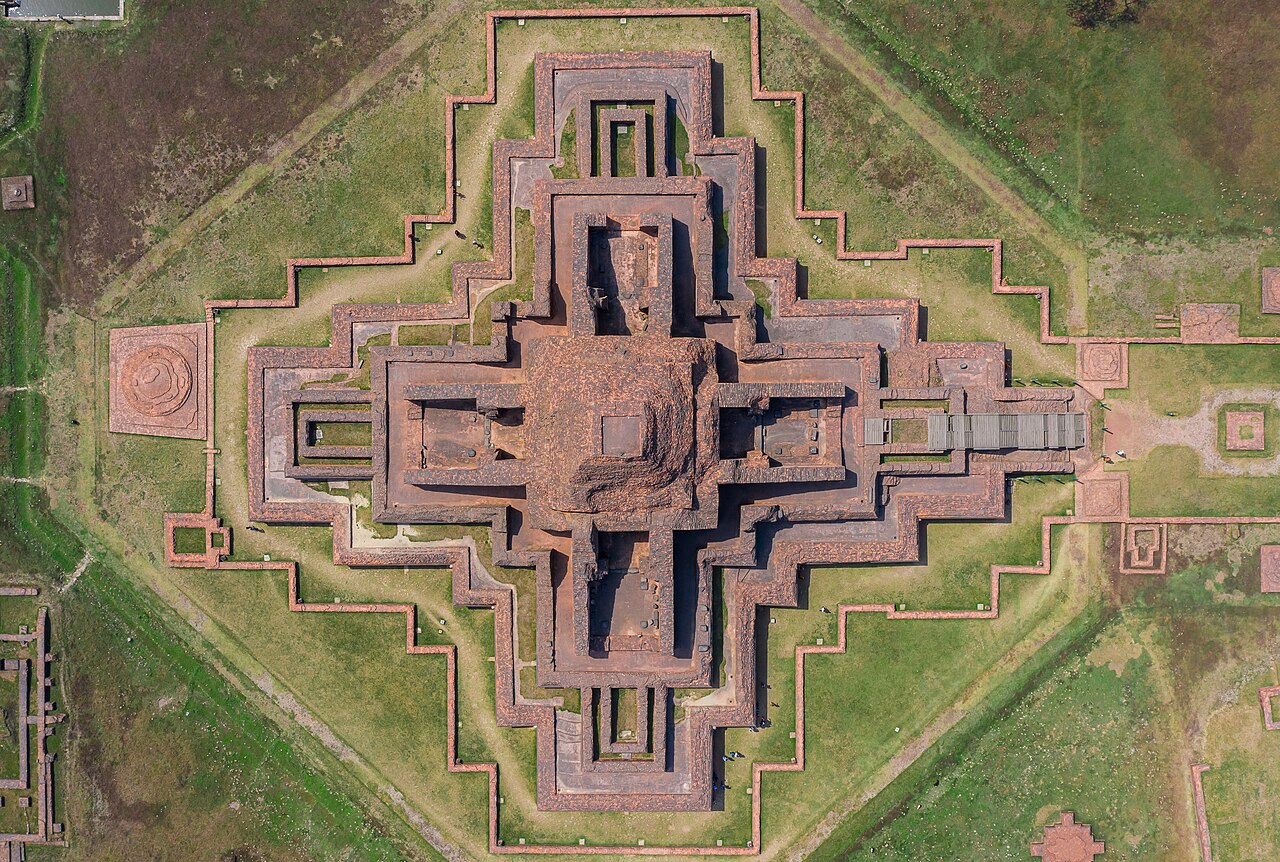
The Somapura Mahavihara at Paharpur was the largest Buddhist monastery south of the Himalayas: 177 monastic cells arranged around a central cruciform temple on a platform 27 acres in extent, built in the late 8th century CE under Pala Emperor Dharmapala. Scholars from China, Tibet, Indonesia, and Malaysia came to study here. An Afghan general destroyed it in 1203 CE, and the ruins were listed as a UNESCO World Heritage Site in 1985.
The Pala Empire’s principal seat of Buddhist learning Naogaon District, Rajshahi Division, Bangladesh
Dharmapala, the second emperor of the Pala dynasty, ruled Bengal and Bihar from approximately 781 to 821 CE. His reign was one of sustained patronage of Buddhism at a moment when the religion was already declining in most of the Indian subcontinent under pressure from revived Brahmanical traditions and the ongoing political fragmentation following the Gupta period. The monastery at Somapura — “City of the Moon” — was his response: a purpose-built institution of a scale that would leave no ambiguity about Pala commitment to Buddhist learning.
The site’s plan is its most distinctive feature. From the air, it reads as a vast square enclosure approximately 300 metres on each side, with 177 monks’ cells arranged along the inner face of the perimeter wall. Each cell has a doorway facing inward toward the central court and a verandah connecting to the adjacent cells — a design that provided both individual accommodation and a continuous covered walkway. The central temple rises from a cruciform platform in the middle of the courtyard, its four projecting arms creating the cross-shaped plan that is entirely absent from the Indian Buddhist mainstream and that appears to have developed specifically in Bengal under the Palas.
The cruciform temple plan at Somapura is significant beyond its own walls. Architectural historians have argued — with varying degrees of certainty — that the cruciform platform tradition of Southeast Asian Buddhist monuments, most famously Borobudur in Java (built c. 825 CE, contemporary with Somapura), may reflect direct influence from Bengal. The Pala dynasty maintained maritime contacts with the Srivijaya kingdom in Sumatra, and Indonesian pilgrims and monks studied at Somapura, making direct transmission of architectural ideas plausible. The connection is not proven by documents, but the formal parallels are close enough that the question of influence has been seriously debated in the academic literature since the 1920s.
The outer walls of the perimeter were decorated with terracotta plaques depicting figures from Buddhist, Hindu, and Jain iconography — an eclectic programme that reflects the syncretic intellectual environment of the Pala court. Over 2,000 plaques have been recovered during excavation, covering subjects from the Jataka tales (stories of the Buddha’s previous lives) to erotic couples in the tradition of yaksha and yakshi figures that appear on Hindu temple doorways. The monastery was not narrowly sectarian in its decorative programme even though it was a Buddhist institution.
The scholars who came, the fire that ended it, and the ruins that survived 300 km north of Bagerhat, 170 km from Nalanda
The most concrete evidence for Somapura’s international standing comes from two sources. The Chinese Buddhist monk Yijing, who travelled extensively through South and Southeast Asia in the 7th century CE (slightly before Somapura’s construction but in the same institutional tradition), described the Bengal viharas as centres of learning on a par with Nalanda in Bihar. Later Chinese and Tibetan sources confirm that monks from their regions came specifically to Bengal to study under teachers who could not be found elsewhere. The Tibetan Buddhist traditions in particular preserve the names of several Bengali masters who taught at institutions like Somapura, and whose works were translated into Tibetan and carried back across the Himalayas.
The destruction came in 1203 CE, when Bakhtiyar Khilji, an Afghan general serving under the Delhi Sultanate, conducted his rapid campaign through Bihar and Bengal. His forces burned Nalanda and Vikramashila — the other great Pala monastic universities in Bihar — and then moved into Bengal, where Somapura was destroyed in the same campaign. The event effectively ended institutional Buddhism in the Indian subcontinent. The monks who survived either fled to Tibet, Nepal, or Southeast Asia, or converted or dispersed. The Paharpur site was abandoned, its bricks quarried by local villagers over subsequent centuries, and its remaining structure slowly buried under accumulated silt and vegetation.
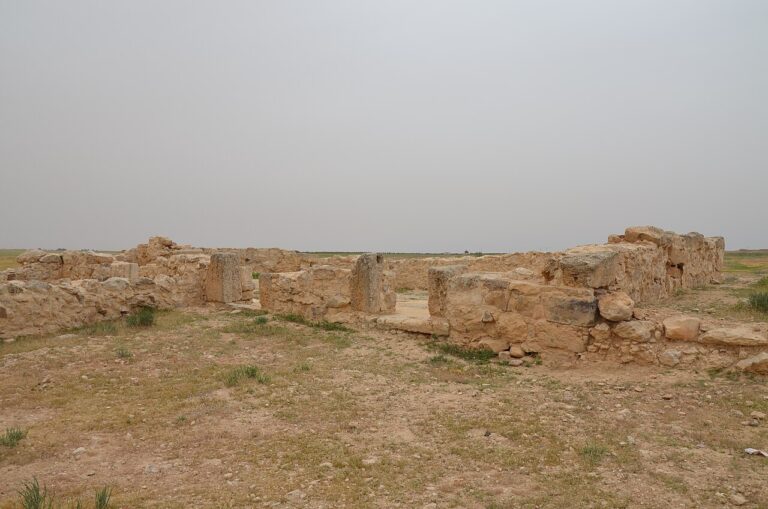
Systematic excavation began under the Archaeological Survey of India in 1923, following earlier identification of the site by British survey officers. The excavation revealed the remarkable state of preservation of the underground portions of the monastery — foundations, drains, cells, and a large collection of terracotta objects that had been protected by the overlying debris. The original temple height is estimated at approximately 21 metres; around 18 metres of the structure survives. The site museum at Paharpur holds the major sculptural finds from the excavations, including bronzes, terracotta plaques, coins, and inscribed tablets that document the monastery’s history across several centuries of occupation.
Mahasthangarh, the oldest known archaeological site in Bangladesh, lies 12 km north of Paharpur. It has been continuously occupied from at least the 4th century BCE — contemporary with the Mauryan Empire — through the medieval period, and its fortified citadel mound remains visible. Mahasthangarh is not yet on the UNESCO World Heritage List but is a candidate site, and its proximity to Paharpur makes it a logical addition to any archaeological itinerary in Rajshahi Division.
Practical information
Paharpur is located in Naogaon District, Rajshahi Division, approximately 230 km northwest of Dhaka. The most practical approach from Dhaka is by rail to Rajshahi (intercity express trains take 5–6 hours) and then by local transport to Paharpur, about 55 km from Rajshahi. Alternatively, buses run from Dhaka’s Kalyanpur bus terminal directly to Naogaon (4–5 hours), from which Paharpur is 30 km by auto-rickshaw or local bus via Badalgachi. There is no commercial air service to Rajshahi from Dhaka on a regular schedule as of 2024.
The site is managed by the Bangladesh Department of Archaeology. Admission fees apply; foreign visitors pay at a higher rate than domestic visitors, as is standard across Bangladesh’s state-managed archaeological sites. The site museum is within the compound and is worth at least an hour — the terracotta plaques and bronze sculptures on display document the full iconographic range of the monastery’s decoration. Opening hours are 09:00–17:00 in winter and 09:00–18:00 in summer; the museum closes one hour before the site gate.
November to February is the most comfortable time to visit (cool and dry, 12–22°C). The monsoon (June–October) floods low-lying portions of the site. Accommodation is very limited near Paharpur itself; Rajshahi offers a broader range of hotels and is the recommended base for exploring both Paharpur and Mahasthangarh. Travel time from Bagerhat to Paharpur via Dhaka is a full day’s journey; the two sites are best treated as separate legs of a Bangladesh itinerary rather than same-week day trips.
Frequently Asked Questions
What made the Somapura Mahavihara different from other Buddhist monasteries in South Asia?
Most South Asian Buddhist monasteries of the Gupta and post-Gupta periods followed variations on a standard plan: a central courtyard, a shrine room at one end, and monks’ cells ranged around the courtyard perimeter. Somapura adapted this basic type to an extraordinary scale — 27 acres, 177 cells — but its most distinctive departure was the cruciform central temple platform. The cruciform plan, with four projecting arms at cardinal points, does not appear in the mainstream Indian architectural tradition of the period. It is a Pala-era Bengal innovation, found at Somapura and at a small number of other monastery sites in the region, and it may have been conceptually connected to the mandala — the cosmological diagram representing the Buddha’s universe — made three-dimensional in brick. The combination of encyclopaedic scale, syncretic decorative programme (Buddhist, Hindu, and Jain imagery on the same perimeter wall), and this distinctive plan type makes Somapura architecturally unlike any other monastery that survives from the period.
How did Bakhtiyar Khilji’s 1203 campaign end Buddhism in Bangladesh and Bihar?
Bakhtiyar Khilji was a cavalry commander of Turkic origin serving under Qutb ud-Din Aibak, the founder of the Delhi Sultanate. His Bengal campaign of 1203–1206 was primarily a military conquest, not a targeted religious persecution, but the monasteries at Nalanda, Vikramashila, and Somapura were major institutional centres that also functioned as the repositories of Buddhist learning — libraries, teachers, and the networks that maintained the tradition. When these institutions were destroyed and their monks killed or dispersed, there was no equivalent alternative within the subcontinent. The tradition of Buddhist higher learning had already been weakening in India for two centuries as royal patronage shifted and Hindu devotional movements grew, and Khilji’s campaign removed what remained. The survivors who went to Tibet, Nepal, and Southeast Asia carried texts and practices that are still alive in those traditions today. In Bangladesh, the physical evidence for what was destroyed is clearest at Paharpur: the excavated cells, the burned roof-tile deposits, and the abrupt end of the coin sequence recovered from the site all confirm a sudden, violent termination rather than a gradual decline.
How does Nalanda University in India relate to the Paharpur monastery?
Nalanda (listed as a UNESCO World Heritage Site in 2016) lies approximately 170 km southwest of Paharpur across the border in Bihar, India. The two sites are roughly contemporary in their peak phases — Nalanda’s greatest period of expansion was under the Gupta dynasty and their successors in the 5th through 7th centuries CE, while Somapura was founded in the late 8th century CE when the Pala dynasty was deliberately continuing and extending the tradition of Buddhist royal patronage. The Pala emperors made significant donations to Nalanda as well as building their own monastery complexes in Bengal, so the two institutions were in the same patronage network. Both attracted scholars from Central Asia, China, Tibet, and Southeast Asia. Both were destroyed in Bakhtiyar Khilji’s 1203 campaign within a short period of each other. The difference is in subsequent historiographical attention: Nalanda, because of its Bihar location and its earlier fame documented by Chinese pilgrims like Xuanzang and Yijing, received intensive scholarly attention from the early 20th century, while Somapura remained less known internationally despite its greater physical extent and comparable institutional significance.