
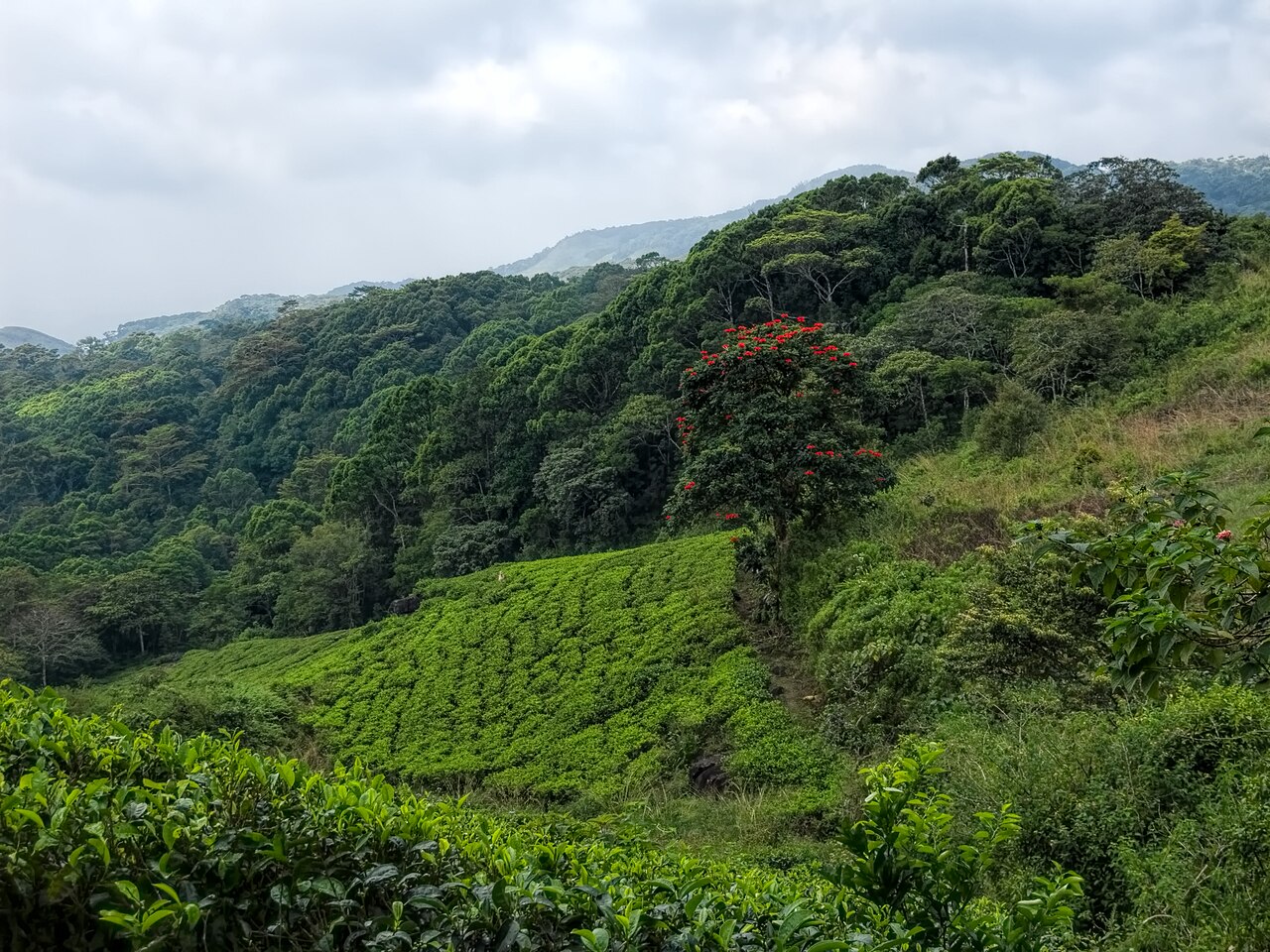
Sinharaja Forest Reserve, inscribed as a UNESCO World Heritage Site in 1988, covers 8,864 hectares in the lowland Wet Zone of southern Sri Lanka and receives between 2,500 and 5,000 millimetres of rain annually. It is the last remaining viable tract of tropical rainforest on the island and contains 60% of Sri Lanka’s endemic tree species. Declared a Crown Forest in 1875 and a Biosphere Reserve in 1978, the forest was commercially logged from 1971 to 1977 before a sustained public protest campaign forced a halt.
The Forest Itself: Endemic Species, Logging History, and the Mixed-Flock Phenomenon Within the reserve, 8,864 hectares, Sabaragamuwa and Southern provinces
The name Sinharaja translates from Sinhala as “Lion Kingdom,” a designation that appears in records referring to this tract as territory under special royal protection from at least the medieval period. The practical effect of that status was limited once colonial administration arrived: British authorities cleared large tracts of Sri Lankan forest for coffee and tea cultivation from the mid-19th century onward, and the land that became Sinharaja survived partly because its steep topography made plantation agriculture impractical and partly because it was formally gazetted as a Crown Forest in 1875, placing it outside the agricultural concession system.
Commercial timber extraction resumed in the post-independence period. Between 1971 and 1977, a logging concession operated within parts of the reserve, removing commercially valuable timber including the endemic hora tree (Dipterocarpus zeylanicus). The logging provoked organised public opposition — petition campaigns, protests, and sustained pressure from Sri Lankan conservationists and scientists — on a scale uncommon in South Asia at the time. The government suspended the concession in 1977. UNESCO’s subsequent inscriptions recognised the reserve as a Man and Biosphere Reserve in 1978, a decade before the World Heritage listing in 1988.
The ecological significance of Sinharaja rests on a combination of species density and endemism that reflects Sri Lanka’s long geological isolation as an island. Sixty percent of Sri Lanka’s endemic tree species are present in the reserve, including several dipterocarps found nowhere else on earth. Of the island’s 26 endemic bird species, 21 have been recorded here. The mammal assemblage includes the purple-faced langur monkey (Trachypithecus vetulus), the Sri Lanka leopard (Panthera pardus kotiya), the fishing cat (Prionailurus viverrinus), and the Sri Lanka giant squirrel. Reptile diversity is similarly high, with several species of endemic gecko and skink recorded only from lowland wet-zone forest of this type.
The mixed-species bird flocks that move through Sinharaja’s canopy have attracted scientific attention since the 1980s. In most forest ecosystems, bird species occupy their own feeding niches and travel independently or in pairs. In Sinharaja, flocks of up to fifteen different species move together through the forest, feeding in proximity as a group. The proposed explanations centre on predator detection: a mixed group produces more varied and frequent alarm calls, allowing each member to spend less time scanning for danger. The species most consistently documented at the core of these flocks include the orange-billed babbler (Turdoides rufescens) and the white-headed starling (Sturnia senex), both endemic to Sri Lanka. Ornithologists have documented this behaviour as one of the most species-rich examples of mixed-flock foraging recorded globally.
Entering the reserve requires a permit and a mandatory guide, both available at the main entry points at Kudawa (northwest) and Pitadeniya (south). The forest floor is permanently wet; rainfall is not confined to a monsoon season but distributed across the year, with peaks between May–June and October–November. Morning visits produce the best wildlife encounters. The trails are not technical but demand attention — root systems make the ground uneven, and leeches are present year-round.
Nearby UNESCO Sites: Colonial Fortress, Royal Capital, and Highland Wilderness Within 80km 40–80km from Sinharaja perimeter
The Central Highlands of Sri Lanka, inscribed as a UNESCO World Heritage Site in 2010, begin approximately 40 kilometres north of Sinharaja and represent the ecological transition from lowland wet-zone rainforest to montane cloud forest and high plateau. The composite designation covers three separate protected areas: the Peak Wilderness Protected Area, Horton Plains National Park, and the Knuckles Conservation Forest, totalling approximately 56,000 hectares. The highest point in Sri Lanka, Pidurutalagala at 2,524 metres, falls within the Peak Wilderness area.
Adam’s Peak (Sri Pada), at 2,243 metres, is the most culturally significant summit in the highlands. A rock formation at the peak has been identified by Buddhists as the left footprint of the Buddha, by Hindus as the footprint of Shiva, and by Christian and Muslim tradition as the place where Adam first stood after expulsion from paradise. Buddhist pilgrims have been making the ascent for more than 1,000 years; the climbing season runs from December to May, when the weather is clear enough for the summit to be reached. The peak is outside the UNESCO boundary but is part of the Peak Wilderness Protected Area that forms one of the three components of the World Heritage site.
Horton Plains, the high plateau at approximately 2,100 metres, is where the ecological character of the highlands is most dramatic. The plateau ends at the World’s End escarpment, where the land falls 880 metres to lowland jungle in a near-vertical drop. Cloud forest — dominated by rhododendron, ferns, and lichens — covers much of the plateau surface. Sambar deer are commonly seen at dawn grazing on the open grassland. The endemic Sri Lanka whistling thrush (Myophonus blighi) and the Sri Lanka wood pigeon (Columba torringtoniae) are among the bird species found here and nowhere outside Sri Lanka.
The highlands are also where the British colonial administration executed one of the most consequential agricultural pivots in South Asian history. Ceylon’s coffee industry had expanded rapidly from the 1840s to support a global market; by the 1860s, it covered more than 270,000 hectares and employed hundreds of thousands of Tamil workers brought from southern India. Between 1869 and 1879, the fungal pathogen Hemileia vastatrix — coffee leaf rust — spread through the plantations with a speed that the colonial administration was unable to contain. The disease destroyed virtually the entire crop within a decade. British planters, facing total loss, switched to Camellia sinensis, the tea cultivar that had proven successful in Assam. Ceylon Tea became a global commodity brand; Sri Lanka today is the fourth largest tea exporter in the world. The landscape of the highlands, with its geometric hillside estates and the towns that grew to service them, is a direct product of that catastrophic fungal event.
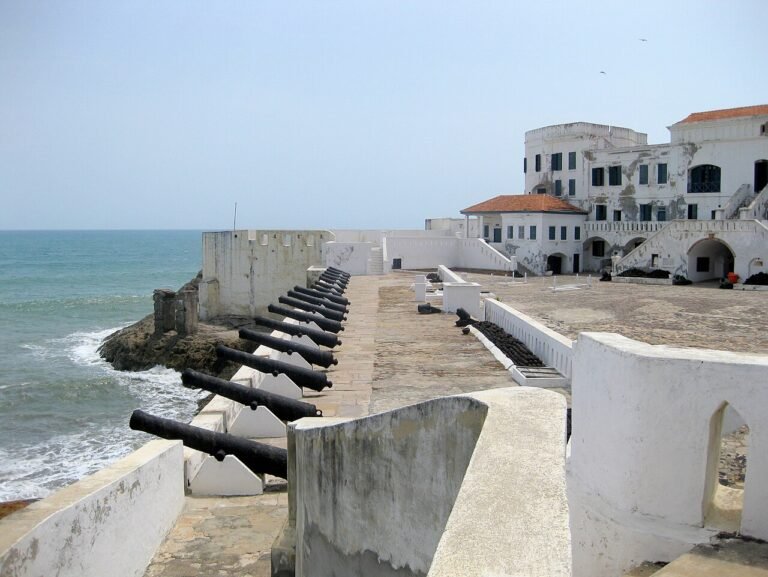
Galle Fort, 60 kilometres south of Sinharaja, has been a UNESCO World Heritage Site since 1988. The fortified town on Sri Lanka’s southwest coast was first built by the Portuguese in 1588, comprehensively rebuilt by the Dutch by 1663, and then left largely intact by the British after 1796. It holds 36 listed monuments and is still inhabited. Kandy, the last royal capital of Sri Lanka and a UNESCO site since 1988, lies approximately 80 kilometres northeast of Sinharaja. The Temple of the Sacred Tooth Relic in Kandy houses a relic brought from India in the 4th century CE and is among the most important Buddhist pilgrimage sites in the world.
Practical Information Sinharaja Forest Reserve, Sabaragamuwa and Southern provinces, Sri Lanka
The reserve has no public transport connections. The standard approach is to hire a vehicle from Colombo (approximately 150 kilometres, 3.5–4 hours), Galle (60 kilometres, 90 minutes), or Ratnapura (40 kilometres, 1 hour). Ratnapura is the nearest town of any size and is itself known for gemstone trading — Sri Lanka is one of the world’s primary sources of blue sapphires and cat’s eye. Accommodation near the reserve is limited; the small village of Kudawa has a few guesthouses, and most visitors come on day trips.
Sri Lanka operates an Electronic Travel Authorization for most nationalities, processed online in advance. No vaccinations are mandatory, but hepatitis A and typhoid are recommended given the remote nature of the area and local food and water conditions. Bring waterproof boots regardless of season — the forest floor is perpetually wet. Leeches are endemic and harmless but abundant; most visitors apply salt or tobacco to remove them. The reserve admission fee and guide fee are payable at the entrance. No photography of wildlife is prohibited, but flash photography disturbs the animals. Allow at least five hours inside the forest for a meaningful visit; two hours covers less than a kilometre of trail.
Frequently Asked Questions
What are the mixed-species bird flocks of Sinharaja, and where else does this behaviour occur?
Mixed-species foraging flocks are groups of birds from multiple species that move and feed together through the forest as a coordinated unit. The Sinharaja flocks, which can include up to 15 species simultaneously, are among the most complex examples documented anywhere in the world. The flocks typically form in the understorey and mid-canopy and move continuously through the forest at roughly 50–100 metres per hour. The nuclear species — those around which others aggregate — in Sinharaja are usually the orange-billed babbler (Turdoides rufescens) and the Sri Lanka white-headed starling (Sturnia senex), both endemic to the island. Satellite species, which join and leave the flock intermittently, include various flycatchers, drongos, minivets, and woodpeckers. The leading hypothesis for why this behaviour occurs is the “many eyes” theory: with more individuals watching for aerial and terrestrial predators, each bird spends less time scanning and more time feeding. A secondary hypothesis involves the “beater” effect, where the movement of the flock flushes insects that are then available to all members. Mixed-flock foraging has been documented in Amazonian rainforest, in the forests of Borneo, and in some African woodlands, but the Sinharaja system is notable for the number of species involved and the consistency with which the flocks form. Scientists have been studying these flocks since the 1980s, and the Sinharaja flocks are among the most closely documented examples globally.
How severe was the logging that threatened Sinharaja between 1971 and 1977, and what survived?
The timber extraction that operated in Sinharaja from 1971 to 1977 focused on commercially valuable hardwood species, principally dipterocarps including hora (Dipterocarpus zeylanicus) and other large emergent trees. The concession operated a selective logging system rather than clear-cutting, but in tropical rainforest the extraction of large canopy trees causes substantial collateral damage: the removal of a single large tree typically damages a significant area of understorey through the fall path and the creation of a canopy gap. The logged areas within Sinharaja showed altered species composition and reduced canopy cover in the years following extraction. The core areas of the reserve, particularly the zones now covered by the World Heritage inscription boundary, were not fully clear-cut, and secondary forest regeneration has recovered significant canopy cover in the decades since. The endemic tree species most targeted by the loggers have been slowly recovering, though their growth rates are slow in a forest system where competition for light and nutrients is intense. The areas around the Kudawa entry point on the northwestern edge of the reserve show the clearest evidence of disturbance and recovery, with younger secondary forest interspersed with mature stands. The campaign to stop the logging, led by Sri Lankan scientists and civic organisations, was significant not only for its outcome but as one of the early examples of successful environmental activism in South Asia, predating the international conservation movement that gained momentum in the 1980s.
What national parks near Sinharaja are worth combining with a visit to the forest reserve?
Two national parks within two hours of Sinharaja offer wildlife experiences that contrast with the forest environment. Udawalawe National Park, approximately 50 kilometres east of the reserve, covers 30,821 hectares of open scrub jungle and grassland around the Udawalawe reservoir. It holds one of the most accessible wild elephant populations in Asia — more than 500 elephants use the park, and sightings are reliable on virtually every safari drive. The flat, open terrain of the park allows long-range visibility unlike the enclosed forest of Sinharaja, and the concentration of large mammals also includes water buffalo, axis deer, sambar, and Sri Lanka leopard. Yala National Park, approximately 120 kilometres southeast of Sinharaja near the south coast, is a different proposition: it holds what biologists cite as the highest density of wild leopards of any protected area in the world. The leopard sightings are less guaranteed than the elephant sightings at Udawalawe — leopards are territorial and less predictable — but the park’s rocky terrain and semi-arid scrub make individual leopards more visible when encountered than in the closed forest. Yala also holds sloth bears, mugger crocodiles, and a substantial bird list. Combining Sinharaja with Udawalawe (1.5 hours) makes a practical two-day itinerary from Galle; adding Yala requires a third day and additional travel.

.jpg)