
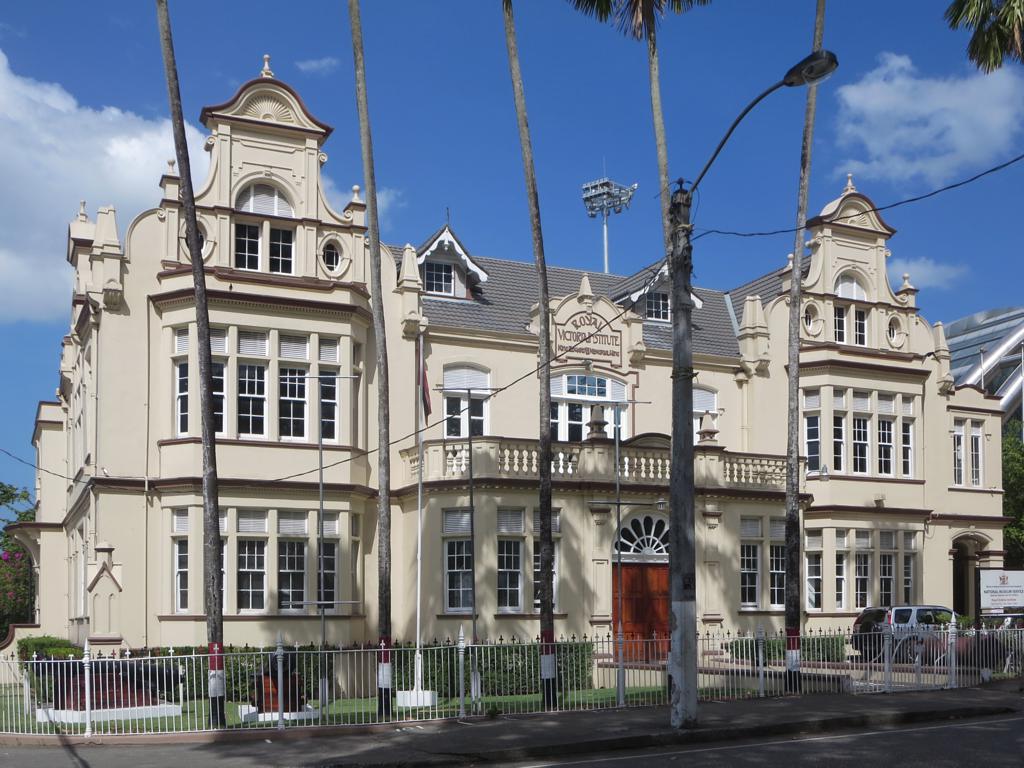
Trinidad and Tobago has no inscribed UNESCO World Heritage Sites, but the Pitch Lake at La Brea — the largest natural asphalt deposit in the world, known since the sixteenth century — and Tobago’s Buccoo Reef represent heritage of genuinely global significance within reach of Port of Spain. From Cultural Heritage Online.
The Pitch Lake, La Brea 50 km southwest — 1 hour by road
The Pitch Lake at La Brea covers approximately 40 hectares of the southern Trinidad coast and reaches an estimated 75 metres in depth at its centre. It is the largest natural deposit of asphalt in the world — the others, in California and Venezuela, are smaller by a significant margin. The surface of the lake is solid enough to walk on in most places, though it shifts and undulates slowly as material from below wells upward; the centre remains liquid and is surrounded by warning barriers. Approximately 300 tonnes of asphalt are extracted from the lake every day, a process that has continued since British commercial extraction began in the 1860s. Despite this, the lake has not perceptibly diminished in size since systematic observation began.
Sir Walter Raleigh calked his ships at La Brea in 1595, making the Pitch Lake one of the few natural resources in the Americas mentioned in an Elizabethan primary source. He described the lake as “an abundance of stone pitch” in his account of the voyage and noted its effectiveness as a marine sealant. The asphalt shipped from La Brea was used to pave roads in London and New York in the nineteenth century; the lake funded a significant portion of Trinidad’s early colonial infrastructure.
The lake’s slow upwelling has preserved Pleistocene remains: mastodon bones and the shells of giant sloths have been recovered from depths below the surface, preserved for tens of thousands of years in the oxygen-free asphalt. The site has a tentative listing as a potential UNESCO candidate, though no formal nomination has been submitted.
Getting there: Road transfer southwest from Port of Spain via the Solomon Hochoy Highway, then south through San Fernando to La Brea (approx. 50 km, 1 hour). Guided tours of the lake operate on site. Allow: 3–4 hours including travel. Best for: Geology and industrial heritage visitors; natural curiosity travellers.
Buccoo Reef and Buccoo Lagoon, Tobago 30 km northeast — 30 min domestic flight or 2.5 hr fast ferry to Tobago
The Buccoo Reef off southwest Tobago forms the outer edge of a lagoon system that includes the Bon Accord Lagoon and the famous Nylon Pool — a natural sandbar in clear, shallow water approximately 1.5 km offshore. The reef is one of the significant coral reef systems in the southern Caribbean, though it has suffered from boat damage, sewage, and tourist pressure since the 1970s. A marine park designation has provided some protection since 1973. The Buccoo Reef and Bon Accord Lagoon appear on Trinidad and Tobago’s Tentative List for UNESCO inscription.
Tobago also holds exceptional biodiversity on land: the Tobago Main Ridge Forest Reserve, established in 1764 by the British colonial administration as one of the first protected forests in the world, covers the island’s mountainous interior and harbours species found nowhere else. The Asa Wright Nature Centre on the Trinidad side — 24 km north of Port of Spain in the Northern Range — is one of the premier bird-watching lodges in the Western Hemisphere.
Getting there: Caribbean Airlines and Caribbean Star operate frequent domestic flights between Port of Spain and Crown Point (Tobago) — 20–30 min. Fast ferry available (2.5 hours). Buccoo Reef boat tours depart from Pigeon Point, approx. 15 min from Crown Point airport. Allow: Full day on Tobago. Best for: Marine ecology visitors and bird-watchers.
Frequently Asked Questions
Does Trinidad and Tobago have any UNESCO World Heritage Sites?
No. As of 2026, neither Trinidad nor Tobago has an inscribed UNESCO World Heritage Site. The country’s Tentative List includes the Buccoo Reef and Bon Accord Lagoon on Tobago. The Pitch Lake at La Brea has been discussed as a potential nomination given its unique geological status as the world’s largest natural asphalt deposit.
Is it safe to walk on the Pitch Lake?
Yes, with a guide. The surface of most of the lake is solid enough to support visitors, though it is warm underfoot and shifts subtly with the upwelling from below. The lake’s centre remains liquid and is marked with barriers. Guided tours organised on site take visitors across the hardened surface and explain the lake’s geology and extraction history. Closed footwear is strongly recommended.
What is the best time of year to visit Port of Spain?
The dry season runs from January to May, making travel to both the Pitch Lake and Tobago most comfortable. The wet season (June–December) brings heavy afternoon rainfall but the landscape turns dramatically green. Carnival, held in February or March (the two days before Ash Wednesday), is one of the most celebrated festivals in the Caribbean and significantly affects accommodation availability in Port of Spain.
What Pleistocene remains have been found in the Pitch Lake?
Mastodon bones, the shells of giant ground sloths, and other Pleistocene megafauna remains have been recovered from depth within the lake. The anaerobic, oxygen-free conditions of the asphalt preserve organic material for tens of thousands of years, similar to the La Brea Tar Pits in Los Angeles. The Pitch Lake finds are displayed in the National Museum and Art Gallery in Port of Spain.

.jpg)