
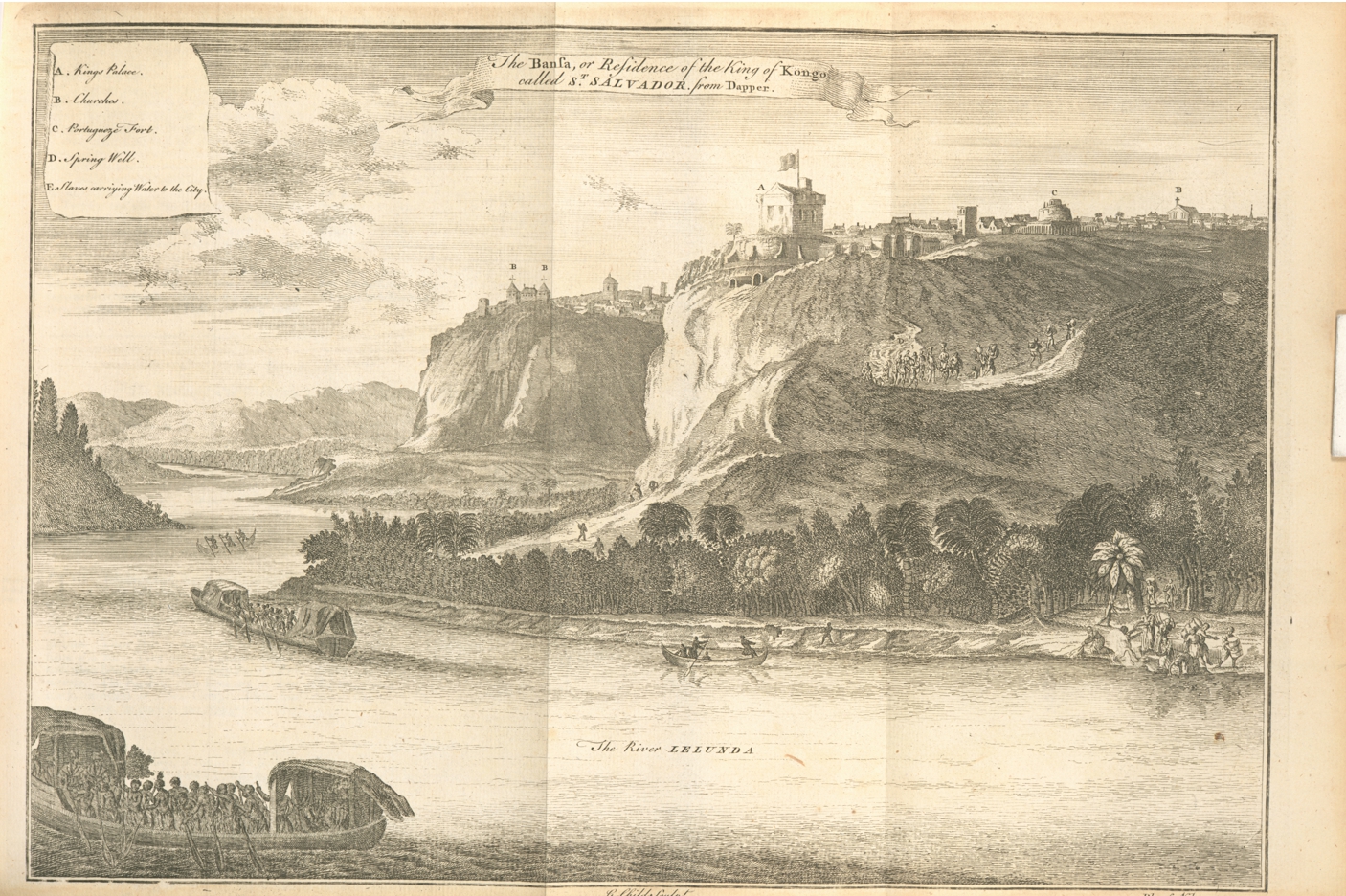
Angola has one UNESCO World Heritage Site: Mbanza Kongo, former capital of one of the most powerful kingdoms in pre-colonial Africa. Located 650 kilometres north of Luanda, it rewards the journey with layered history spanning the 15th century to today. From Cultural Heritage Online.
Mbanza Kongo, Vestiges of the Capital of the Former Kingdom of Kongo 650 km north — 1.5 hr flight or 10 hr road

Mbanza Kongo sits on a plateau in Zaire Province at around 570 metres above sea level, its red-earth streets overlooking a vast sweep of savannah and secondary forest. The modern town of roughly 100,000 inhabitants occupies almost exactly the same ground as the royal capital that once governed an empire, and that continuity is the inscription’s central argument: the archaeological record and the living city are inseparable. UNESCO inscribed the site in 2017, making it Angola’s first and, to date, only World Heritage designation.
At its height between roughly 1400 and 1665, the Kingdom of Kongo controlled territory across present-day Angola, the Democratic Republic of Congo, and the Republic of Congo, with a population historians estimate at two to three million. The Portuguese navigator Diogo Cão established contact in 1483, and what followed was one of the earliest, most sustained exchanges between sub-Saharan Africa and Europe: diplomatic missions, intermarriage within the royal lineage, a shared Christian vocabulary, and an intensive Atlantic trade that eventually, catastrophically, included enslaved people. The capital was renamed São Salvador by the Kongolese Christian elite, though Mbanza Kongo — “city of the Kongo” in Kikongo — reclaimed official use after Angolan independence in 1975.
The inscription encompasses several discrete elements woven into the urban fabric. The Cathedral of Our Lady of the Rosary, begun around 1549 and completed in the following decades, is among the oldest Catholic churches in sub-Saharan Africa; its roofless stone shell stands at the centre of town, used today for open-air services. The former royal enclosure, known as the Kulumbimbi, preserves earthwork and stone foundations from the palace complex. The São Miguel Royal Fortress, built in the 17th century on the plateau’s western edge, provided a defensive perimeter. A sacred Nsanda fig tree — a ficus species with deep ritual significance in Kongolese cosmology — marks the traditional site of royal investiture. A network of sacred groves surrounds the plateau, some still in active ceremonial use by Kongolese descendants living in the region.
The visit requires more logistical commitment than most African heritage sites. TAAG Angolan Airlines operates domestic flights from Luanda’s 4 de Fevereiro International Airport to Mbanza Kongo, with a journey time of approximately 90 minutes. The overland route via the N100 and N230 roads covers around 650 kilometres and takes ten hours or more, depending on road conditions. Independent travellers generally find accommodation limited: a handful of guesthouses and one hotel-standard property serve the town. Guided visits to the cathedral ruins and Kulumbimbi can be arranged locally; the sacred groves require permission from community authorities and are best approached through a knowledgeable local contact. The dry season, from May to October, offers the most predictable travel conditions.
Getting there: Domestic flight Luanda–Mbanza Kongo with TAAG (approx. 90 min), or road via N100/N230 (approx. 10 hr). Visa required for most nationalities — apply in advance. Allow: Minimum two days to cover the main inscription elements; three days to include the sacred groves and surrounding landscape. Best for: Historians of the Atlantic world, travellers with an interest in early African Christianity, and those researching the Kongo diaspora’s imprint on Afro-Brazilian and Caribbean cultures.
Frequently Asked Questions
How many UNESCO World Heritage Sites are near Luanda?
Angola has exactly one UNESCO World Heritage Site: Mbanza Kongo, inscribed in 2017. It lies approximately 650 kilometres north of Luanda. There are no additional inscribed sites in Angola, and no transboundary sites that straddle Angola’s borders are currently on the UNESCO list. Neighbouring countries — the DRC, Zambia, Namibia, and the Republic of Congo — each have their own separate inscriptions, but none falls within practical day-trip range of Luanda.
How do I reach Mbanza Kongo from Luanda?
The fastest option is a domestic flight with TAAG Angolan Airlines, approximately 90 minutes each way. Flights do not run daily, so check schedules and book ahead, especially during holidays. Overland travel on the N100 and N230 highways takes around ten hours under good conditions; the roads are paved for much of the route but quality varies, and fuel availability outside major towns requires planning. Car hire with a driver experienced on the northern routes is the most practical overland choice for independent travellers.
When is the best time to visit Mbanza Kongo?
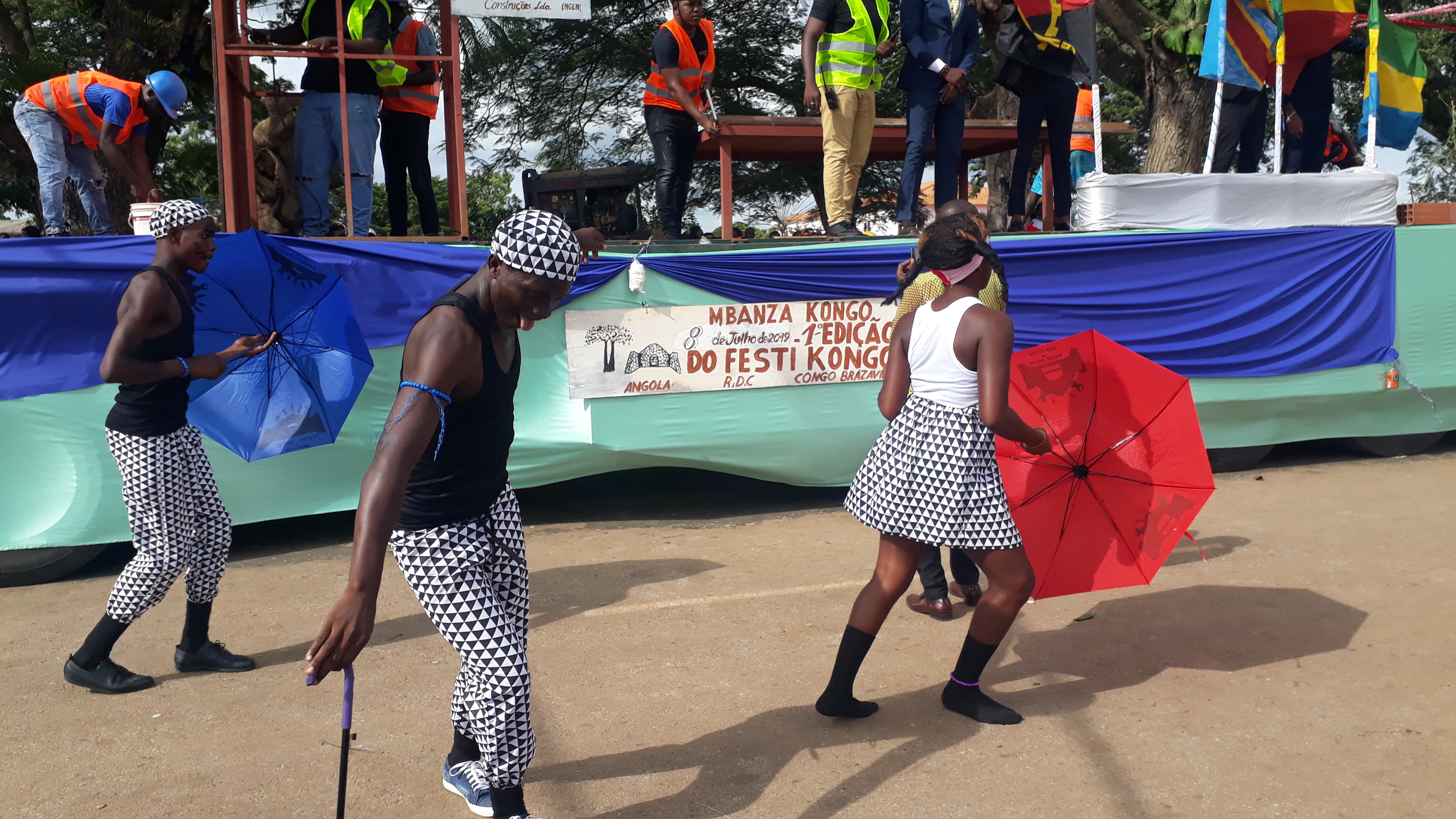
The dry season from May to October is the most comfortable period: temperatures are moderate, roads are reliable, and the plateau’s red laterite paths are passable on foot. The rainy season (November to April) can make rural tracks leading to the sacred groves difficult to access, particularly in February and March when rainfall peaks. The provincial carnival, held each year in late February or early March, draws large crowds to Mbanza Kongo and offers an exceptional window into the region’s living culture — though it coincides with the wettest weeks of the year.
Why is Mbanza Kongo significant beyond Angola?
The Kingdom of Kongo’s influence radiates across the Atlantic world. When enslaved Kongolese people were transported to Brazil, Cuba, Haiti, and elsewhere from the 16th century onward, they carried with them elements of Kongo cosmology, iconography, and ritual practice. Scholars trace the root of the Candomblé nation Bantu, the Palo Monte tradition in Cuba, and certain visual vocabularies in Haitian Vodou to Kongolese cultural memory. Mbanza Kongo also represents the earliest documented instance of sustained African-European Christian exchange: King Afonso I (r. 1509–1542) corresponded with the Portuguese crown and the Vatican in Latin, making the Kongo court one of the most literate political entities in 16th-century Africa.
,_Astley_1745.jpg)
_in_1668,_also_known_as_Sao_Salvador..webp)
