
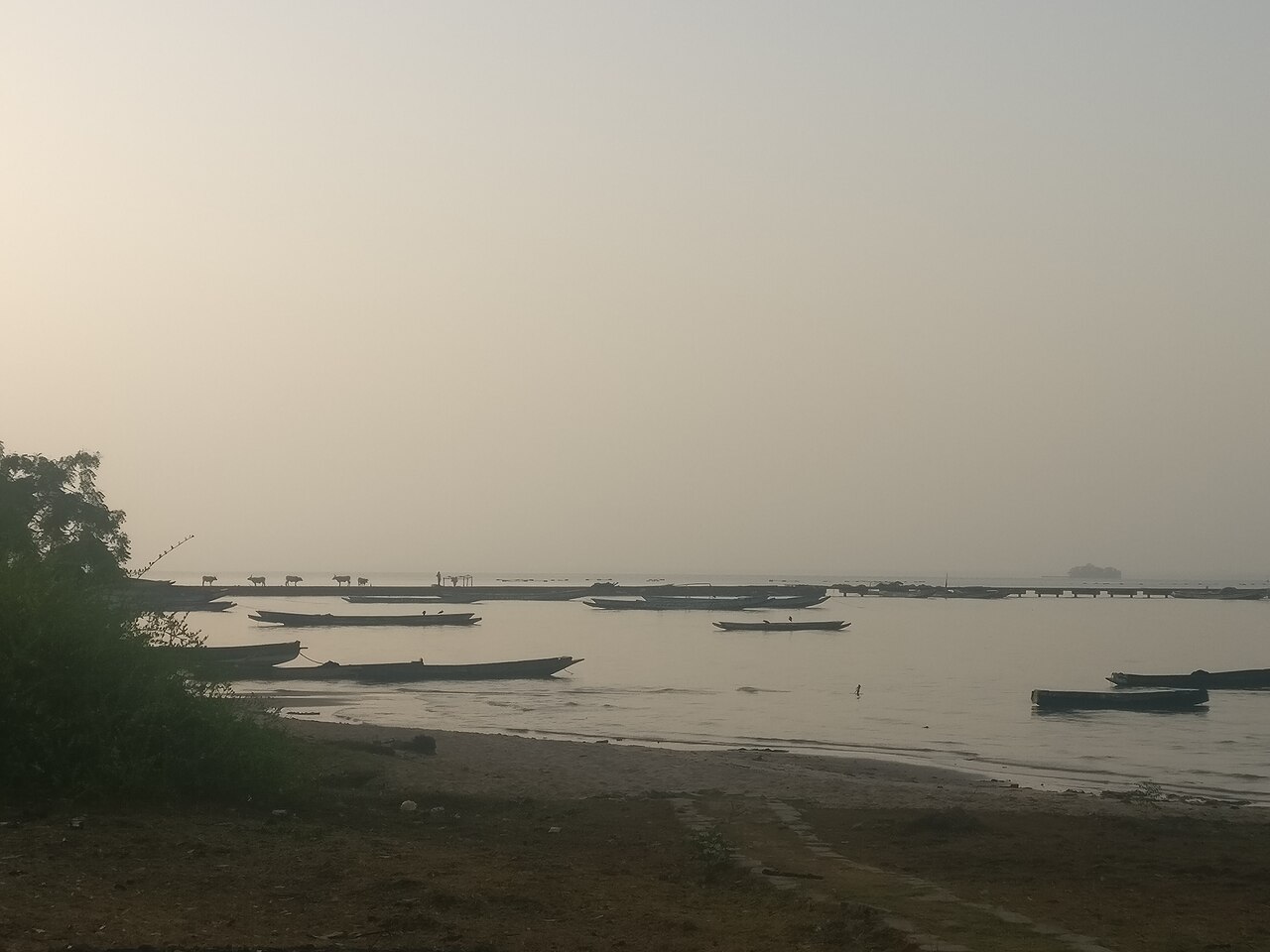
The Gambia holds two UNESCO World Heritage Sites, both reachable as day trips or overnight excursions from Banjul: Kunta Kinteh Island, a sobering monument to the Atlantic slave trade, and the Stone Circles of Senegambia, one of West Africa’s most enigmatic prehistoric landscapes. From Cultural Heritage Online.
Kunta Kinteh Island and Related Sites 200 km · 2.5–4 hrs from Banjul
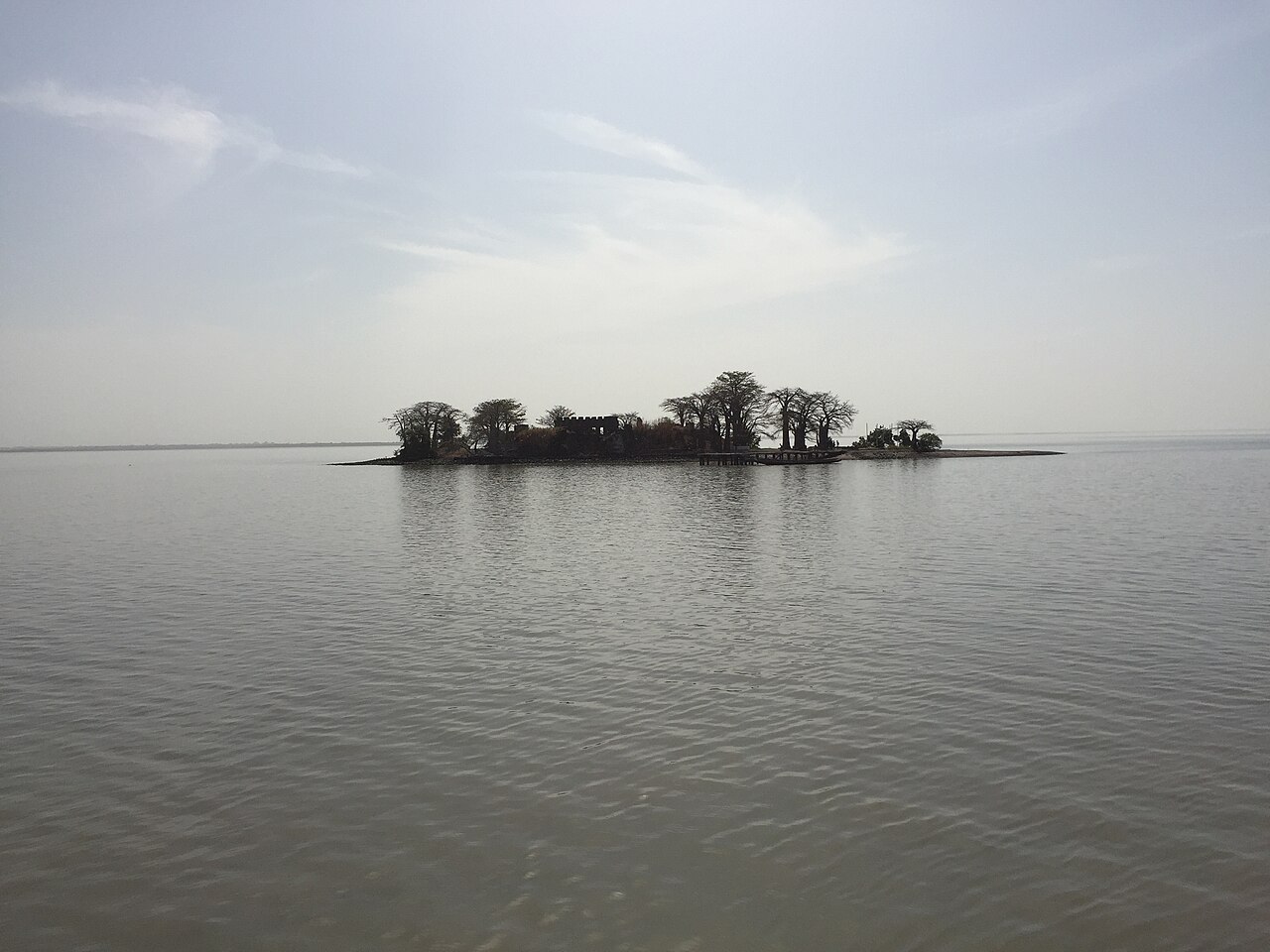
A small, flat island barely 300 metres long sits in the Gambia River about 30 kilometres from its mouth, its silhouette broken by crumbling brick walls and the silhouettes of ancient baobabs. This is Kunta Kinteh Island — known for most of its documented history as James Island — and the ruins visible today are what remains of Fort James, a fortified slave-holding post that operated at the heart of the Atlantic trade for nearly two centuries.
The island was first settled by the Duchy of Courland (in present-day Latvia) in 1651. England purchased it in 1661, constructing a fort that would be attacked, burned, and rebuilt multiple times over the following century as Dutch, French, and British forces contested control of the river and its trade. Enslaved men and women were held in its cells before being loaded onto ships bound for the Americas. The UNESCO inscription — awarded in 2003 — extends beyond the island itself to include the fortified north-bank sites, the colonial settlement of Albreda, and the village of Juffureh, from which Alex Haley’s ancestor Kunta Kinte was allegedly taken, as recounted in his 1976 novel Roots. That literary connection draws diaspora heritage visitors from across the world, and the site carries an emotional weight that few UNESCO properties can match.
Access is by road to Janjanbureh (Georgetown), the nearest town on the south bank, followed by a short boat crossing to the island. Alternatively, pirogue services operate the full river journey from Banjul, a four-hour trip that itself passes through mangrove-lined tributaries and historic riverine settlements. The island is managed by the National Centre for Arts and Culture; a small museum near the ferry landing at Albreda provides context on the slave-trade history of the region.
Getting there: By road via Soma and Janjanbureh (approx. 200 km, 2.5 hrs); then short boat crossing to the island. Alternatively, organised river boat from Banjul (4 hrs). Allow: Full day or overnight at Janjanbureh. Best for: Diaspora heritage tourists, historians, travellers with a serious interest in Atlantic slavery and African history.
Stone Circles of Senegambia — Wassu 190 km · 3 hrs from Banjul
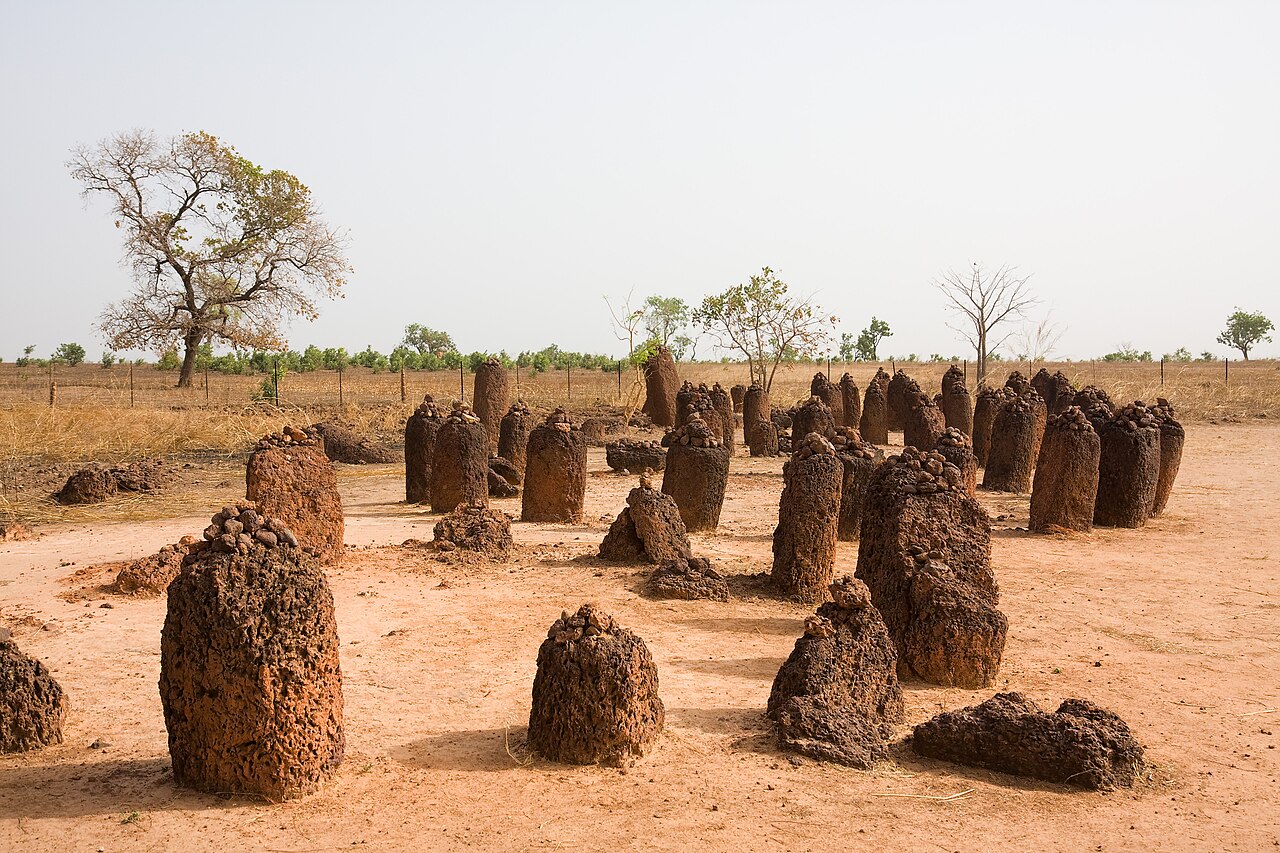
Roughly 190 kilometres northeast of Banjul, near the village of Wassu in the Central River Region, a series of low circles of reddish laterite monoliths stands in dry savanna. These are the Wassu Stone Circles — the best-known Gambian component of the transboundary Stone Circles of Senegambia inscription, which was added to the UNESCO World Heritage List in 2006 and is shared with Senegal.
The scale of the phenomenon across the wider Senegambia region is remarkable: approximately 1,000 stone circles, containing around 29,000 individually shaped laterite pillars, spread across a zone roughly 350 kilometres east to west. At Wassu alone, eleven circles and two isolated monoliths survive in reasonable condition. Most pillars are cylinders, precisely shaped by hand, standing between one and two and a half metres tall and weighing up to ten tonnes each. The circles are understood to mark the burials of important individuals, constructed at various points between approximately 750 BC and AD 1600 — a span that makes this one of the longest continuously practised funerary traditions in African prehistory. The identity of the cultures responsible and the techniques used to transport and shape the stones remain subjects of active research.
A small on-site museum at Wassu provides an introduction to the archaeology. The Kerbatch Stone Circles, the second Gambian component of the inscription, lie further east in the same region and are visited far less frequently. Both Wassu and Kerbatch can be combined with a stop at Janjanbureh — making a logical loop with Kunta Kinteh Island for travellers with two or three days to spend in the interior.
Getting there: By road from Banjul via Soma and north bank road to Wassu (approx. 190 km, 3 hrs by private vehicle or bush taxi to Kuntaur then short transfer). Allow: Half day at Wassu; full day if combining with Kerbatch. Best for: Archaeologically curious travellers, overland itineraries combining both Gambian UNESCO sites.
Frequently Asked Questions
How many UNESCO World Heritage Sites are near Banjul?
The Gambia has two UNESCO World Heritage Sites, and both are accessible from Banjul. Kunta Kinteh Island and Related Sites (inscribed 2003) lies approximately 200 km upriver, reachable in 2.5 hours by road to Janjanbureh plus a short boat crossing. The Stone Circles of Senegambia (inscribed 2006, shared with Senegal) is roughly 190 km northeast, near the village of Wassu, about 3 hours by road.
Can I visit both UNESCO sites in one trip from Banjul?
Yes, with two to three days and your own vehicle or a hired driver. A practical route runs east along the south bank road to Janjanbureh (Kunta Kinteh Island), crosses to the north bank, continues northeast to Wassu (Stone Circles), then returns to Banjul via the north bank road and the Farafenni ferry crossing. Bush taxis cover most of the route but require changes at Soma and Kuntaur; independent travel is considerably easier with a private vehicle.
What is the best time of year to visit these sites?
The dry season, from November to May, is strongly preferred. The roads to both Wassu and Janjanbureh can be difficult in the rains (July–September), and the river pirogue from Banjul is more reliable in dry conditions. November to February also brings cooler temperatures — daytime highs around 28–32°C rather than the 38°C-plus heat of April and May.
What is the significance of Juffureh to the Kunta Kinteh inscription?
Juffureh is a village on the north bank of the Gambia River, included within the UNESCO inscription alongside the island fort and Albreda. It became widely known after American author Alex Haley identified it as the home village of his ancestor Kunta Kinte in his 1976 novel and television miniseries Roots. Haley’s genealogical claims have been disputed by historians, but Juffureh’s association with Roots has made it one of the most visited villages in West Africa for diaspora heritage tourism, and it remains an important site for African-American travellers tracing connections to the Atlantic slave trade.



.jpg)
