
Nicaragua holds two UNESCO World Heritage Sites, and both lie within a 95-kilometre radius of Managua — a colonial archaeological site buried under volcanic ash and the largest cathedral in Central America. This guide covers access, history, and what to expect at each. From Cultural Heritage Online.
Ruins of León Viejo 90 km northwest — approx. 1.5 hr by road
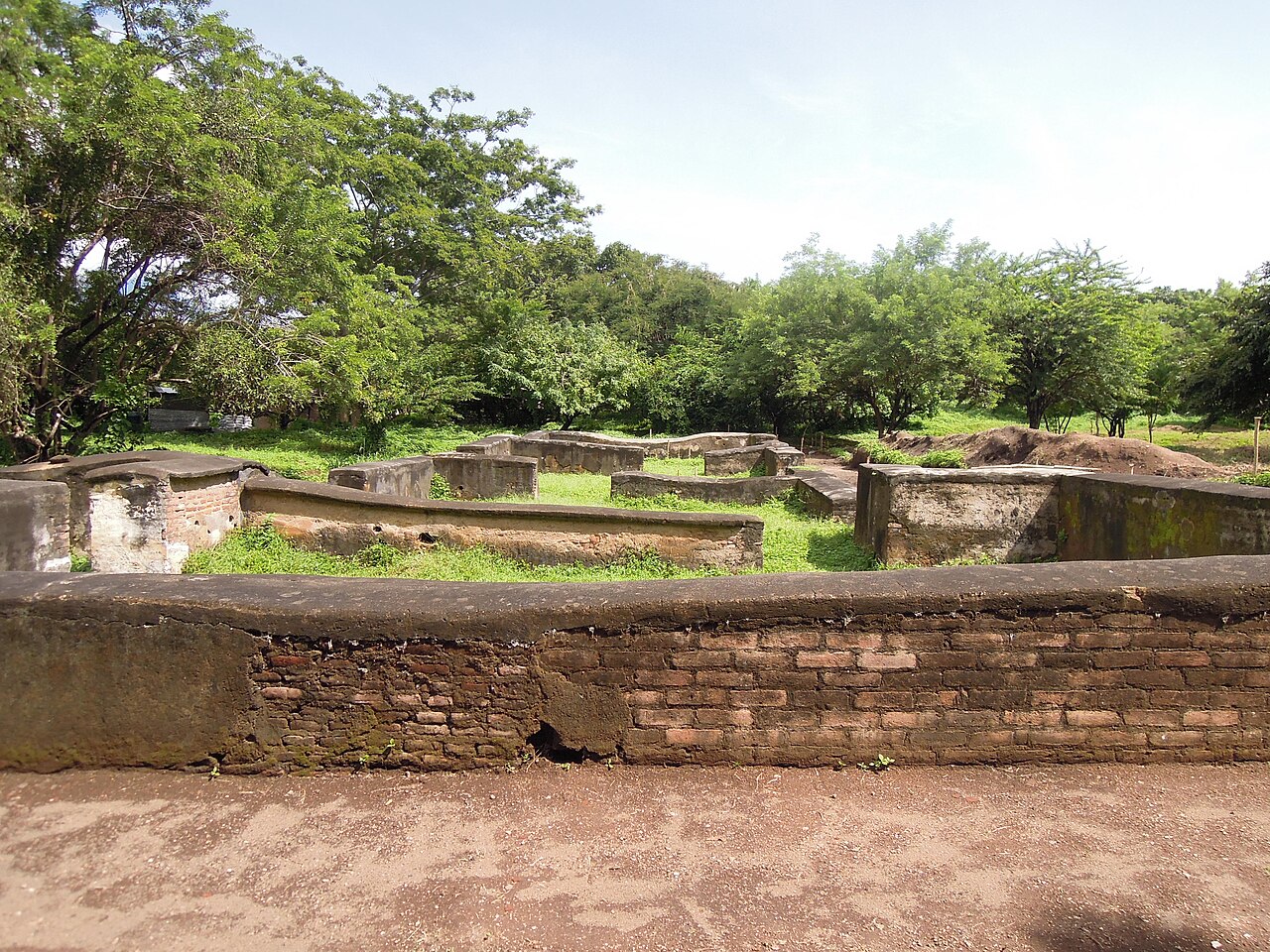
On the northwest shore of Lake Managua, in the shadow of the Momotombo volcano, the foundations of a city that once governed Spanish Nicaragua emerge from the earth in low stone outlines. León Viejo — Old León — was founded in 1524 by the conquistador Francisco Hernández de Córdoba and served as the colonial capital for close to a century before it was abandoned. Repeated eruptions of Momotombo and a destructive earthquake in 1610 drove the population to resettle 30 kilometres to the northwest, where modern León stands today. The original city was sealed under volcanic ash, preserved rather than destroyed.
Systematic excavations began in 1967 and have since uncovered the cathedral, the plaza mayor, the convents of La Merced and San Francisco, the governor’s palace, private houses, and artisan workshops — all left in situ. The archaeological footprint is unusually legible: you can read the colonial urban grid directly from the exposed foundations. Among the most significant finds were the skeletal remains of Francisco Hernández de Córdoba himself, executed for treason by the ruthless governor Pedrarias Dávila in 1526, and later of Dávila as well — both identified in the cathedral. UNESCO inscribed León Viejo in 2000 as one of the oldest intact Spanish settlements in the Americas, a material record of the first century of European colonisation in Central America.
The site is managed as an open-air museum with walkways between the excavated structures. A small on-site museum provides artefacts and contextual panels. The setting — lake to one side, active volcano to the other — is itself part of the story: Momotombo remains visible throughout the visit as a reminder of why the city was left behind.
Getting there: From Managua, drive or take a bus toward Puerto Momotombo via La Paz Centro on the Panamericana Norte; the site is signposted from the village. Taxi or private transfer recommended for flexibility. Allow: 2–3 hours at the site, plus travel time. Best for: History and archaeology enthusiasts, travellers interested in colonial Latin America and pre-tourism Nicaragua.
Cathedral of the Assumption of León 95 km northwest — approx. 1.5 hr by road
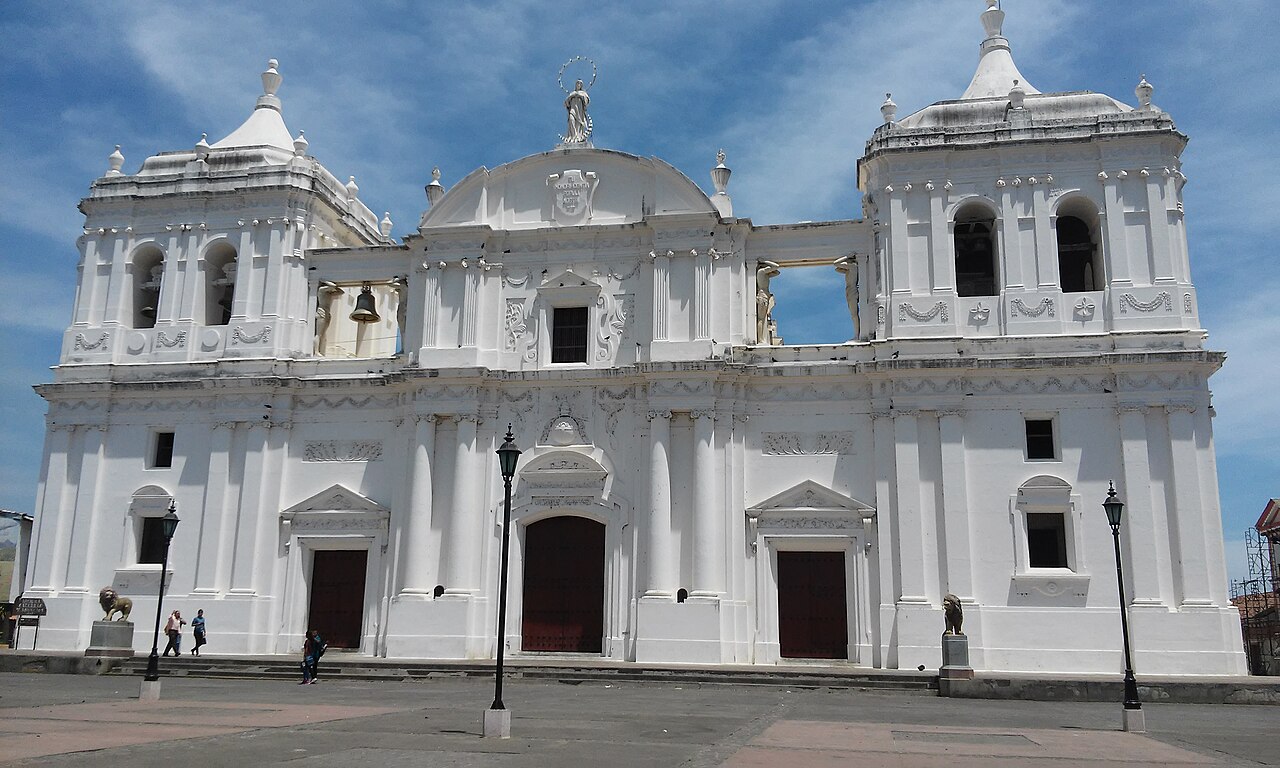
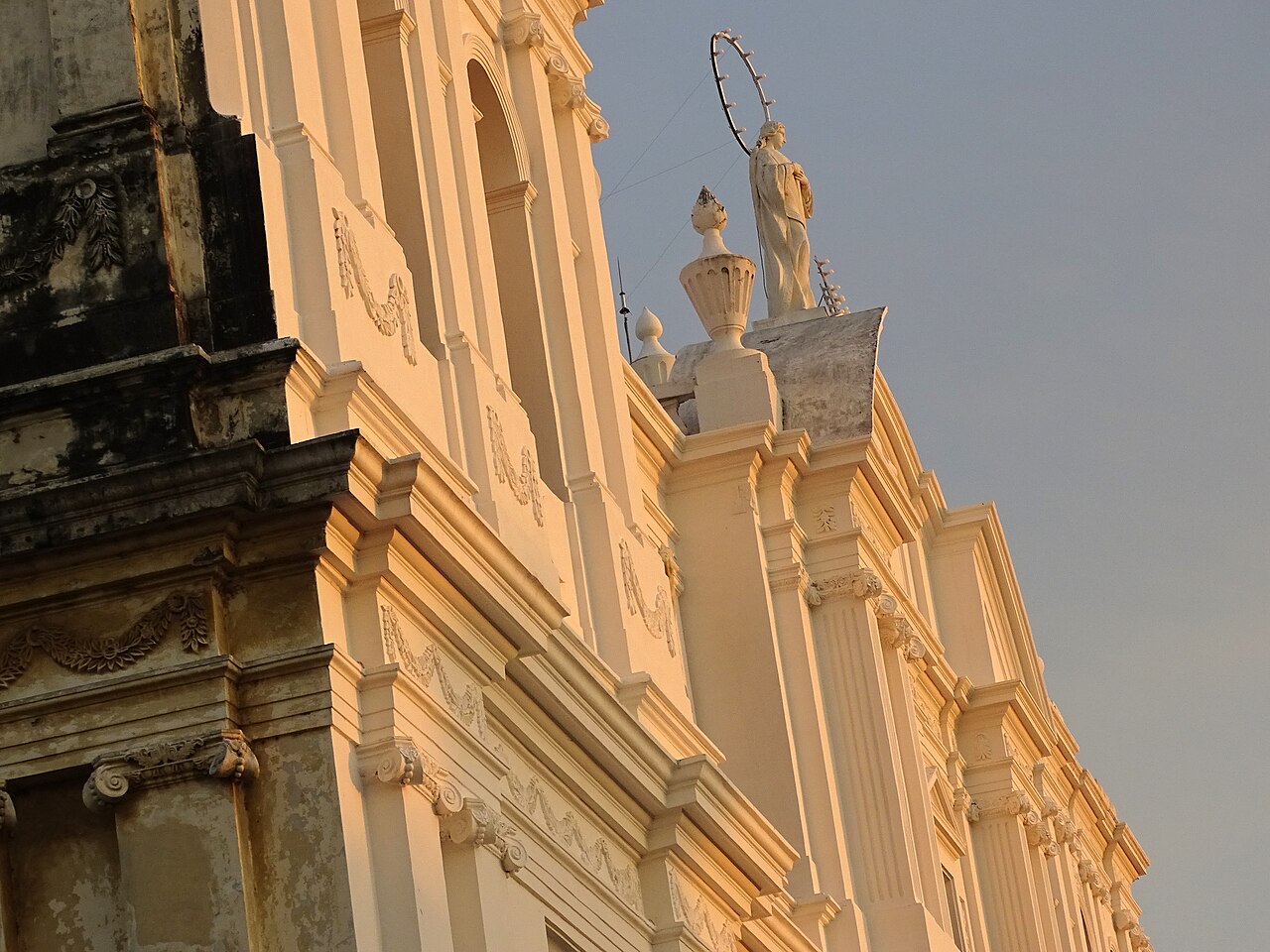
León’s cathedral is not easily missed. Its pale yellow facade dominates the central plaza of Nicaragua’s second city, and at roughly 100 metres long, it is the largest cathedral in Central America. Construction began in 1747 and was completed only in 1860 — a span that accounts for the building’s synthesis of Spanish Colonial Baroque and Neoclassical elements. UNESCO inscribed it in 2011 for outstanding architectural value and for the way it encapsulates the evolution of ecclesiastical architecture across more than a century of colonial and post-colonial building.
The interior rewards close attention. The tomb of Rubén Darío (1867–1916) rests in the Chapel of Sorrows, attended by a stone lion — a fitting monument to the poet who founded the Modernismo movement and reshaped Spanish-language literature across two continents. Other notable elements include an 18th-century great organ, a painting of Our Lady of the Immaculate Conception in a silver frame, and the Stations of the Cross painted by Adolfo Saravia. The rooftop is accessible to visitors; from it, León’s red-tiled roofscape unfolds toward a chain of volcanoes on the horizon, including Momotombo to the south — the same peak that destroyed the first city.
León itself merits time beyond the cathedral. The city has several well-preserved colonial churches, a strong tradition of political muralism, and the CDAV contemporary art centre housed in a former prison. Combining a visit to the cathedral with the ruins of León Viejo — both located in the same corridor northwest of Managua — makes a coherent single-day or overnight itinerary from the capital.
Getting there: Express buses depart Managua’s Israel Lewites terminal regularly; journey time approximately 1.5 hours. By car, take the Carretera Nueva a León northwest from Managua. The cathedral faces the central park and is accessible on foot from the bus terminal. Allow: 1.5–2 hours at the cathedral; a half-day for León including the colonial centre. Best for: Architecture, literary history, and travellers combining both UNESCO sites in a single day trip.
Frequently Asked Questions
How many UNESCO World Heritage Sites are near Managua?
Nicaragua has two UNESCO World Heritage Sites, and both are reachable from Managua in under two hours. The Ruins of León Viejo (inscribed 2000) lie 90 km northwest near Lake Managua; the Cathedral of the Assumption of León (inscribed 2011) is 95 km northwest in the city of León. They can be visited on the same day.
Can I visit both UNESCO sites in a single day from Managua?
Yes, with an early start. León Viejo is best visited in the morning — allow two to three hours including travel — then continue 30 km north to León for the cathedral and a walk through the colonial centre in the afternoon. A private vehicle or hired driver makes the sequence easier; express buses connect Managua to León but do not serve León Viejo directly, requiring a local connection or taxi from La Paz Centro.
What is the best time of year to visit León and León Viejo?
The dry season (November through April) is most comfortable for visiting both sites. León is one of Nicaragua’s hotter cities year-round, so an early morning departure from Managua reduces heat exposure at the open-air ruins. The rainy season (May through October) brings afternoon downpours but also greener landscapes and fewer visitors; León Viejo’s walkways can be muddy after rain.
Who is buried in León Cathedral, and why is it significant?
The cathedral holds the tomb of Rubén Darío (1867–1916), the Nicaraguan poet widely regarded as the founder of Modernismo — a literary movement that redefined Spanish-language poetry across Latin America and Spain. His remains were interred in the Chapel of Sorrows, marked by a stone lion sculpted by Jorge Navas Cordero. The cathedral also contains 18th-century artworks, a period organ, and the Stations of the Cross by Adolfo Saravia, making it both a major pilgrimage site and a repository of colonial religious art.


.jpg)

