Kota Kinabalu, the capital of Sabah on the northern tip of Borneo, sits within reach of two UNESCO World Heritage Sites that represent some of the most extraordinary natural environments on Earth: a mountain that stands as Southeast Asia’s highest peak, and a cave system of staggering scale. Kinabalu Park is accessible in under two hours by road; Gunung Mulu National Park requires a short flight but rewards with underground chambers large enough to park a fleet of jumbo jets. From Cultural Heritage Online.
Kinabalu Park 90 km east — 1.5 hr by road
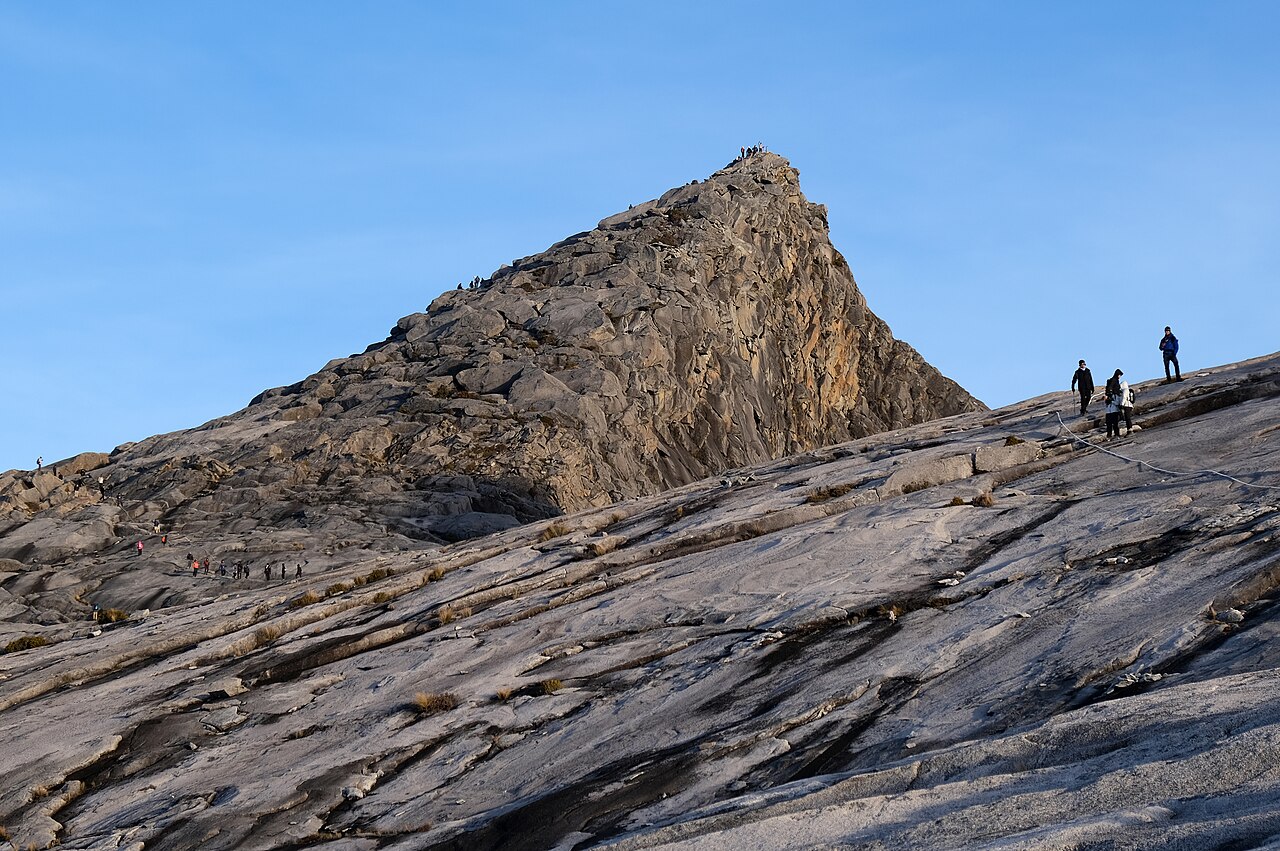
Kinabalu Park was inscribed in 2000 for a quality that is rare even among protected areas of global standing: it sits at the convergence of multiple biogeographical zones, which means species from the Asian mainland, the Australasian realm, and the island interiors of Borneo all overlap here. The result is a concentration of life that scientists have compared to no other single place — roughly 5,000 to 6,000 plant species occupy its slopes, including some 800 orchid species and periodic appearances of the Rafflesia, the world’s largest individual flower. The park also shelters 326 bird species and around 100 mammal species, among them the Bornean orangutan.
At the centre of the park stands Mount Kinabalu itself, a granite massif that reaches 4,095 metres — the highest point in Southeast Asia. The summit is accessible via a guided two-day climb on a well-maintained trail; permits are required and capped at 135 climbers per day, which keeps the ascent controlled without eliminating it as a realistic objective for reasonably fit travellers. For experienced climbers, the Via Ferrata route on the summit cliffs holds the distinction of being the highest via ferrata in the world. From the base areas around Kinabalu Park headquarters (roughly 1,500 m elevation), extensive trail networks give non-climbers access to the cloud forest, orchid gardens, and canopy walkways without requiring summit-level preparation.
The park’s headquarters at Kundasang, reached by minibus or private car from Kota Kinabalu’s Inanam bus terminal, sits at around 1,500 metres. Most visitors stay one or two nights in park accommodation to acclimatise before the summit attempt; day visitors can walk the nature trails and botanical garden without an overnight commitment.
Getting there: Minibus from Inanam terminal or private taxi/tour vehicle; journey approximately 1.5 hours on the Kota Belud–Ranau highway. Allow: Two days minimum for the summit climb; one day for trail exploration only. Best for: Trekkers, naturalists, birdwatchers, and travellers with an interest in montane ecosystems.
Gunung Mulu National Park 230 km northeast — flight via Miri
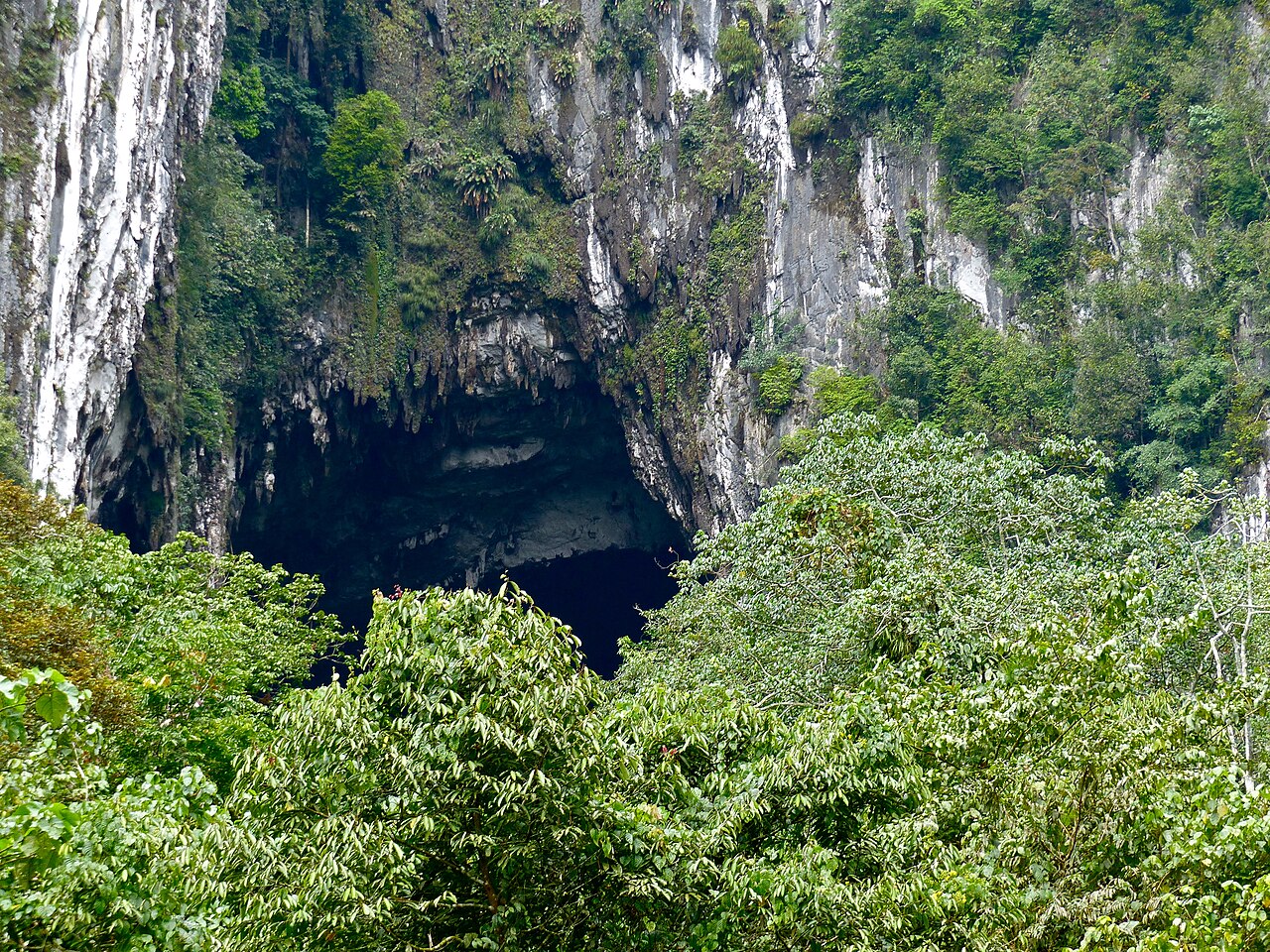
Gunung Mulu National Park, also inscribed in 2000, occupies a different register of natural spectacle from Kinabalu — less about altitude and more about what lies underground. The park contains one of the most extensively explored cave systems on Earth: 3,900 kilometres of known passages mapped so far within the limestone karst of the Melinau range in Sarawak. Two caves here claim world records. Deer Cave is one of the world’s largest cave passages: 2.2 kilometres long and 174 metres high, a volume generous enough to contain Notre-Dame Cathedral several times over. The Sarawak Chamber is categorically the largest cave chamber on Earth by area — 600 metres long, 415 metres wide, and 80 metres high; forty Boeing 747 aircraft could be parked inside it.
Above ground, the park’s biodiversity credentials are equally serious. The caves are set within intact tropical rainforest that supports a range of Bornean endemic species, and the karst surface itself produces one of the park’s most striking landscapes: the Pinnacles, a field of sharp limestone spires rising up to 50 metres from the forested flanks of Gunung Api. Reaching them requires a three-day trek from park headquarters — physically demanding but achievable without specialist equipment. Each evening, millions of bats exit Deer Cave in spiralling columns visible from the viewing platform at the cave mouth, a natural event that draws visitors on its own terms.
The logistics of getting to Mulu are more involved than Kinabalu but entirely straightforward. From Kota Kinabalu, the standard route is a domestic flight to Miri (Sarawak), followed by a 30-minute regional flight to Mulu Airport on Malaysia Airlines or MASwings. An alternative route travels by longboat from Kuala Baram near Miri, taking around three hours through river jungle — a worthwhile choice for travellers who want the full Borneo experience rather than the fastest connection.
Getting there: Fly KK to Miri, then 30-minute MASwings/Malaysia Airlines regional flight to Mulu Airport; or boat from Kuala Baram (3 hr). Allow: Three nights minimum; five nights to include the Pinnacles trek. Best for: Cavers, rainforest trekkers, and travellers prepared to venture beyond day-trip range.
Frequently Asked Questions
How many UNESCO World Heritage Sites are near Kota Kinabalu?
Two of Malaysia’s four UNESCO World Heritage Sites are accessible from Kota Kinabalu: Kinabalu Park (90 km east, about 1.5 hours by road) and Gunung Mulu National Park (reachable via a flight to Miri followed by a 30-minute regional connection to Mulu). The other two Malaysian UNESCO sites — the Historic Cities of the Straits of Malacca (Melaka and George Town) and the Archaeological Heritage of the Lenggong Valley — are on peninsular Malaysia and not practical from Kota Kinabalu.
Do I need a permit to climb Mount Kinabalu?
Yes. Climbing permits are required and must be booked through Sutera Sanctuary Lodges or a licensed tour operator, as the park limits the summit to 135 climbers per day. The standard climb is a two-day, one-night itinerary: hikers ascend to Laban Rata mountain huts on day one, then complete the summit push before dawn on day two to catch sunrise from Low’s Peak at 4,095 metres. Permits often sell out weeks in advance, particularly during the peak seasons of March–April and July–August.
Is it possible to combine both UNESCO sites in one trip from Kota Kinabalu?
Yes, and the combination makes geographic sense for a Borneo itinerary of eight to ten days. A typical sequence: spend two nights at Kinabalu Park (one for acclimatisation, one for the summit climb), return to Kota Kinabalu, fly to Miri, then connect to Mulu for three to five nights. The two sites contrast effectively — high granite and cloud forest at Kinabalu; underground limestone and lowland rainforest at Mulu — so they complement rather than repeat each other.
When were Kinabalu Park and Gunung Mulu National Park inscribed as UNESCO World Heritage Sites?
Both sites received UNESCO World Heritage status in the same year: 2000. Kinabalu Park was inscribed for its outstanding universal value as a centre of plant endemism and exceptional biodiversity, particularly at the convergence of multiple biogeographical zones. Gunung Mulu was inscribed on the basis of both its cave resources — which include world-record passages and chambers — and the integrity of its surrounding tropical forest ecosystem.