Within three hours of Prague, five UNESCO World Heritage Sites stretch across Bohemia and Moravia — from a cathedral raised on the profits of medieval silver mines to a Baroque village resurrected from plague, a Renaissance-and-Gothic castle coiled above the Vltava, and a bishop’s palace whose gardens contain one of the finest Baroque art collections in Central Europe. From Cultural Heritage Online.
Historic Centre of Prague City centre — Metro A
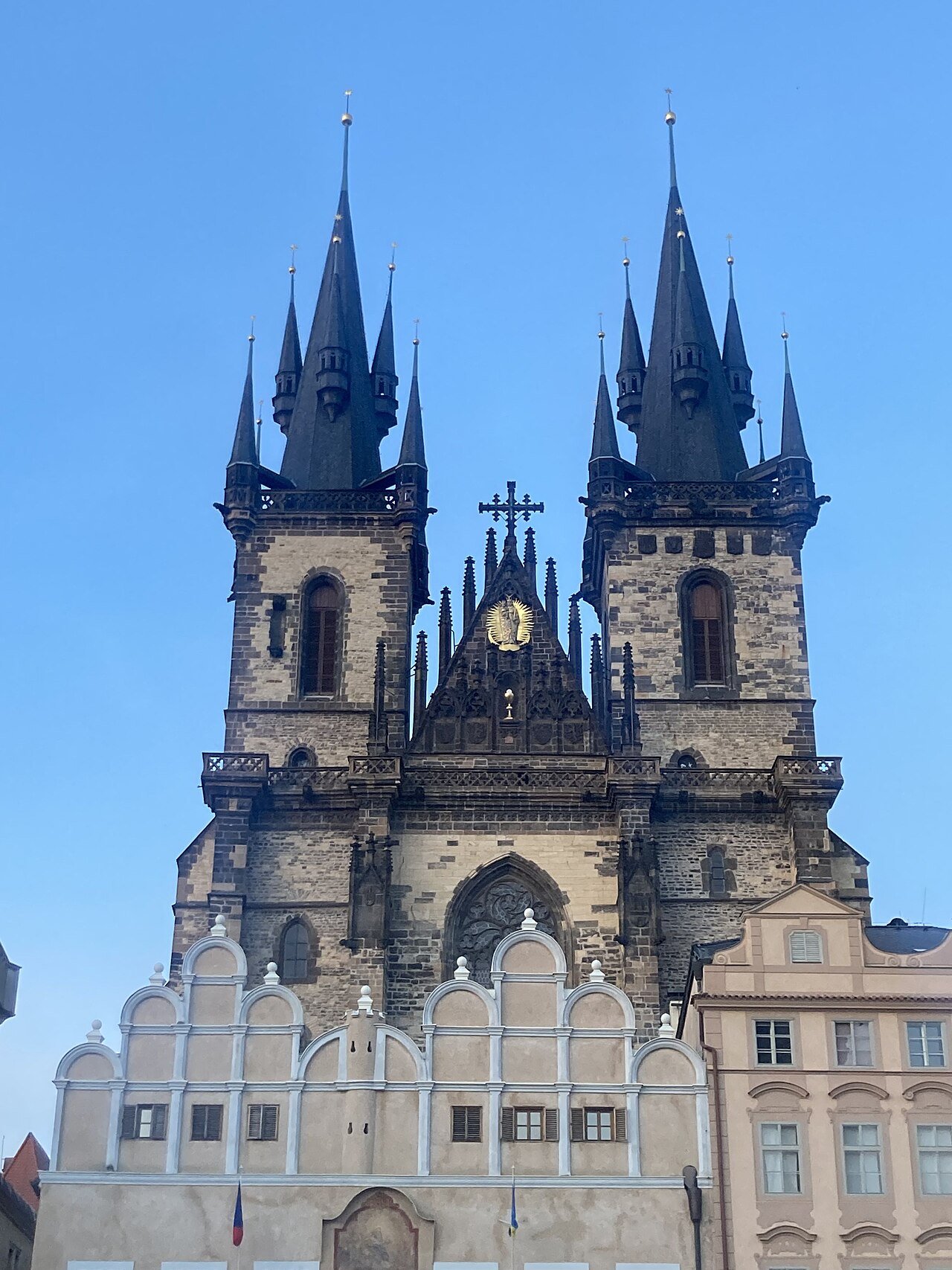
Inscribed in 1992, the Historic Centre of Prague encompasses five historic towns — Hradcany, Mala Strana, Stare Mesto, Nove Mesto, and Vysehrad — that together form one of the most complete medieval urban landscapes in Europe. Charles IV (r. 1346–1378), who founded Charles University in 1347 and commissioned the stone bridge bearing his name, transformed the city into an imperial capital whose skyline still reads as he shaped it. St. Vitus Cathedral, begun in 1344 and not completed until 1929, anchors the castle district, its soaring nave flooding the interior with coloured light through stained glass by Alfons Mucha and medieval glaziers alike. The Prague Astronomical Clock on the Old Town Hall, first installed in 1410, remains the world’s third-oldest functioning mechanism of its kind. Fourteen bridges cross the Vltava within the protected zone. At street level, Romanesque cellars, Gothic arcades, Renaissance facades, and Baroque palaces share the same block — a density of layered historical fabric that few European capitals can match.
Getting there: Metro Line A to Staromestska puts you at the heart of the Old Town in minutes; Prague Castle is served by tram from Malostranska. Allow: A full day — two days if you plan to visit the castle complex and cross-river districts separately. Best for: Visitors who want to read a thousand years of Central European architecture without leaving the same square kilometre.
Kutna Hora: St Barbara’s Church and Sedlec Ossuary 1 hr by direct train
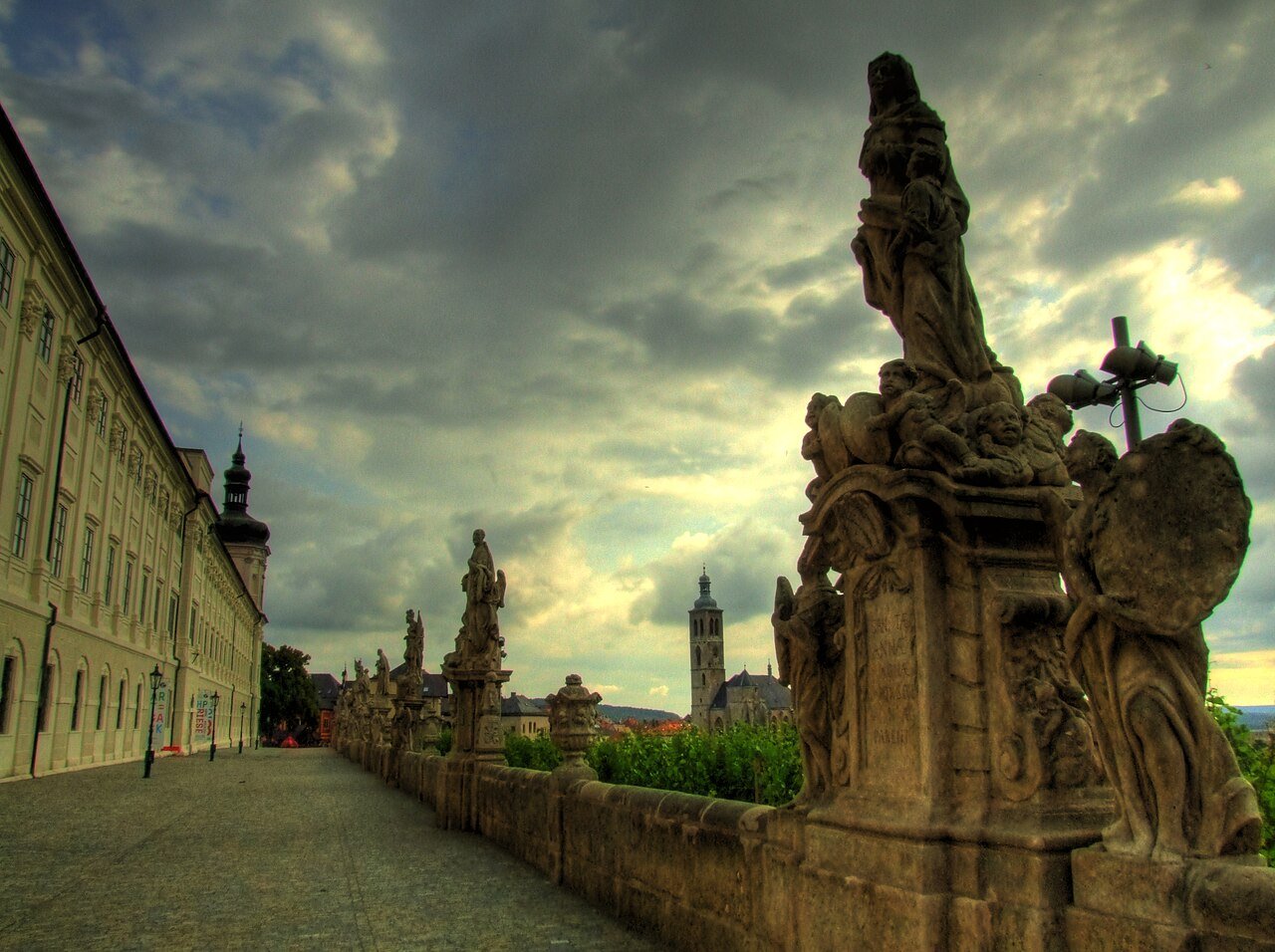
Kutna Hora earned its place on the UNESCO list in 1995 through the sheer ambition of wealth made visible in stone. Silver began flowing from the mines here around 1260, and the town quickly became the second city of the Bohemian Crown. St. Barbara’s Church — begun in 1388 and not completed until 1905 — was designed to rival the cathedral at Sedlec and was worked on successively by Johann Parler, Matej Rejsek, and Benedikt Rejt, whose late-Gothic vaulted interior still carries medieval frescoes depicting miners at work beneath the vaults. The triple tent-like roof, visible from across the valley, rises 83 metres above the surrounding gardens. A short walk away, the Sedlec Ossuary beneath the Church of All Saints contains the arranged bones of between 40,000 and 70,000 people — plague victims and Hussite War dead — reshaped into chandeliers, chalices, and heraldic displays by woodcarver Frantisek Rint in 1870. The effect is quiet and strange rather than theatrical.
Getting there: Direct trains from Praha hlavni nadrazi run throughout the day; the journey takes approximately one hour. From Kutna Hora station, a local bus or a 25-minute walk reaches the historic centre. Allow: 3–4 hours to cover both the church and the ossuary at a considered pace. Best for: The pairing of Gothic sacred architecture with a genuinely singular memento mori — two experiences that reinforce each other in ways no other day trip from Prague replicates.
Holasovice Historic Village 2 hrs to Ceske Budejovice + taxi
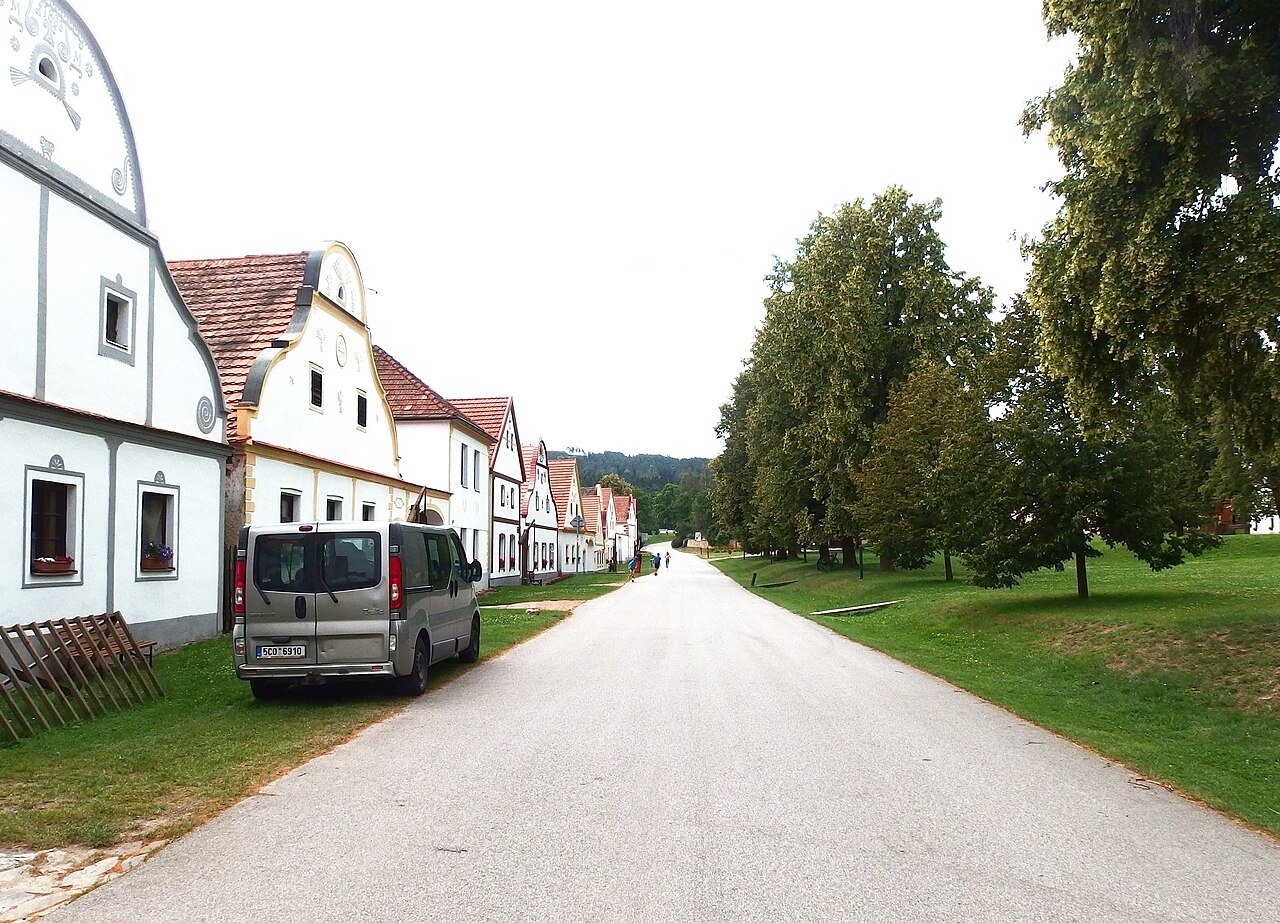
Holasovice, inscribed in 1998, preserves a South Bohemian village that came close to disappearing entirely. Between 1520 and 1525, a bubonic plague outbreak killed all but two of its inhabitants; a commemorative column still marks the plague grave at the northern edge of the green. The settlement was rebuilt and expanded through the 18th and 19th centuries, and its 23 brick farmsteads — enclosing 120 individual buildings — survive as an exceptionally intact example of South Bohemian Folk Baroque. Each farmstead arranges its barns, granaries, and dwelling house in a U-shape around a courtyard, with elaborately stuccoed and whitewashed gable ends facing the village pond. The Chapel of St. John of Nepomuk, built in 1755, stands at the centre of the green. Restoration work that began in 1990 after decades of neglect under the communist era returned the plasterwork to its original cream and ochre palette. Holasovice is small — around 147 residents — and almost silent.
Getting there: Take a direct train from Praha hlavni nadrazi to Ceske Budejovice (approximately 2 hours), then a taxi or hired car for the 18 km to the village. Allow: 1–2 hours to walk the single street, the farmstead perimeter, and the chapel. Best for: Anyone who wants to understand rural Central European Baroque on a human scale, away from tourist infrastructure.
Historic Centre of Cesky Krumlov 2 hrs 30 min by bus from Florenc
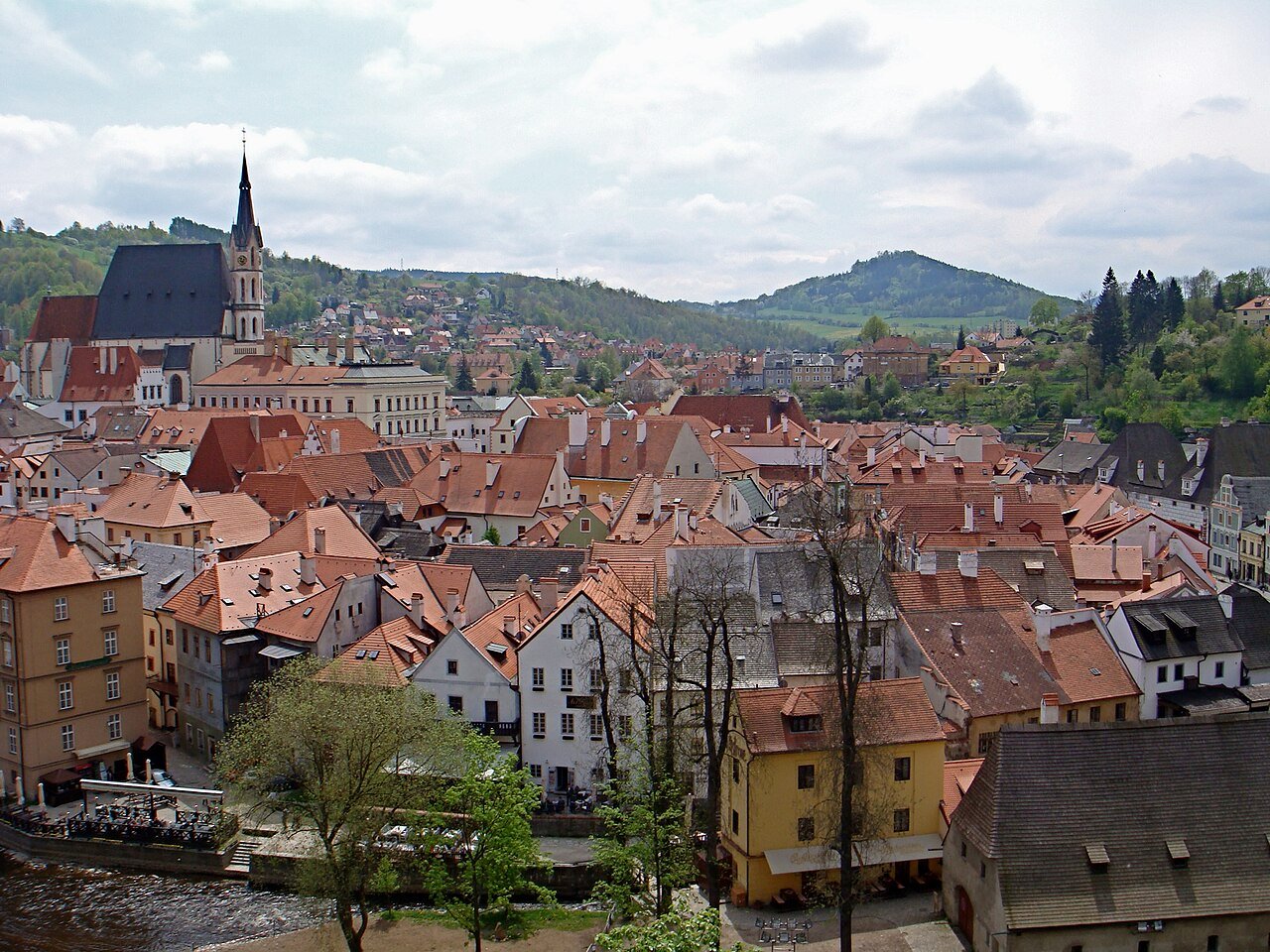
Cesky Krumlov joined the UNESCO list in 1992 as one of the best-preserved medieval and Renaissance townscapes in Central Europe. The castle complex — 7 hectares, 40 buildings, five courtyards — crowns a meander of the Vltava that wraps around the old town on three sides. The Vitkovci family founded the stronghold shortly before 1250; the Rosenberg family, who held it from 1302 to 1602, rebuilt it in Renaissance style during a period when the town reached its greatest prosperity under Oldrich II of Rosenberg in the 15th century. The castle moat, rather than containing water, houses brown bears — a tradition rooted in the Rosenbergs’ claimed kinship with the Italian Orsini family. A Baroque theatre constructed between 1680 and 1682 and renovated in 1765–1766 preserves its original stage machinery, painted backdrops, and costume collection, making it one of the oldest intact theatre interiors in the world. The roofline of the old town, seen from the castle ramparts, has changed little since the 17th century.
Getting there: Coaches depart from Prague’s Florenc bus terminal throughout the day; the journey takes approximately 2 hours 30 minutes. Allow: 3–4 hours for the castle interior and the old town lanes below. Best for: The rare combination of a working Baroque theatre, a castle with a live bear moat, and a river-encircled medieval town centre — all within a single afternoon.
Gardens and Castle at Kromeriz 2 hrs 40 min to Brno + 50 min local train
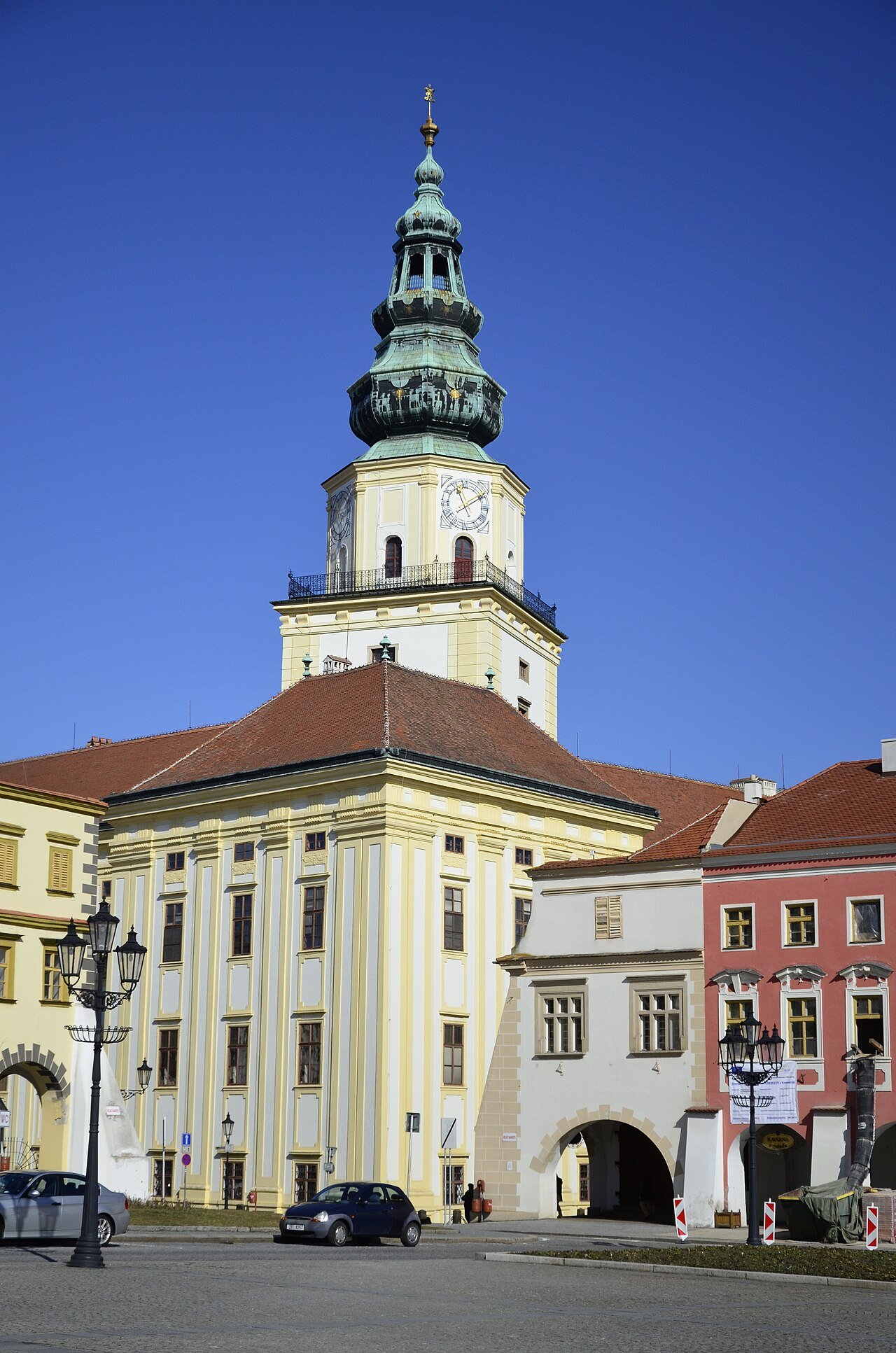
The Gardens and Castle at Kromeriz, inscribed in 1998, represent the principal residence of the bishops and archbishops of Olomouc — and the most complete surviving example of Baroque garden design in Central Europe. The Pleasure Garden was laid out from 1665 by Filiberto Lucchese (1607–1666); after his death, Giovanni Pietro Tencalla (1629–1702) completed both the formal garden and the palace rebuilding. Swedish forces sacked the complex during the Thirty Years’ War in 1643; a major fire destroyed the interior in March 1752, after which Bishop Hamilton commissioned Franz Anton Maulbertsch and Josef Stern for restoration painting. The castle’s picture gallery holds Titian’s final mythological canvas, The Flaying of Marsyas, alongside Flemish and Dutch Old Masters — ranking it the second-finest art collection in the Czech Republic. The formal parterre, axial allees, and clipped hornbeam hedges of the Flower Garden unroll in geometric precision that the 1997 Morava River floods damaged but did not defeat.
Getting there: High-speed trains from Praha hlavni nadrazi reach Brno in under 2 hours 40 minutes; a local train from Brno to Kromeriz takes approximately 50 minutes. Allow: 2–3 hours for the gardens and picture gallery. Best for: A Baroque garden and Old Master painting collection of European quality that remains significantly less visited than comparable sites in Austria or Germany.
Frequently Asked Questions
How many UNESCO World Heritage Sites are near Prague?
There are five UNESCO World Heritage Sites within approximately three hours of Prague by public transport or car. They are: the Historic Centre of Prague itself, Kutna Hora with St. Barbara’s Church and the Sedlec Ossuary, the Holasovice Historic Village, the Historic Centre of Cesky Krumlov, and the Gardens and Castle at Kromeriz.
What is the closest UNESCO World Heritage Site to Prague?
The Historic Centre of Prague is itself a UNESCO World Heritage Site, inscribed in 1992, so the closest site is the city centre. Among day-trip destinations outside Prague, Kutna Hora is the most accessible — a direct train from Praha hlavni nadrazi reaches it in approximately one hour.
Can you visit Kutna Hora and Cesky Krumlov on the same day from Prague?
In practice, combining both in a single day is difficult. Kutna Hora takes at least 3–4 hours to do justice to St. Barbara’s Church and the Sedlec Ossuary, and Cesky Krumlov requires 2.5 hours each way by bus. Visiting each on a separate day produces a far more satisfying experience at both sites.
Is Kromeriz worth the longer journey from Prague?
Kromeriz is the furthest site on this list — roughly 3.5 hours each way — but it rewards the journey with a Baroque garden complex and a picture gallery containing Titian’s The Flaying of Marsyas, one of the most significant Renaissance paintings in Central Europe. Visitor numbers remain modest compared to Cesky Krumlov or Kutna Hora, making it unusually calm for a World Heritage site of this quality.
Sources used in this article
- UNESCO World Heritage Centre — World Heritage List.
- Wikipedia — Kutna Hora.
- Wikipedia — Holasovice.
- Wikipedia — Gardens and Castle at Kromeriz.
- CHO — Interactive heritage map.