The Democratic Republic of Congo has five UNESCO World Heritage Sites, every single one of them natural parks — and all five have appeared on UNESCO’s List of World Heritage in Danger. Four remain endangered today: Virunga National Park, Kahuzi-Biéga National Park, Garamba National Park, and the Okapi Wildlife Reserve. A fifth, Salonga National Park, was on the list from 1999 to 2021 before being removed following improved conservation efforts. No other country on Earth has concentrated so much endangered natural heritage in one place. From Cultural Heritage Online.
The Congo Basin: a natural heritage of global importance
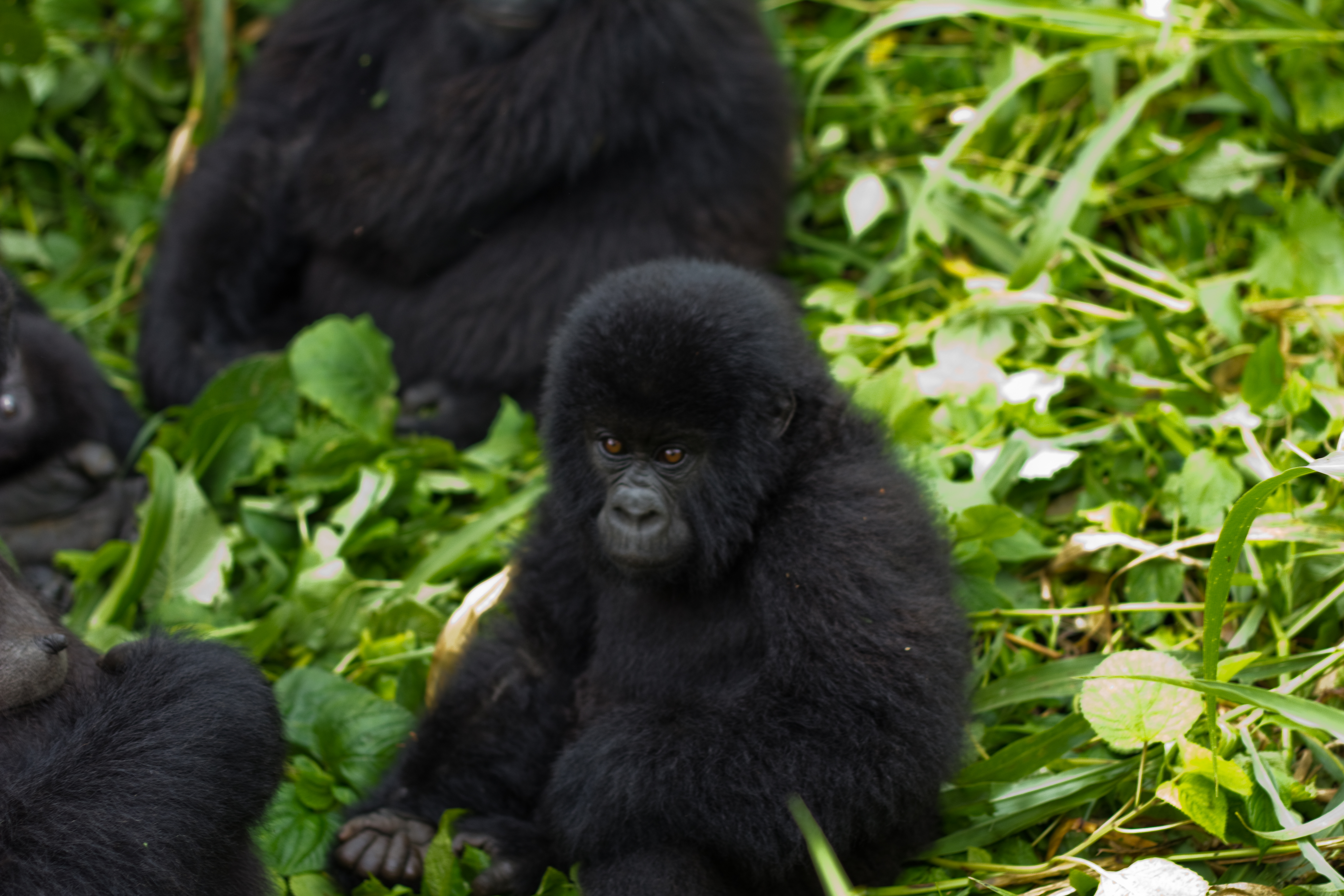
The Democratic Republic of Congo sits at the heart of the Congo Basin, home to the world’s second-largest tropical rainforest and one of the planet’s most biodiverse regions. Its five UNESCO-listed parks protect ecosystems that exist nowhere else — from the montane forests of the eastern Albertine Rift to the flooded savannas of the northeast and the immense, roadless interior of the Congo River basin. These landscapes shelter species that define Africa’s natural heritage: mountain gorillas, eastern lowland gorillas, bonobos, okapis, forest elephants, and the Congo peafowl.
This is not marginal territory. Virunga alone covers 7,800 km² along the borders of Uganda and Rwanda, and was founded in 1925 as Africa’s first national park. Salonga, at approximately 36,000 km², is Africa’s largest tropical rainforest reserve. Collectively, the five parks protect an area larger than many European countries — and they are all under severe pressure.
Five parks, all in danger: a troubling record
UNESCO’s List of World Heritage in Danger was established under Article 11.4 of the 1972 World Heritage Convention as a tool for mobilising international assistance, not as a penalty. Inscription triggers emergency funding and concentrated diplomatic attention. For DR Congo, that mechanism has been working almost continuously since the mid-1990s:
- Virunga National Park — inscribed 1979, added to danger list 1994
- Kahuzi-Biéga National Park — inscribed 1980, added to danger list 1997
- Garamba National Park — inscribed 1980, added to danger list 1996
- Salonga National Park — inscribed 1984, added to danger list 1999, removed 2021
- Okapi Wildlife Reserve — inscribed 1996, added to danger list 1997
Salonga’s removal from the danger list in 2021 stands as a genuine conservation achievement — the result of sustained co-management between Congolese authorities and WWF, with active collaboration from indigenous Iyaelima communities. It is a rare piece of good news in an otherwise stark picture.
Armed conflict and poaching: the twin threats
The underlying cause of danger across all four remaining sites is the same: the eastern and northeastern DRC has experienced near-continuous armed conflict since the mid-1990s, and conservation infrastructure collapses where armed groups operate. In Virunga, more than 175 park rangers have been killed since the conflict intensified — one of the highest death tolls for conservation workers anywhere in the world. In 2026, jihadist groups occupied sections of the northern park, with attacks in June killing 29 people. In the Okapi Wildlife Reserve, the Allied Democratic Forces have occupied portions of the Ituri Forest, contributing to violence that has claimed thousands of civilian lives across the broader region.
Poaching follows directly from the security vacuum. Garamba’s elephant population fell from roughly 20,000 in the 1970s to fewer than 2,000 by 2017. The northern white rhinoceros, once Garamba’s flagship species, is now functionally extinct in the wild — the last wild population disappeared in the park as armed groups and ivory poachers overwhelmed conservation capacity. Kahuzi-Biéga has seen illegal coltan mining eat into gorilla habitat, while ranger effectiveness is undermined by inadequate pay and support.
Conservation in conflict zones
Working in these parks requires methods that go far beyond standard wildlife management. African Parks took over the management partnership at Garamba in 2005, bringing private conservation expertise alongside Congolese government authority. In 2023, the organisation relocated 16 white rhinos from South Africa to the park — a long-term bet that security can be stabilised enough to rebuild a population. In Virunga, the Virunga Foundation has maintained ranger patrols and community programmes despite repeated attacks, and the park’s mountain gorilla population — once numbering only a few hundred individuals — has shown signs of recovery under sustained protection effort.
Oil exploration adds a distinct layer of pressure. The Congolese government auctioned exploration blocks overlapping with the Congo Basin in 2022, including areas near Virunga, despite international protests and prior climate commitments. UNESCO and conservation groups have repeatedly called for a halt, arguing that oil infrastructure in these ecosystems would cause irreversible damage. The tension between national resource sovereignty and international heritage obligations remains unresolved.
How to find these parks on the map
All five of DR Congo’s UNESCO parks are geographically distinct, spread across an enormous country. Virunga occupies the far east, running along the borders with Rwanda and Uganda in North Kivu province. Kahuzi-Biéga lies southwest of Virunga, near Bukavu and Lake Kivu. Garamba is in the far northeast, near the South Sudan border. Okapi Wildlife Reserve sits in the Ituri Forest of the northeast. Salonga, meanwhile, is deep in the interior — accessible only by river, straddling four provinces of the central basin. Together they map the full geographic range of the DRC, from the volcanic east to the forested heart of the continent.
These sites sit alongside thousands of others on CHO’s interactive heritage map, with GPS coordinates and sourced editorial history. See our complete guide to UNESCO Sites in Danger and our explainer on UNESCO criteria.
Frequently Asked Questions
How many UNESCO World Heritage Sites does DR Congo have in danger?
The Democratic Republic of Congo has four UNESCO World Heritage Sites currently on the List of World Heritage in Danger: Virunga National Park, Kahuzi-Biéga National Park, Garamba National Park, and the Okapi Wildlife Reserve. A fifth site, Salonga National Park, was on the danger list from 1999 until 2021, when it was removed following improved conservation outcomes.
Why is Virunga National Park on the UNESCO danger list?
Virunga has been on the danger list since 1994 due to the prolonged armed conflict in eastern Democratic Republic of Congo. Rebel groups and militia operate within and around the park, making conservation work extremely dangerous — more than 175 rangers have been killed over the years. Threats also include poaching, illegal charcoal production, human encroachment, and proposed oil exploration in the surrounding region.
What happened to the northern white rhinoceros in Garamba National Park?
Garamba was once the last stronghold of the northern white rhinoceros in the wild. Decades of poaching and armed conflict — particularly incursions by the Lord’s Resistance Army — devastated the population, and the subspecies is now functionally extinct in the wild. In a long-term restoration effort, African Parks relocated 16 white rhinos from South Africa to Garamba in 2023.
Which of DR Congo’s parks has had a conservation success story?
Salonga National Park, Africa’s largest tropical rainforest reserve, was removed from the UNESCO danger list in 2021 after sustained co-management between Congolese conservation authorities and WWF, with strong involvement from indigenous Iyaelima communities. The park protects one of the highest-density bonobo populations on Earth, as well as forest elephants and the Congo peafowl.
Sources used in this article
- UNESCO — UNESCO World Heritage — Democratic Republic of Congo.
- UNESCO — List of World Heritage in Danger.
- CHO magazine — What is a World Heritage Site?
- CHO — Interactive map of heritage sites.