Syria has six UNESCO World Heritage Sites on UNESCO’s List of World Heritage in Danger — every single property the country holds under the 1972 World Heritage Convention. All six were placed on the danger list in 2013, within two years of the outbreak of the Syrian civil war, making Syria the country with the most endangered UNESCO sites in the world. From Cultural Heritage Online.
Syria’s place in world heritage
Syria was among the earliest nations to benefit from UNESCO’s World Heritage programme. The Ancient City of Damascus received inscription in 1979, the year the list itself was barely a decade old, followed by Bosra and Palmyra in 1980, Aleppo in 1986, the two Crusader castles in 2006, and finally the Ancient Villages of Northern Syria in 2011. Together, these six properties span more than five millennia of human settlement, from Bronze Age urban planning to medieval Islamic architecture to Roman-era desert cities.
Syria sits within UNESCO’s Arab States region, which currently holds 22 of the 53 total sites on the global danger list — the highest concentration of any region. The pattern reflects a decade of armed conflict across the Middle East and North Africa, where wars in Syria, Iraq, Yemen, Libya, and the Palestinian territories have put irreplaceable places at risk simultaneously.
Six sites, all in danger: the full list
Every UNESCO-listed property in Syria appears on the danger list. The six sites, with their original inscription year and the year they were formally designated as endangered, are:
- Ancient City of Damascus — inscribed 1979, danger list 2013. One of the world’s oldest continuously inhabited cities, its historic core faced mortar shelling from fighting in adjacent districts.
- Ancient City of Bosra — inscribed 1980, danger list 2013. Home to a remarkably preserved Roman theatre converted into a medieval citadel; the surrounding city suffered from the broader conflict.
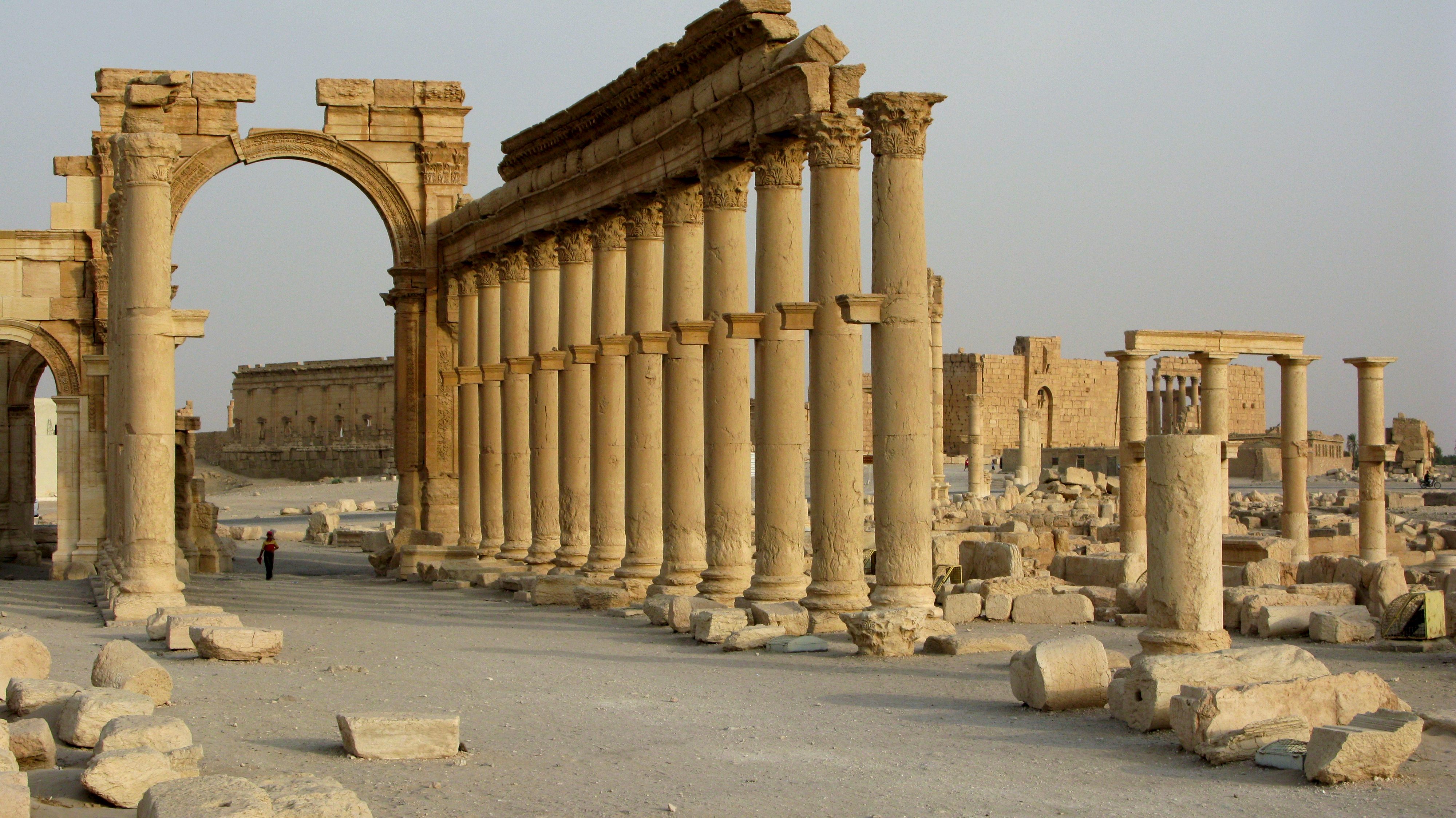
- Site of Palmyra — inscribed 1980, danger list 2013. The desert caravan city was captured twice by the Islamic State, which destroyed the Temple of Baalshamin, the Temple of Bel’s cella, the Arch of Triumph, and executed the site’s longtime antiquities director.
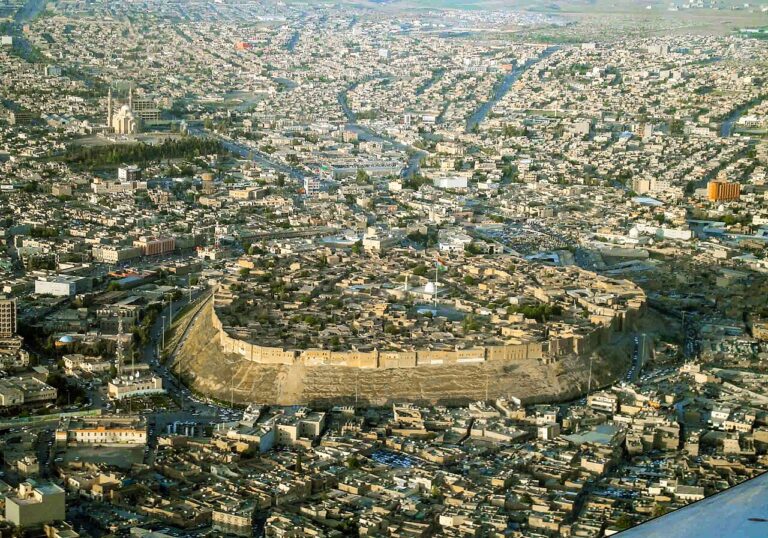
- Ancient City of Aleppo — inscribed 1986, danger list 2013. Heavy urban combat and aerial bombardment caused severe damage to the historic souks, the Umayyad Mosque’s minaret, and entire residential quarters of the old city.
- Crac des Chevaliers and Qal’at Salah El-Din — inscribed 2006, danger list 2013. The two Crusader-era castles were occupied by armed factions and sustained damage; both were subsequently recaptured by government forces.
- Ancient Villages of Northern Syria — inscribed 2011, danger list 2013. The “Dead Cities” of the limestone massif — some 700 Byzantine-era settlements — were held by various armed groups and subjected to looting and demolition.
How armed conflict threatens ancient places
The Syrian civil war produced a convergence of threats rarely seen at a single UNESCO site, let alone across six simultaneously. Direct military strikes caused structural collapse; looting stripped portable artefacts for sale on the international black market; the displacement of local communities ended the informal stewardship that had protected sites for generations. In Palmyra, the Islamic State used deliberate destruction as propaganda, filming demolitions and broadcasting them globally.
UNESCO’s danger list designation does not reflect failure — it is a formal mechanism, established under Article 11.4 of the 1972 World Heritage Convention, designed to mobilise emergency funding and diplomatic pressure. The listing triggers access to the World Heritage Fund for urgent conservation work and keeps international attention focused on sites that might otherwise be forgotten amid the wider humanitarian catastrophe.
The international response
After Palmyra’s partial recapture in 2017, UNESCO coordinated with the Syrian government and international partners on damage assessments and stabilisation work. The Lion of Al-lat statue, smashed by the Islamic State in 2015, was restored and put on display by late 2017. Polish, Italian, and German conservation teams contributed expertise. Similar assessment missions were conducted in Aleppo following the end of major urban fighting, with reconstruction of the Great Mosque’s minaret among the priorities identified.
The international community has also worked to disrupt the illicit antiquities trade fuelled by the conflict. UN Security Council Resolution 2347, adopted in 2017, was the first resolution devoted exclusively to cultural heritage protection in armed conflict — a direct response to the systematic destruction documented in Syria and Iraq. Whether long-term restoration becomes possible depends heavily on the political settlement that eventually emerges from more than a decade of war.
How to find Syria’s sites on the map
All six endangered Syrian properties are geocoded and available with sourced editorial content for visitors planning future travel or researchers tracking the state of preservation. Damascus, Aleppo, Bosra, and Palmyra each anchor distinct geographic and historical zones across the country, while the Northern Syria villages and the two castles extend the coverage into the limestone hills of the northwest and the Orontes valley.
These sites sit alongside thousands of others on CHO’s interactive heritage map, with GPS coordinates and sourced editorial history. See our complete guide to UNESCO Sites in Danger and our explainer on UNESCO criteria.
Frequently Asked Questions
How many UNESCO World Heritage Sites does Syria have in danger?
Syria has six UNESCO World Heritage Sites, and all six are currently on the List of World Heritage in Danger. This makes Syria the country with the highest number of endangered UNESCO properties in the world. All six were added to the danger list in 2013.
Why are Syria’s UNESCO sites on the danger list?
All six Syrian sites were inscribed on the danger list because of the Syrian civil war, which began in 2011. Armed conflict caused direct structural damage, looting of portable antiquities, and the displacement of local communities who had informally maintained these places for generations. The Islamic State’s deliberate destruction of monuments at Palmyra was particularly severe.
Can tourists visit Syria’s UNESCO World Heritage Sites today?
Travel to Syria remains subject to advisories from most governments, and access to heritage sites varies significantly by location and current security conditions. Some sites, including parts of Palmyra, have been assessed by international conservation teams since the cessation of major fighting, but large-scale tourism has not resumed. Travellers should consult their government’s official travel advisory before making any plans.
What has been done to restore the damaged monuments?
International teams have carried out damage assessments and initial stabilisation work at several sites, most notably Palmyra, where the restored Lion of Al-lat was put on display in 2017. UN Security Council Resolution 2347, adopted in 2017, created a global framework for protecting cultural heritage in conflict zones. Full restoration of Syria’s endangered properties remains a long-term goal contingent on broader political stabilisation.
Sources used in this article
- UNESCO — UNESCO World Heritage — Syria.
- UNESCO — List of World Heritage in Danger.
- CHO magazine — What is a World Heritage Site?
- CHO — Interactive map of heritage sites.