
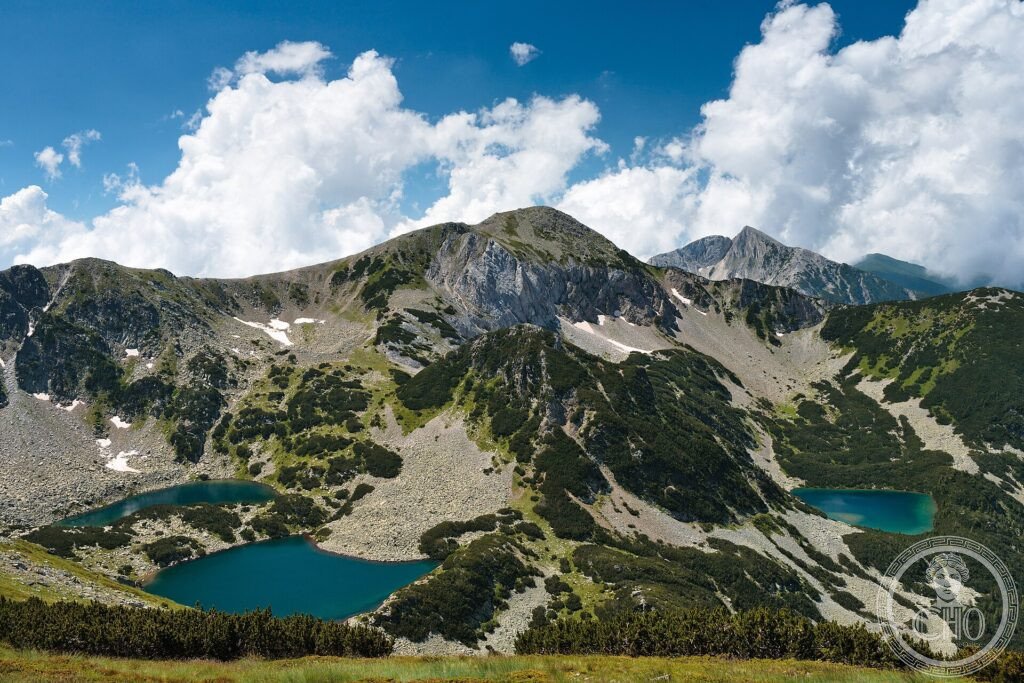
In south-western Bulgaria rises the Pirin, a range of marble and granite crowned with sharp peaks, around which dozens of glacial lakes shine. Forests of ancient pines, among them thousand-year-old trees, clothe the slopes of this alpine park, one of the finest in the Balkans.
At a glance
Pirin National Park, in the mountains of south-western Bulgaria, protects most of the high Pirin range, a dramatic alpine landscape of sharp limestone and granite peaks rising above forests and pastures. Among the summits lie dozens of clear glacial lakes, and the slopes carry ancient forests of Macedonian and Bosnian pine, including the venerable Baikushev pine, thought to be over a thousand years old. Recognised for its glaciated mountain scenery and rich life, it was inscribed by UNESCO in 1983.
Key facts
- UNESCO: World Heritage since 1983 (Pirin National Park)
- Glacial lakes: dozens of clear lakes among the peaks
- Sharp summits: limestone and granite peaks above 2,900 m
- Ancient pines: including the millennia-old Baikushev pine
- Rich wildlife: bears, chamois and many endemic plants
- Bansko: the mountain resort town at the park’s edge
History
The Pirin mountains were carved into their present form by ice-age glaciers, which left the cirques, ridges and chains of high lakes that give the range its alpine character. Their forests, including stands of rare Balkan pines, have grown here for thousands of years, sheltering a wealth of plants and animals, many found only in these mountains.
Long grazed and used by highland communities, the core of the range was protected as a national park and inscribed by UNESCO in 1983, later extended. The park is now a destination for hiking in summer and, around the town of Bansko, for skiing in winter, while its high wilderness of peaks and lakes remains its heart.
What you see
Trails climb from the forests into the high country, past glacial lakes such as the Banderishki and Vasilashki groups, beneath peaks like Vihren, the range’s highest. The ancient Baikushev pine stands near Bansko, and the contrast of bare grey summits, blue lakes and green pine forest is everywhere.
The serenity of the mountain lakes beneath the marble peaks is the beauty of the Pirin.
Practical information
- Park: hiking trails and mountain huts; skiing at Bansko in winter
- Best time: summer for the high lakes and peaks
- Time needed: a day to multi-day treks
- Setting: in the mountains of south-western Bulgaria
Getting there
Pirin National Park is in south-western Bulgaria, around the town of Bansko, about 150 km south of Sofia by road. GPS: 41.75° N, 23.45° E.
Nearby
- Bansko — the historic town and ski resort
- Melnik — a small town of sandstone pyramids and wine
- Rila — the neighbouring range with its famous monastery
Sources
- UNESCO World Heritage Centre — “Pirin National Park” (ref. 225)
- Pirin National Park Directorate (Bulgaria) — official body
- Encyclopaedia Britannica — Pirin Mountains
Find it on the map
See this place and what’s around it →📷 Become a Cultural Heritage Online photographer
Share your photos of places: they stay published under your name as the author. The more they're seen, the more you get noticed — and soon a contest will reward the most appreciated photos.
Log in or sign up free to add a photo