
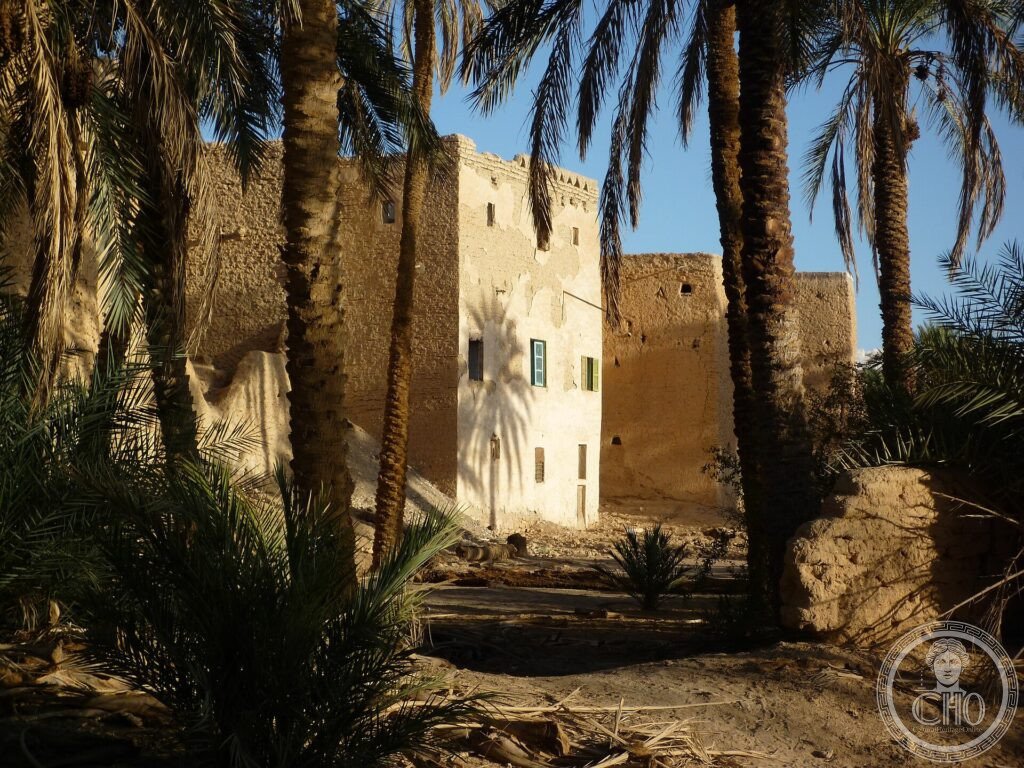
Ghadames (sito culturale): la città-oasi dalle strade coperte
Chiamata la “perla del deserto”, Ghadames è un’antica città-oasi ai margini del Sahara, dove da secoli i Berberi hanno costruito case di fango a più piani, addossate l’una all’altra, percorse da strade coperte fresche e ombrose. Una geniale architettura del deserto, divisa fra il mondo degli uomini in basso e quello delle donne sui tetti.
At a glance
Ghadames, an ancient oasis town on the edge of the Sahara in western Libya, is one of the oldest pre-Saharan cities and a marvel of desert architecture. Long a caravan town, its Berber inhabitants built tightly packed, multi-storey houses of mud, palm and lime, linked by covered, shaded streets at ground level that stay cool in the desert heat, with open terraces above forming a separate world used by the women. Called “the pearl of the desert”, its old town was inscribed by UNESCO in 1986.
Key facts
- UNESCO: World Heritage since 1986 (Old Town of Ghadamès)
- “Pearl of the desert”: a famed Saharan oasis town
- Caravan city: an ancient hub of trans-Saharan trade
- Covered streets: shaded ground-level passages keep the town cool
- Vertical world: men’s level below, women’s terraces above
- Mud architecture: houses of mud, palm and lime
History
Ghadames has been an oasis settlement since antiquity, known to the Romans and flourishing for centuries as a key staging post on the caravan routes that carried gold, salt, ivory and people across the Sahara. Its Berber inhabitants developed a remarkable communal architecture suited to the climate: houses built close together for shade, connected by covered alleys, with whitewashed and painted interiors and rooftop terraces.
Life was organised vertically and socially — the shaded streets and lower rooms the domain of men and trade, the sunlit rooftops linked into a network used by women. The old town was largely abandoned for a modern settlement in the late 20th century, but it survives as an exceptional record of Saharan urban life, inscribed by UNESCO in 1986.
What you see
The old town is a labyrinth of covered, whitewashed streets winding between tall mud houses, opening into small squares and the palm gardens of the oasis. Inside, traditional houses are decorated with bright paintings and mirrors; above, the flat rooftops and terraces form their own connected upper town, with views over the palms and desert.
The cool, shaded maze below and the sunlit terraces above, all of mud and palm, make Ghadames unforgettable.
Practical information
- Town: the old town adjoins the modern settlement
- Note: check current travel advice for Libya; sites are on the danger list
- Time needed: half a day or more
- Setting: a Saharan oasis near the Tunisia/Algeria borders
Getting there
Ghadames is in the far west of Libya, near the borders with Tunisia and Algeria, about 600 km south-west of Tripoli. Access depends on the situation in Libya. GPS: 30.13° N, 9.50° E.
Nearby
- The oasis gardens — the palm groves around the old town
- The Sahara — the desert and dunes beyond
- The borderlands — where Libya, Tunisia and Algeria meet
Sources
- UNESCO World Heritage Centre — “Old Town of Ghadamès” (ref. 362)
- Libyan Department of Antiquities — official body
- Encyclopaedia Britannica — Ghadames
Find it on the map
See this place and what’s around it →📷 Diventa un fotografo di Cultural Heritage Online
Condividi le tue foto dei luoghi: restano pubblicate con la tua firma come autore. Più vengono viste, più ti fai conoscere — e presto un concorso premierà le foto più apprezzate.
Accedi o registrati gratis per aggiungere una foto