
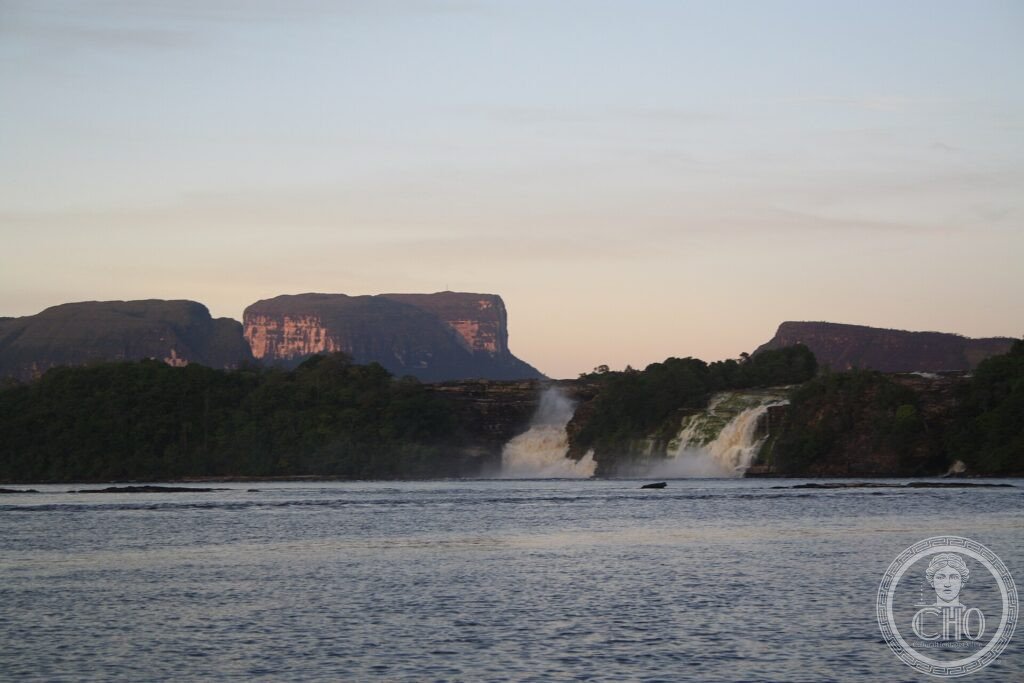
Out of the savannah of southern Venezuela rise the tepuis: gigantic flat-topped mountains, isolated by vertical walls, immensely old and heavy with legend. From one of them falls Salto Ángel, the highest waterfall in the world. Canaima is a lost world of rock, forest and water that inspired writers and fantasies.
At a glance
Canaima National Park, in the Gran Sabana of south-eastern Venezuela, is a vast wilderness of savanna, forest and the extraordinary tepuis — immense flat-topped mountains with sheer vertical walls, among the oldest rock formations on Earth, each an isolated world with its own unique plants. From one of them, Auyán-tepui, plunges Angel Falls (Salto Ángel), the highest waterfall in the world. This “lost world” landscape was inscribed by UNESCO in 1994.
Key facts
- UNESCO: World Heritage since 1994 (Canaima National Park)
- Tepuis: giant flat-topped table mountains with sheer walls
- Angel Falls: the highest waterfall in the world (~979 m)
- Ancient rock: among the oldest formations on the planet
- Endemic life: each tepui summit has its own unique species
- Gran Sabana: the rolling savanna at the mountains’ feet
History
The tepuis are the eroded remnants of a vast ancient sandstone plateau, so old and so isolated by their cliffs that their summits evolved distinctive plants and animals found nowhere else — a real-world inspiration for tales of a “Lost World”. The Pemón people, who live in the region, have long held the mountains sacred.
Angel Falls, cascading from Auyán-tepui, was made known to the wider world in the 20th century after the aviator Jimmie Angel landed on the tepui, and it bears his name. The whole region was protected as Canaima National Park and inscribed by UNESCO in 1994 for its geology, its tepuis and its falls.
What you see
From the village of Canaima, boats and small aircraft reach the lagoon with its red-tinged waterfalls and, in the wet season, the towering thread of Angel Falls dropping from Auyán-tepui. Across the Gran Sabana rise other tepuis — including Roraima, which trekkers can climb — above savanna, forest and rivers.
The sight of the sheer table mountains rising from the plain, crowned with cloud and trailing waterfalls, is the marvel of Canaima.
Practical information
- Park: reached mainly by light aircraft to Canaima village
- Best time: Angel Falls is fullest in the wet season (June–November)
- Time needed: several days
- Note: remote; arrange tours and flights in advance
Getting there
Canaima National Park is in Bolívar state, south-eastern Venezuela, in the Gran Sabana. The village of Canaima, the main base, is reached by light aircraft. GPS: 5.33° N, 61.50° W.
Nearby
- Angel Falls (Salto Ángel) — the world’s highest waterfall
- Mount Roraima — the great tepui climbed by trekkers
- Gran Sabana — the savanna of tepuis and rivers
Sources
- UNESCO World Heritage Centre — “Canaima National Park” (ref. 701)
- INPARQUES (Venezuela) — official body
- Encyclopaedia Britannica — Canaima National Park; Angel Falls
Find it on the map
See this place and what’s around it →📷 Become a Cultural Heritage Online photographer
Share your photos of places: they stay published under your name as the author. The more they're seen, the more you get noticed — and soon a contest will reward the most appreciated photos.
Log in or sign up free to add a photo