
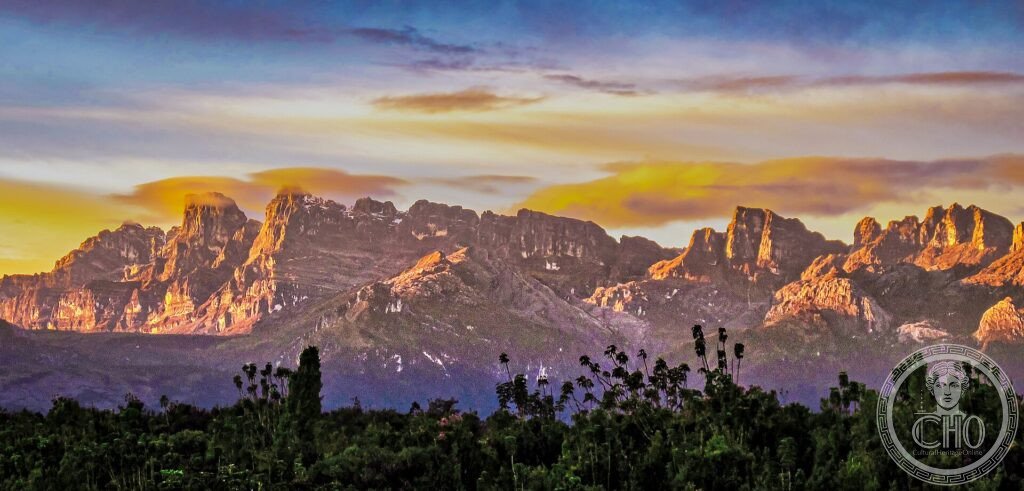
It is the largest protected area in South-East Asia, and perhaps the only park in the world that runs from the perpetual snows of the equator down to the mangroves of the ocean. In Papua, Lorentz gathers into a single territory glaciers, rainforest, swamps and a biodiversity still largely undiscovered.
At a glance
Lorentz National Park, in the Indonesian province of Papua, is the largest protected area in South-East Asia and one of the few places on Earth that runs unbroken from glaciers near the equator down to a tropical sea. Within its vast extent it spans snow-capped peaks — including Puncak Jaya, the highest mountain between the Himalayas and the Andes — alpine grassland, cloud and rainforest, swamp and coastal mangrove, harbouring an extraordinary and still little-known biodiversity. It was inscribed by UNESCO in 1999.
Key facts
- UNESCO: World Heritage since 1999 (Lorentz National Park)
- Largest in SE Asia: the biggest protected area in the region
- Equatorial glaciers: rare permanent ice near the equator
- Puncak Jaya: the highest peak between the Himalayas and Andes
- Full gradient: from snow peaks to tropical sea in one park
- Rich biodiversity: many endemic and little-studied species
History
The park is named after a Dutch explorer who crossed this part of New Guinea in the early 20th century. The land has been home to indigenous Papuan peoples — among them the Dani, Asmat and Amungme — for thousands of years, living across the range of environments from highland valleys to lowland forest.
Recognised for spanning a complete ecological transect from glacier to ocean and for its exceptional, largely unexplored biodiversity and geology, Lorentz was protected and inscribed by UNESCO in 1999. Its remoteness has kept much of it wild, though its glaciers are now shrinking with the changing climate.
What you see
Most of Lorentz is remote wilderness, reached only with difficulty: highland valleys and grasslands beneath jagged, sometimes snow-streaked peaks, dense cloud forest and rainforest, and vast lowland swamps and mangroves toward the Arafura Sea. Indigenous communities live within and around the park.
The vision of glaciated mountains rising above equatorial forest, found almost nowhere else, defines Lorentz.
Practical information
- Park: very remote; access is difficult and limited
- Time needed: a serious expedition for the interior
- Note: permits and local guides are essential; conditions are demanding
- Setting: in the central highlands and lowlands of Papua
Getting there
Lorentz National Park is in the central and southern part of Papua province, Indonesia. Gateways such as Wamena are reached by air; the interior requires expedition logistics. GPS: 4.75° S, 137.83° E.
Nearby
- Baliem Valley — the highland valley of the Dani people
- Puncak Jaya — the glaciated highest peak of Oceania
- Asmat region — the lowland home of the Asmat woodcarvers
Sources
- UNESCO World Heritage Centre — “Lorentz National Park” (ref. 955)
- Indonesian Ministry of Environment and Forestry — official body
- Encyclopaedia Britannica — New Guinea; Puncak Jaya
Find it on the map
See this place and what’s around it →📷 Become a Cultural Heritage Online photographer
Share your photos of places: they stay published under your name as the author. The more they're seen, the more you get noticed — and soon a contest will reward the most appreciated photos.
Log in or sign up free to add a photo