
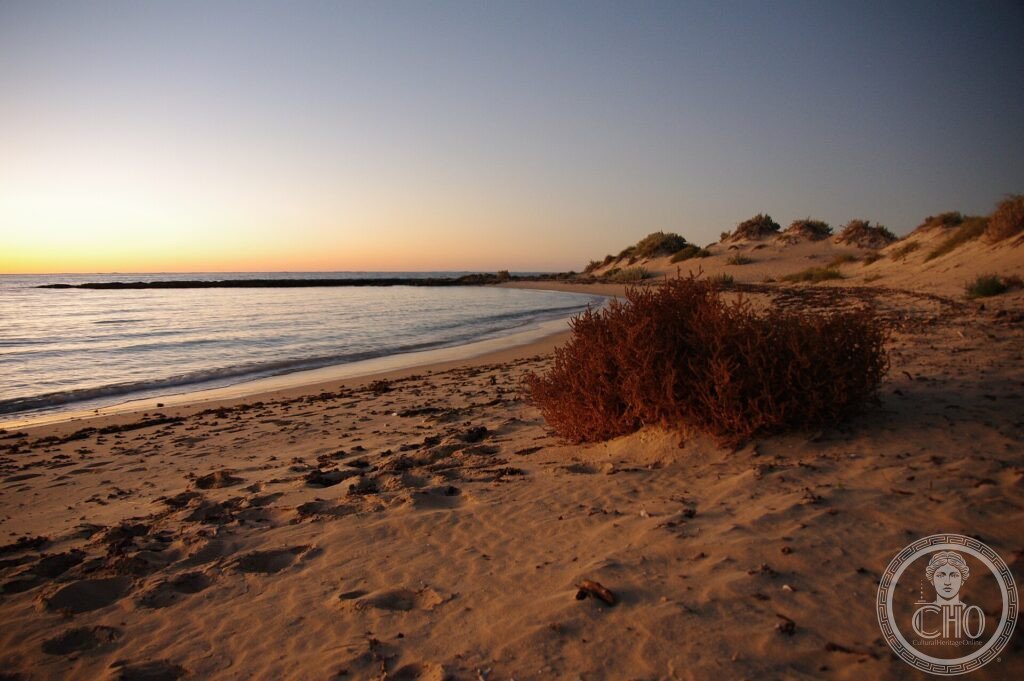
Sulla costa remota dell’Australia occidentale, una delle più lunghe barriere coralline costiere del mondo cresce a pochi passi dalla spiaggia, ai piedi di un altopiano arido e fessurato. A Ningaloo si nuota fianco a fianco con lo squalo balena, il pesce più grande del mondo, in un raro incontro fra deserto e oceano.
At a glance
The Ningaloo Coast, on the remote north-western shore of Western Australia, holds one of the longest fringing coral reefs in the world — a reef that grows close inshore, so that brilliant coral gardens and abundant marine life lie just off the beach. Behind it rises the arid, canyon-cut limestone of the Cape Range. Famous as a gathering place for the whale shark, the largest fish on Earth, this meeting of reef and desert was inscribed by UNESCO in 2011.
Key facts
- UNESCO: World Heritage since 2011 (Ningaloo Coast)
- Fringing reef: one of the longest near-shore reefs in the world
- Whale sharks: a key gathering place for the giant fish
- Reef meets desert: coral close to the arid Cape Range
- Marine life: manta rays, turtles, dugongs and migrating whales
- Cape Range: limestone gorges and underground karst behind the coast
History
Far from cities on the dry Western Australian coast, the Ningaloo reef long remained little disturbed, known to the local Aboriginal peoples and, later, to fishers and a few travellers. Its closeness to shore makes it unusually easy to reach — snorkellers can swim out to the coral directly from the beach.
Each year, drawn by plankton blooms, whale sharks gather off Ningaloo, along with manta rays and migrating humpback whales, making it one of the world’s great places to encounter large marine animals. Recognised for this richness and for the karst landscape of the Cape Range behind it, the Ningaloo Coast was inscribed by UNESCO in 2011.
What you see
Along the coast, calm turquoise lagoons lie between the beach and the reef, easily explored by snorkel; boats run to swim with whale sharks (in season), manta rays and turtles. Behind the shore, the gorges of Cape Range National Park cut into the arid plateau, home to rock-wallabies and emus.
The simple wonder of stepping off an empty beach straight onto a living reef is the gift of Ningaloo.
Practical information
- Coast: snorkelling from shore; boat tours for whale sharks and rays
- Best time: whale sharks roughly March–August
- Time needed: two or more days
- Note: remote; base at Exmouth or Coral Bay and bring supplies
Getting there
The Ningaloo Coast is in the north-west of Western Australia, around Exmouth and Coral Bay, about 1,200 km north of Perth. Exmouth has an airport. GPS: 22.50° S, 113.80° E.
Nearby
- Cape Range National Park — the gorges behind the reef
- Exmouth — the main town and dive base
- Coral Bay — a small resort on the reef
Sources
- UNESCO World Heritage Centre — “Ningaloo Coast” (ref. 1369)
- Western Australia Parks and Wildlife Service — official body
- Encyclopaedia Britannica — Western Australia
Find it on the map
See this place and what’s around it →📷 Become a Cultural Heritage Online photographer
Share your photos of places: they stay published under your name as the author. The more they're seen, the more you get noticed — and soon a contest will reward the most appreciated photos.
Log in or sign up free to add a photo