
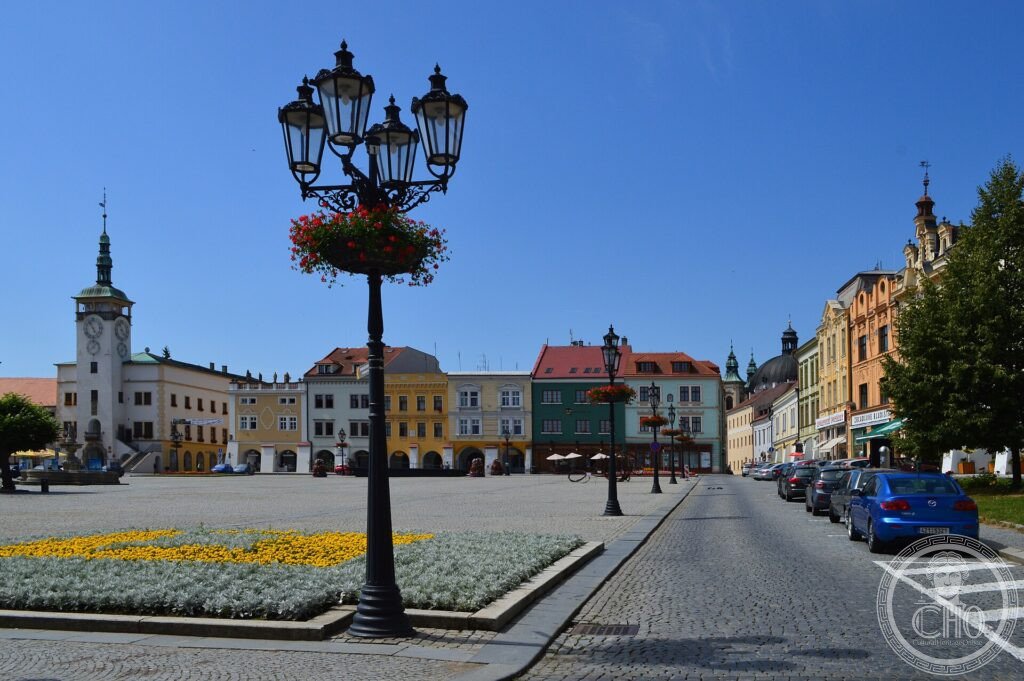
Residence of the prince-bishops of Olomouc, Kroměříž pairs a vast baroque palace with two extraordinary gardens: the geometric Flower Garden and the great castle park. Rebuilt after the Thirty Years’ War, it is one of Central Europe’s best-preserved baroque ensembles.
At a glance
Kroměříž, in Moravia, was the residence of the prince-bishops of Olomouc, and its World Heritage listing centres on their great Baroque palace and two exceptional gardens. After the town was devastated in the Thirty Years’ War, the bishops rebuilt the residence and laid out the formal Flower Garden (Květná zahrada) and the landscaped Castle Garden. The palace, gardens and old town form one of the best-preserved Baroque ensembles in Central Europe, inscribed by UNESCO in 1998.
Key facts
- UNESCO: World Heritage since 1998 (Gardens and Castle at Kroměříž)
- Residence: the palace of the prince-bishops (later archbishops) of Olomouc
- Flower Garden (Květná zahrada): a rare surviving early-Baroque geometric garden
- Castle Garden: a large landscaped park beside the palace
- Picture gallery: the palace holds an important collection of paintings
- Rebuilt: after destruction in the Thirty Years’ War
History
Kroměříž was the country seat of the bishops of Olomouc from the Middle Ages. The town and its castle were ruined during the Thirty Years’ War, and the energetic bishop Karl von Liechtenstein-Kastelkorn rebuilt them in the later 17th century in grand Baroque style, with Italian architects.
He laid out the Květná zahrada, a geometric pleasure garden of parterres, a colonnade and a central rotunda, a type now rare in Europe, and remodelled the grounds beside the palace as a landscaped park. The bishops’ wealth filled the palace with a fine picture gallery and library. In 1848 the palace even briefly hosted the imperial parliament.
What you see
The palace rises over the town with its tall tower, its state rooms and the celebrated picture gallery within. Behind it stretches the Castle Garden, a landscape of lawns, water and trees. A short walk away lies the Flower Garden, with its long arcaded colonnade, clipped parterres and domed rotunda — a geometric vision of the early Baroque.
The old town around the palace keeps its arcaded square and churches.
Practical information
- Palace: state rooms and gallery by guided tour; gardens charge separately
- Flower Garden: a short walk from the palace, open seasonally
- Time needed: half a day for palace and both gardens
- Note: the Castle Garden is free to enter
Getting there
Kroměříž is in the Zlín region of eastern Moravia, Czech Republic. It is reached by road or train, changing at Kroměříž or Hulín on the line from Brno and Olomouc. GPS: 49.30° N, 17.393° E.
Nearby
- Olomouc — with its UNESCO Holy Trinity Column, to the north
- Brno — the Moravian capital with the UNESCO Villa Tugendhat
- Moravian wine country — the vineyards of the south-east
Sources
- UNESCO World Heritage Centre — “Gardens and Castle at Kroměříž” (ref. 860)
- Národní památkový ústav — Czech heritage institute
- Encyclopaedia Britannica — Kroměříž
Find it on the map
See this place and what’s around it →📷 Become a Cultural Heritage Online photographer
Share your photos of places: they stay published under your name as the author. The more they're seen, the more you get noticed — and soon a contest will reward the most appreciated photos.
Log in or sign up free to add a photoIs this page about you?
This page is read by travellers and heritage enthusiasts who find it on Google. Tell us how you are connected to this place and we will take it from there.