
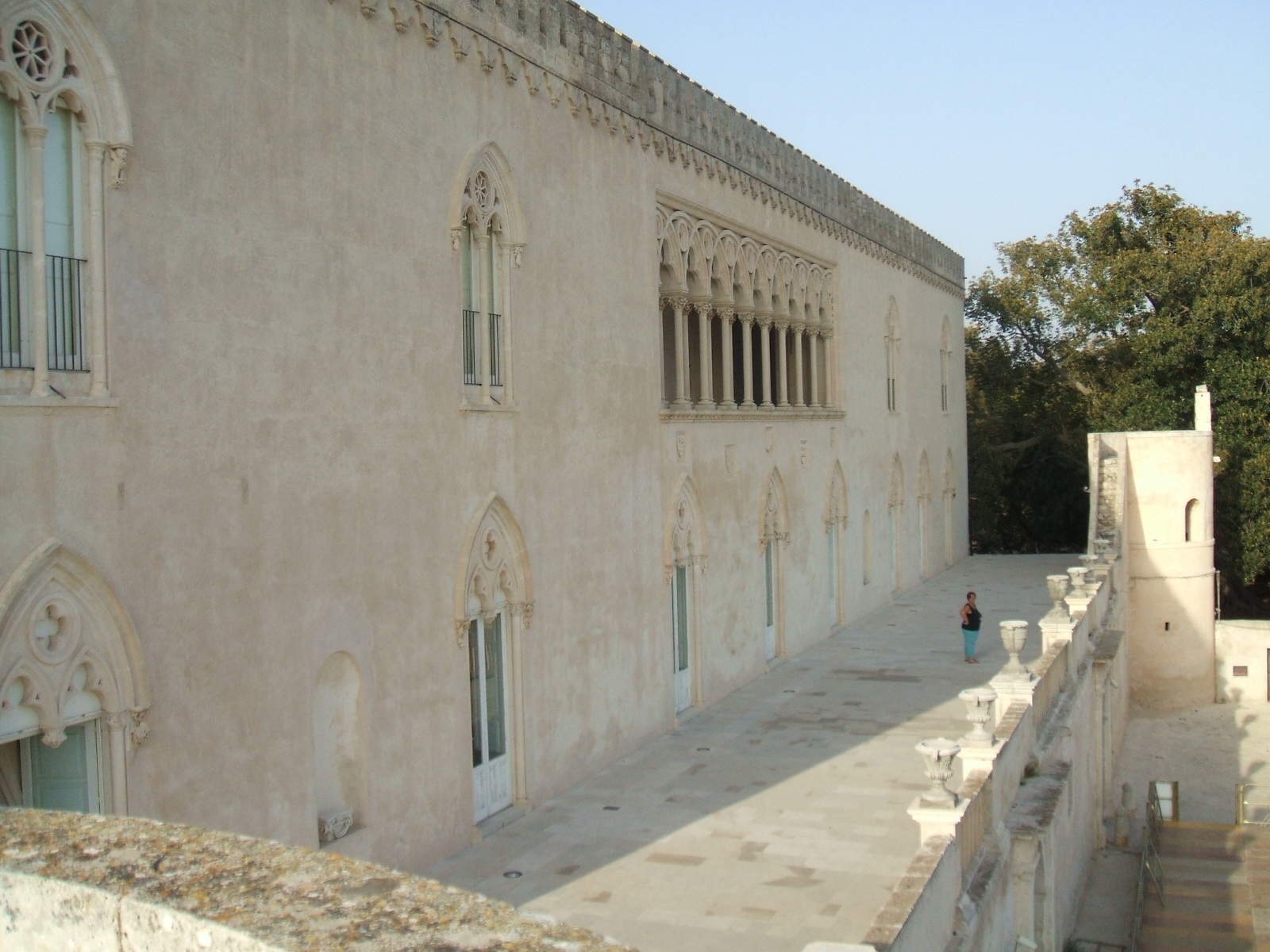
A sumptuous neo-Gothic noble residence built by the Arezzo family, Donnafugata Castle rises 15 kilometers south of Ragusa as a monument to 19th-century Sicilian aristocratic grandeur.
At a glance
Donnafugata Castle spans approximately 2,500 square meters and announces itself with a striking neo-Gothic façade crowned by two side towers. Despite its name, this is not a medieval fortress but a lavish residential palace built during the late 19th century for the wealthy Arezzo De Spuches family, whose estates surrounded the building.
History
The site’s earliest documented history remains uncertain. Legend attributes an initial 14th-century construction to the Chiaramonte, counts of Modica, and suggests 15th-century occupation by Bernardo Cabrera, then Sicily’s chief executioner. These claims lack historical evidence and derive from 15th-century folklore.
The feud known as Bellio-Cabrera di Donnafugata was purchased in 1648 by Vincenzo Arezzo-La Rocca, former baron of Serri, who transformed it into a fortified farm. Over succeeding centuries, the structure evolved from neoclassical design toward its present neo-Gothic character.
Baron Corrado Arezzo, an eclectic scholar and politician, directed most 19th-century construction that established the castle’s current appearance. The property later passed through several generations, eventually reaching Clementina Paternò di Manganelli, widow of Viscount Gaetano Combes de Lestrade. After decades of neglect, the Municipality of Ragusa acquired it in 1982 and undertook extensive restoration.
What you see
The castle’s defining feature is its imposing neo-Gothic façade, flanked by two prominent towers that create a romantic silhouette. The building’s 2,500-square-meter footprint reflects both functional residential requirements and aesthetic ambitions characteristic of 19th-century Sicilian nobility.
Cultural significance
Donnafugata Castle embodies the architectural tastes and aspirations of post-unification Sicily’s landowning elite. Its transformation from fortified farm to palatial residence documents evolving aristocratic preferences and the region’s 19th-century cultural shifts.
Key facts
- Address: Contrada Donnafugata, 97100 Ragusa
- Coordinates: 36.8817274511524, 14.564083814620972
- Phone: 0932 676500
- Website: https://www.comune.ragusa.gov.it/turismo/castello/index.html
Practical information
The castle is located approximately 15 kilometers from Ragusa city center. Opening hours and admission details are available through the Municipality of Ragusa’s tourism office or official website.
Getting there
From Ragusa city center, take the road toward Donnafugata. The castle stands on its own grounds in the Contrada Donnafugata locality. Contact the municipality for directions and current visiting arrangements.
See the place
Sources & resources
The castle as a stage: Compagnia G.o.D.o.T.
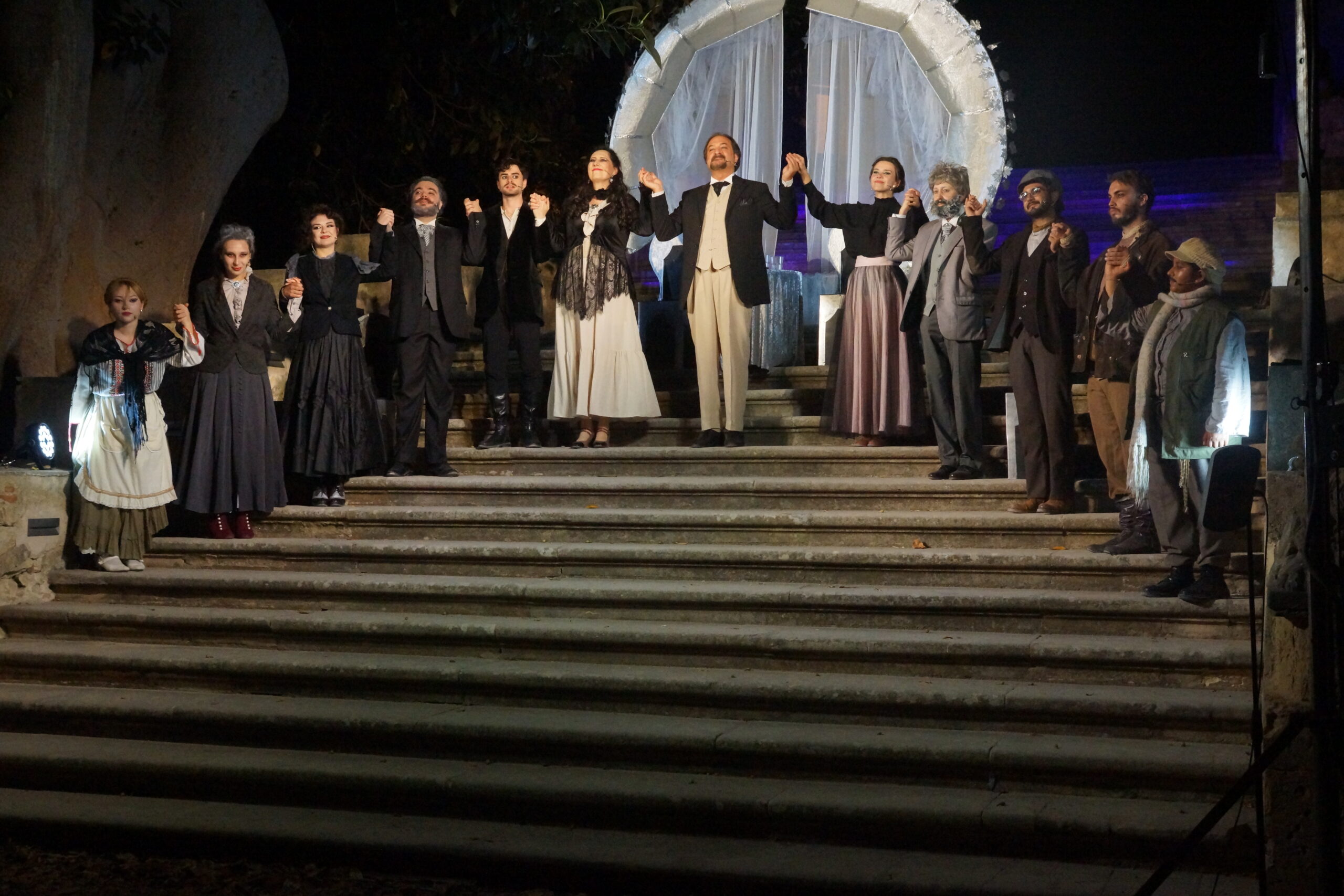
The castle is not only visited, it is performed in. For sixteen years the Ragusan theatre company Compagnia G.o.D.o.T. has staged its summer season here, using the rooms and the grounds as sets, and it was the first to treat the grand staircase as a stage in its own right — a device that has since become one of the things visitors remember about a performance at Donnafugata. The repertoire runs from Aeschylus, Sophocles and Euripides to Shakespeare, Molière, Goldoni and Pirandello. The company is directed by Federica Bisegna and Vittorio Bonaccorso, and spends the rest of the year at its own small theatre in the city, Maison G.o.D.o.T.
Account and photograph supplied by Compagnia G.o.D.o.T. to Cultural Heritage Online, August–September 2026.
Find it on the map
See this place and what’s around it →📷 Become a Cultural Heritage Online photographer
Share your photos of places: they stay published under your name as the author. The more they're seen, the more you get noticed — and soon a contest will reward the most appreciated photos.
Log in or sign up free to add a photoIs this page about you?
This page is read by travellers and heritage enthusiasts who find it on Google. Tell us how you are connected to this place and we will take it from there.