

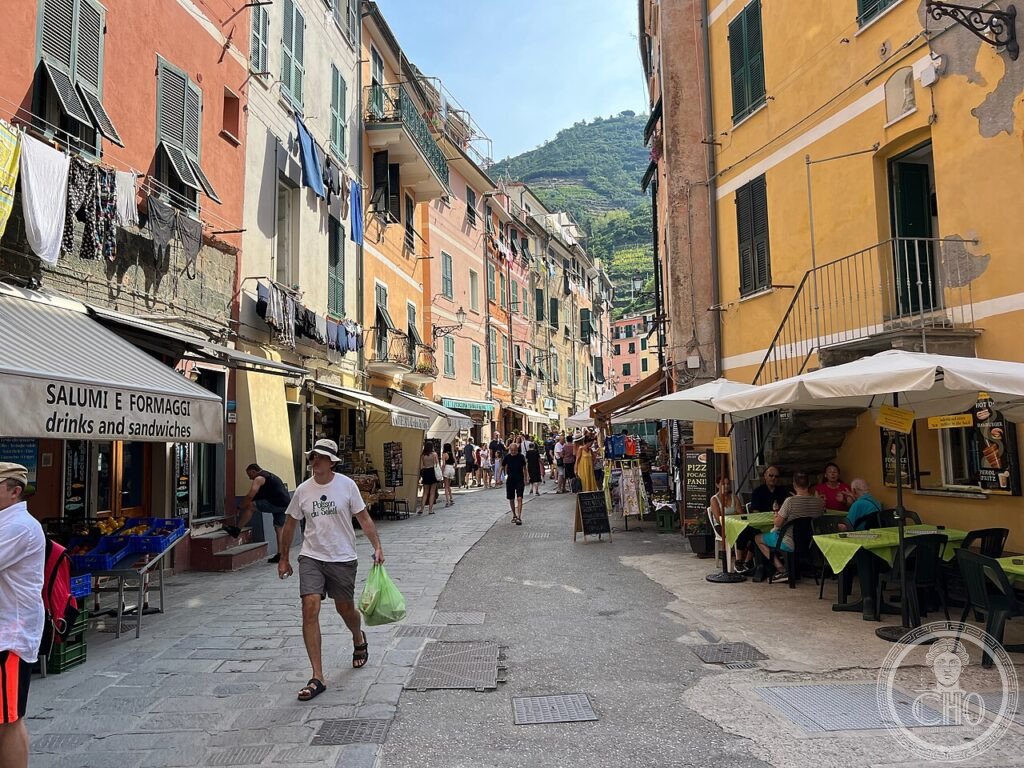
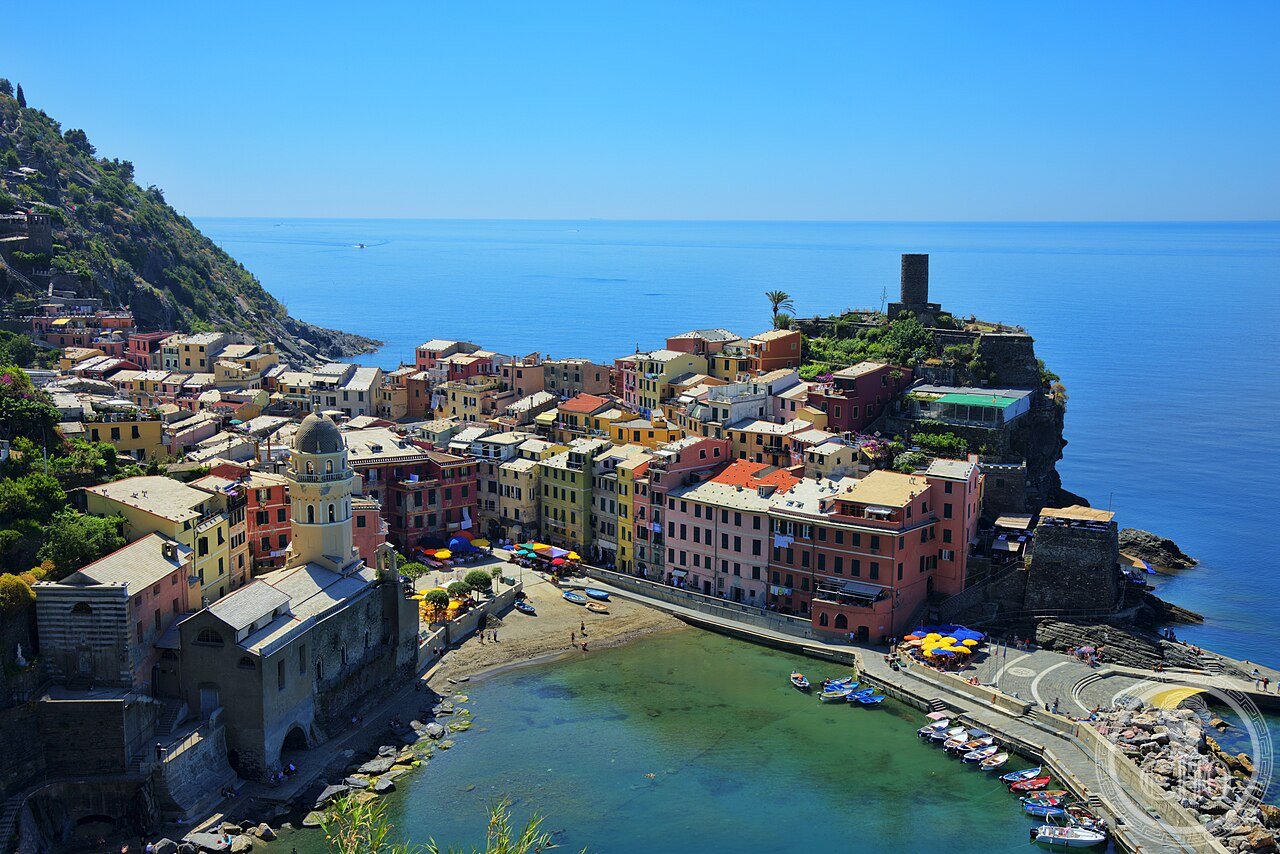
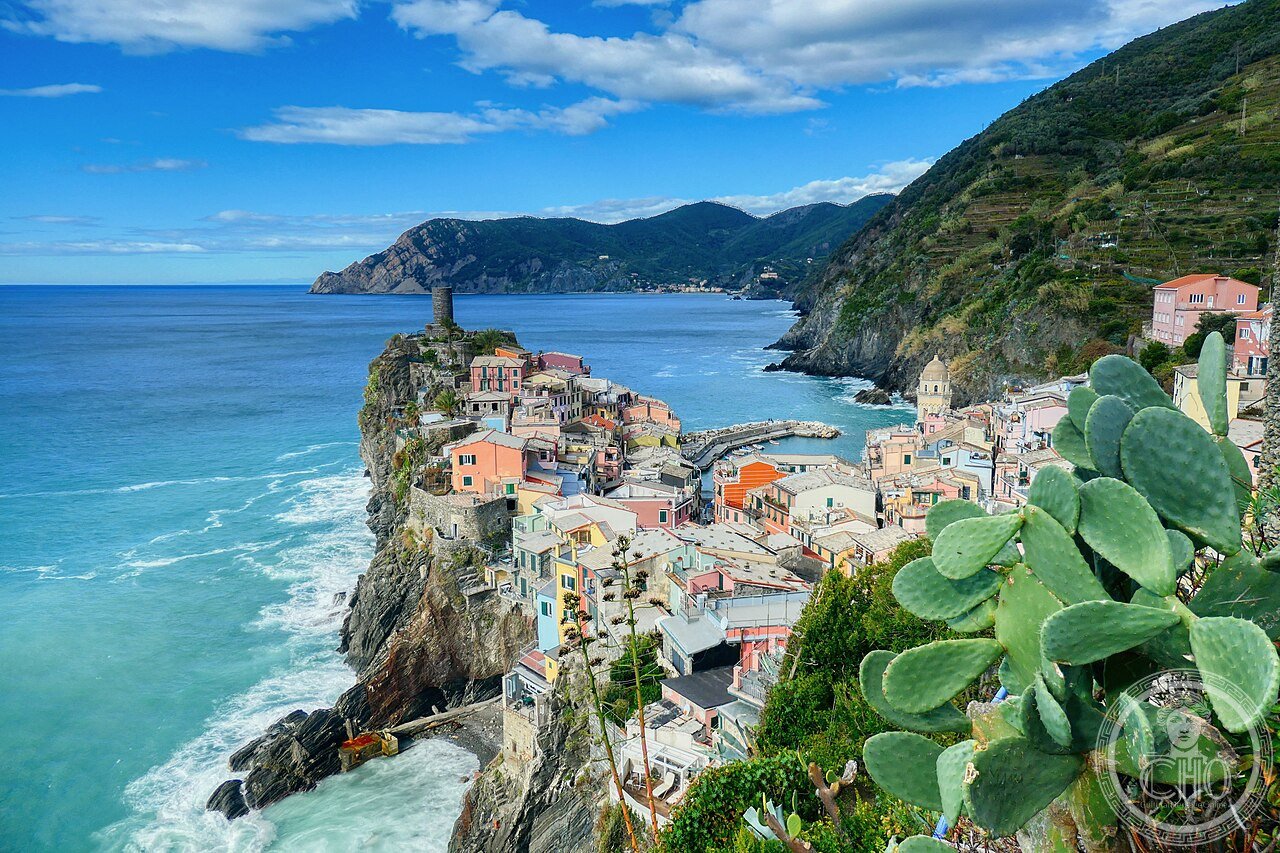
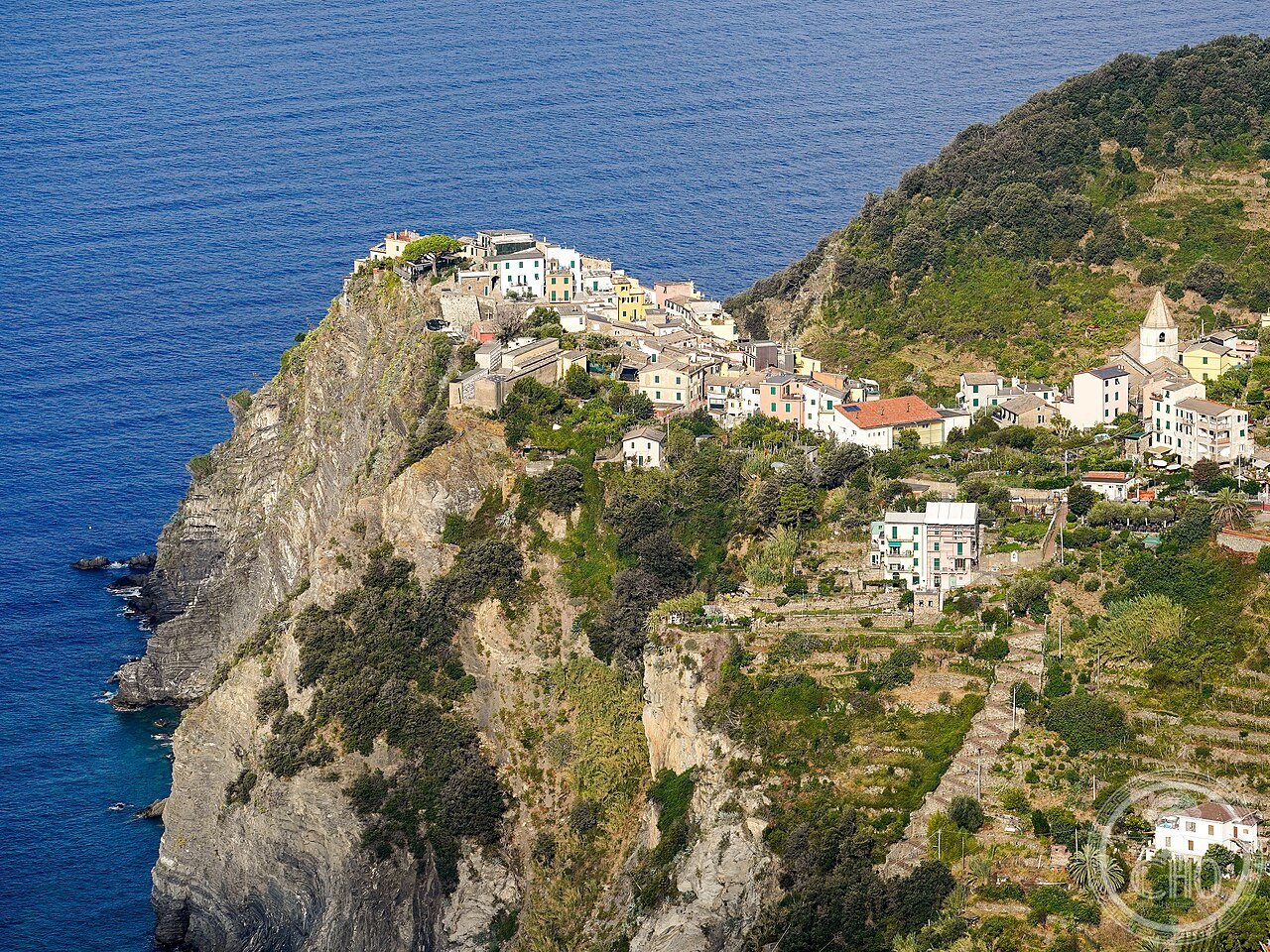
Vernazza is the village most people picture when they hear Cinque Terre: a curved natural harbour, pastel houses stacked against the cliff, and a castle watching over it all. It sits within a landscape held together, quite literally, by hundreds of kilometres of dry-stone terrace walls.
At a glance
Vernazza is one of the five villages that make up the Cinque Terre, strung along the cliffs of the eastern Ligurian coast between Monterosso al Mare and Riomaggiore. It is generally considered the most photographed of the five, thanks to its round natural harbour, protected by a curve of emerged rocks, and its skyline of the Doria castle above the water.
The village keeps a small fleet of traditional wooden gozzo fishing boats, and its waterfront church, Santa Margherita d’Antiochia, presents its Gothic-Ligurian facade directly onto the harbour, its octagonal bell tower visible from the sea.
Key facts
- Region: Liguria, province of La Spezia
- Setting: a natural harbour basin sheltered by a curve of rock, overlooked by the Doria castle (11th century) and the Torre del Belforte (12th century)
- Church: Santa Margherita d’Antiochia, built 1318, Gothic-Ligurian style, with its facade facing the harbour
- Boats: around 30 surviving traditional wooden gozzo fishing boats are registered at Vernazza
- Wider site: part of the UNESCO World Heritage property inscribed in 1997 (reference 826), covering the five Cinque Terre villages, Portovenere, and the islands of Palmaria, Tino and Tinetto
- Coastal path: Vernazza lies on the Sentiero Azzurro, the roughly 9 km coastal trail linking the five villages
History
The origins of the Cinque Terre villages lie between the 10th and 12th centuries. Vernazza’s earliest documentary mention dates to 1080, in a document granting defensive rights to the Doria family, whose castle still stands above the harbour. Corniglia, its neighbour, appears even earlier, referred to as “Cornelia” in a document of 1056 issued by the Bishop of Luni.
From 1261 the Cinque Terre came under the control of the Republic of Genoa, which had acquired the territory from the Da Passano family. The Genoese used the villages as a strategic point in their naval and trading network, exporting local wine and salt-preserved anchovies to northern Europe. The Sciacchetrà dessert wine, made from Bosco grapes dried on reed mats, is first recorded in a Genoese trade document of 1289.
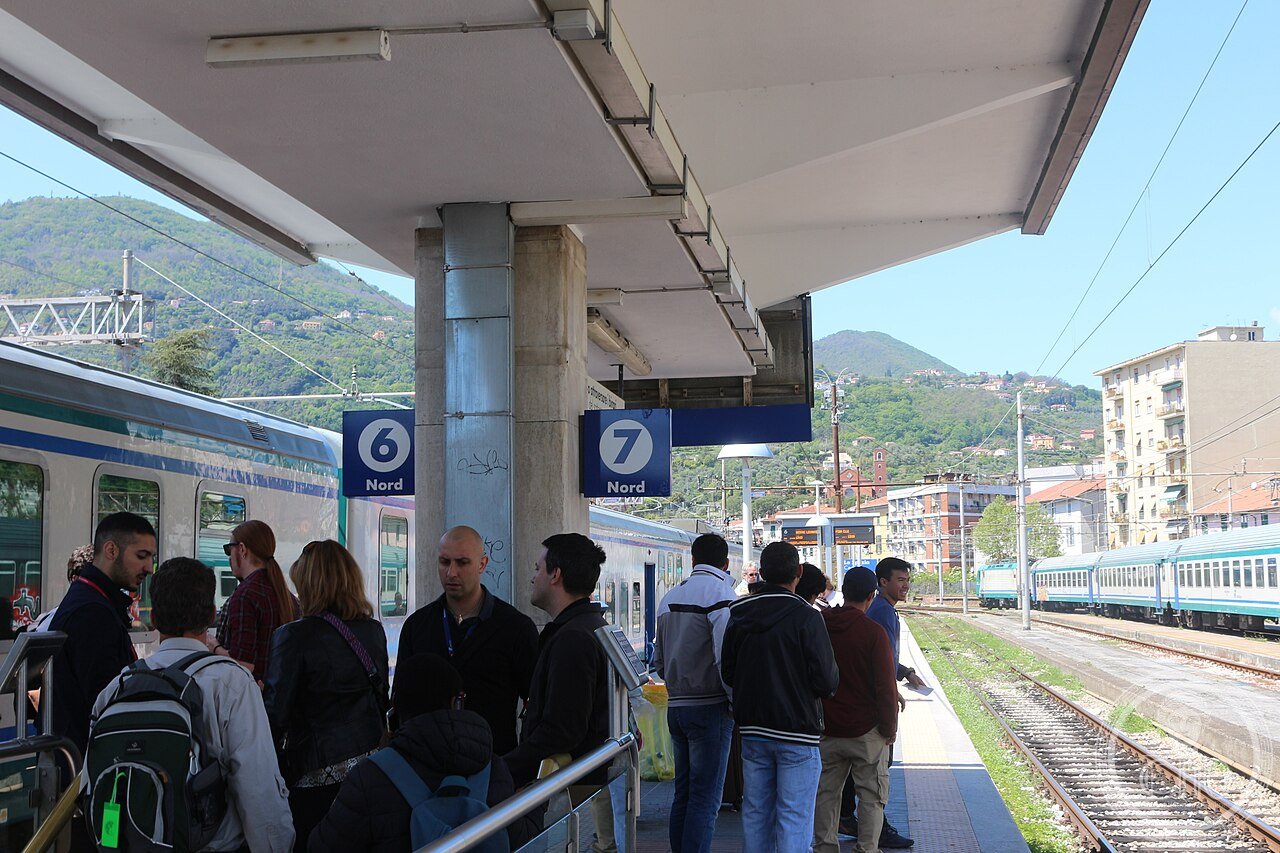
The arrival of the La Spezia–Genoa railway in 1870 gave the villages their first land connection to one another; before that, the sea and mountain paths were the only routes. Each village gained a station cut directly into the cliff. In 1997 the Cinque Terre, together with Portovenere and its islands, was inscribed on the UNESCO World Heritage List under reference 826.
What you see
The heart of Vernazza is its harbour, a natural basin closed off by a spur of rock, where small boats are still drawn up onto the stone slipway below the castle. The Doria castle and the Torre del Belforte stand above the water, and the church of Santa Margherita d’Antiochia, with its Gothic bell tower, faces directly onto the port.
Vernazza is a stop on the Sentiero Azzurro, the coastal path connecting all five Cinque Terre villages. The stretch between Corniglia and Manarola is considered the easiest and most panoramic section and is free to walk, while the section between Monterosso and Vernazza is the most demanding, involving a substantial climb and descent, and requires a paid pass. Access to the paid sections and to unlimited train travel between the villages is covered by the official Cinque Terre Card.
Many visitors reach Vernazza by train, since the five villages sit only a few minutes apart on the La Spezia–Genoa line. A vineyard path above neighbouring Manarola, climbing toward Volastra, is often cited as offering the best overview of the terraced landscape that surrounds all five villages.
Practical information
- Getting around: the train linking La Spezia, Riomaggiore, Manarola, Corniglia, Vernazza and Monterosso is the most practical way to move between villages
- Cinque Terre Card: covers train travel between the villages and access to the Sentiero Azzurro and secondary paths; some coastal path sections carry an additional charge; current terms and prices are available from the official Cinque Terre National Park site
- When to go: spring, particularly April and May, brings flowering terraces and fewer crowds; summer, especially August, brings very heavy visitor numbers
- Access notes: the Via dell’Amore path between Riomaggiore and Manarola was closed after a rockfall in 2012 and has only partially reopened since 2024; check current status before planning a walk
Getting there
Vernazza is reached by train from La Spezia Centrale, on the same line that serves the other four Cinque Terre villages and continues to Genoa. There is no direct road access into the historic village centre; travellers arriving by car generally park outside and continue by train or on foot.
Nearby
- Monterosso al Mare — a few minutes by train, the largest of the five villages and the only one with a sizeable beach
- Corniglia — a few minutes by train, the only Cinque Terre village without direct sea access, reached by a long flight of steps from the station
- Manarola — a short train ride away, known for its steep main street and views back over its own harbour
- Riomaggiore and Portovenere — further along the coast, Portovenere forms part of the same UNESCO-inscribed area and is known for the striped Gothic facade of the Church of San Pietro
Sources
- UNESCO (World Heritage property reference 826)
- Università di Genova (2018 LIDAR survey of dry-stone walls)
- Cinque Terre National Park (cinqueterre.it)
Gallery
Find it on the map
See this place and what’s around it →📷 Become a Cultural Heritage Online photographer
Share your photos of places: they stay published under your name as the author. The more they're seen, the more you get noticed — and soon a contest will reward the most appreciated photos.
Log in or sign up free to add a photo