
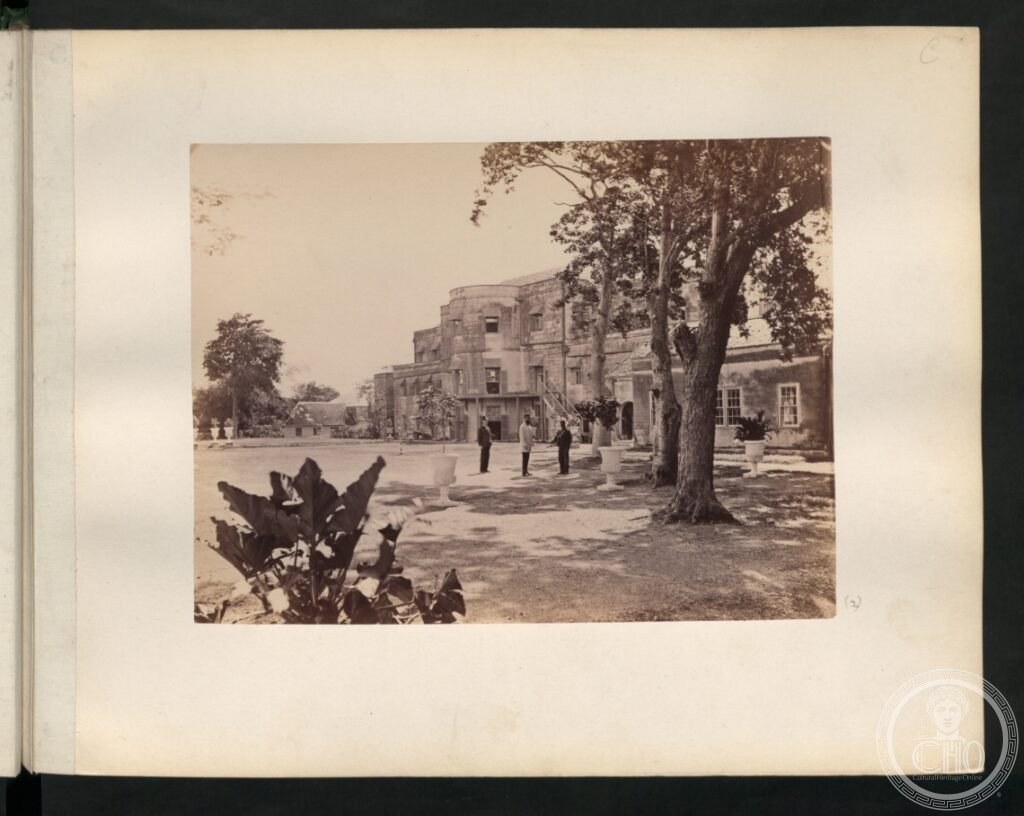
Historic Bridgetown and its Garrison brings together the oldest English colonial city in the Caribbean with the most complete surviving British colonial military garrison in the Americas, telling four centuries of Atlantic history through coral limestone streets, a working racecourse and the Western Hemisphere’s oldest surviving Jewish place of worship.
At a glance
The UNESCO inscription covers four connected precincts in and around Bridgetown: the historic city centre along the Careenage waterfront, including National Heroes Square, the Parliament Buildings and the Cathedral Church of St Michael and All Angels; the Garrison Savannah, the former parade ground and racecourse of the Barbados Garrison; the surrounding Garrison historic buildings, among them barracks, officers’ quarters, a magazine and fortifications; and the Nidhe Israel Synagogue area, with its Sephardic Jewish cemetery and synagogue.
The site is presented as documenting the sugar economy, the slave trade, Scottish Covenanters, Dutch Sephardic Jews and the free coloured Bajan community alongside the garrison’s military history.
Key facts
- Founded: Bridgetown established as the main port of the English settlement of Barbados by 1628.
- Barbados Garrison: established 1649, held to be the most complete surviving British colonial garrison complex in the Americas, with 26 of the original buildings still standing.
- Main Guard: built 1803, distinguished by its clock tower, now home to the Barbados Museum and Historical Society.
- Garrison Savannah: the former parade ground, in use as a horse-racing track since 1845 and the main flat-racing venue in Barbados.
- Nidhe Israel Synagogue: founded 1654 by Sephardic Jews expelled from Dutch Brazil, with the present building dating to 1833; described as the oldest surviving Jewish place of worship in the Americas.
- Parliament Buildings: completed 1872, home to the Barbados Assembly, established in 1639 and cited as the third oldest parliament in the world after Westminster and Bermuda.
History
English settlers arrived in Barbados in 1627, an expedition sponsored by the London merchant William Courteen, and first landed at what became Holetown. Bridgetown was established as the island’s main port by 1628, making it the earliest English colonial city in the Caribbean. The Barbados Garrison followed in 1649, serving for more than three centuries as the headquarters of British forces in the region, its parade ground in use until Barbadian independence in 1966.
The 1640s brought the sugar revolution: planters learned cane cultivation from Dutch Brazil, and with it adopted an economic model built on enslaved African labour. Within twenty years Barbados turned from a tobacco colony of small white freeholds into a sugar island dominated by a small planter class and a vast enslaved workforce; by 1680 the island counted 40,000 enslaved people alongside 20,000 white colonists. Ships loading sugar at the Careenage returned from West Africa carrying enslaved people, part of the wider triangular trade that tied Bridgetown to England and Africa.
What you see
Almost every historic building in Bridgetown is built of coral limestone, quarried locally, cream-white and soft when cut but hardening on exposure to air. It was the standard material for construction across the island through the 17th and 18th centuries. The Careenage, the old inner harbour where sailing ships were rolled onto their sides for hull cleaning, is crossed by the Constitution River, spanned today by the 1872 Chamberlain Bridge, a swing bridge, and by the newer Charles Duncan O’Neal Bridge of 1999.
National Heroes Square, the city’s central public space, holds a statue of Lord Nelson erected in 1813, said to be the first Nelson statue raised anywhere in the British Empire, predating the Trafalgar Square column by three decades. The square was renamed from Trafalgar Square in 1999 amid debate over its colonial associations, though the statue itself remains in place.
Practical information
- Access: the historic centre is compact and best explored on foot, from the Careenage to the Garrison via National Heroes Square, the Cathedral and the Synagogue.
- Transport in town: shared minibus-style ZR vans run local routes, including one serving the airport, as a low-cost alternative to taxis.
- Car hire: available at Grantley Adams International Airport for those wishing to combine the site with trips further afield.
- Current opening arrangements and any charges for individual buildings such as the Museum, the Synagogue or the Parliament Buildings should be checked with the relevant institutions before visiting.
Getting there
Grantley Adams International Airport, the main international gateway for the Eastern Caribbean, is served by direct flights from London, New York, Toronto and Miami among other cities. From the airport, the historic centre of Bridgetown can be reached by taxi, car hire or the local ZR van network; once there, the site’s key precincts are within easy walking distance of one another.
Nearby
- St Nicholas Abbey — about 25 km north; a Jacobean plantation house of 1658, one of only three such mansions surviving in the Western Hemisphere, with a working rum distillery and a collection of 1930s home movies documenting plantation life.
- Animal Flower Cave — about 35 km north, at North Point; the only publicly accessible sea cave in Barbados, formed by wave erosion of coral limestone, with sea anemones in its pools and an opening in the ceiling to the sky.
Sources
- Wikipedia
- UNESCO
Find it on the map
See this place and what’s around it →📷 Become a Cultural Heritage Online photographer
Share your photos of places: they stay published under your name as the author. The more they're seen, the more you get noticed — and soon a contest will reward the most appreciated photos.
Log in or sign up free to add a photo