

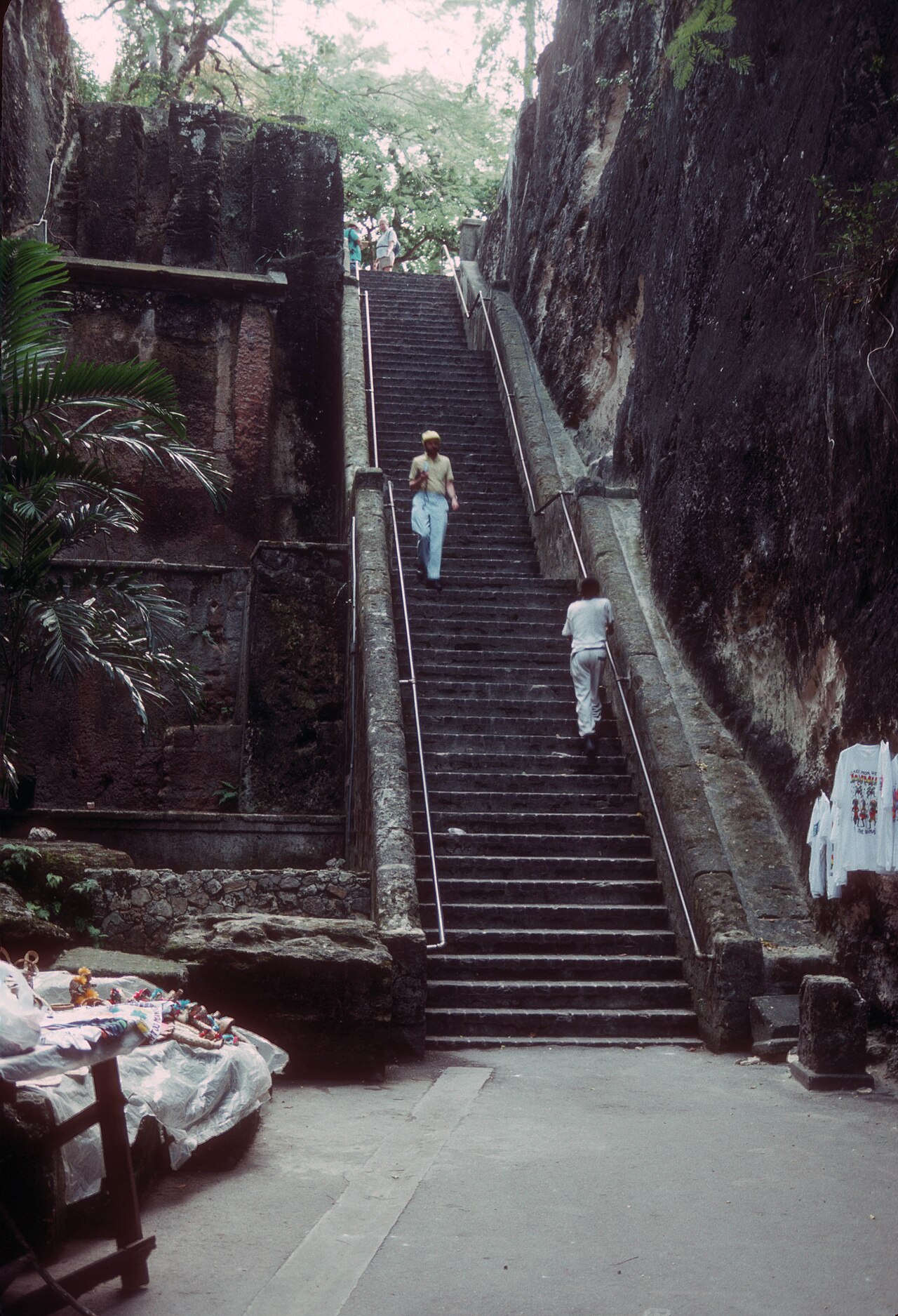
Sixty-six steps hewn through solid limestone by enslaved workers – Nassau’s gorge of memory climbing to the paddle-wheel fort above the town.
At a glance
- Type
- Rock-cut staircase and fort
- Period
- 1793-1794
- Style
- Colonial military engineering
- Location
- Elizabeth Avenue, Nassau, Bahamas
- Coordinates
- 25.0735, -77.3354
- Builders
- Enslaved African labourers under Lord Dunmore
Overview
The Queen’s Staircase ascends a hand-cut limestone gorge from Nassau’s old town to Bennet’s Hill – 66 steps carved through ten metres of rock in 1793-94 by some six hundred enslaved Africans, the Bahamas’ most visited and most sobering monument. Above, Fort Fincastle’s odd paddle-steamer prow of masonry watches harbour and island.
History
Governor Lord Dunmore ordered the cut as a protected route to the new fort during the French wars; the name honours Victoria’s long reign and, in island telling, the 1838 emancipation her era brought – one step per year of her life in the popular count. The fort fired no shot in anger; the staircase’s makers left the deeper mark, commemorated in guides’ narrations and the gorge’s cool shade of ferns.
Architecture and Design
The gorge’s sheer hewn walls preserve pick-lines and recesses; a waterfall threads the entrance. Fincastle’s wedge – shaped, tradition says, like Dunmore’s namesake paddle vessel – mounts replica guns over the water tower’s viewpoint, the island’s highest.
Cultural significance
Staircase and fort carry the Bahamas’ enslaved-labour memory at the heart of its capital – heritage the tourism narrative increasingly centres – and give Nassau its iconic short pilgrimage between straw market and hilltop.
Visiting today
The staircase is free and open daily; local guides at the base recount the history for tips. The fort’s small fee adds the panorama; mornings beat cruise crowds.
Getting there
Elizabeth Avenue climbs from Shirley Street, ten minutes’ walk from Bay Street and the cruise pier.
Sources and resources
Find it on the map
See this place and what’s around it →Record researched and written by Luigi De Marchi for Cultural Heritage Online, 2026.
📷 Become a Cultural Heritage Online photographer
Share your photos of places: they stay published under your name as the author. The more they're seen, the more you get noticed — and soon a contest will reward the most appreciated photos.
Log in or sign up free to add a photo