
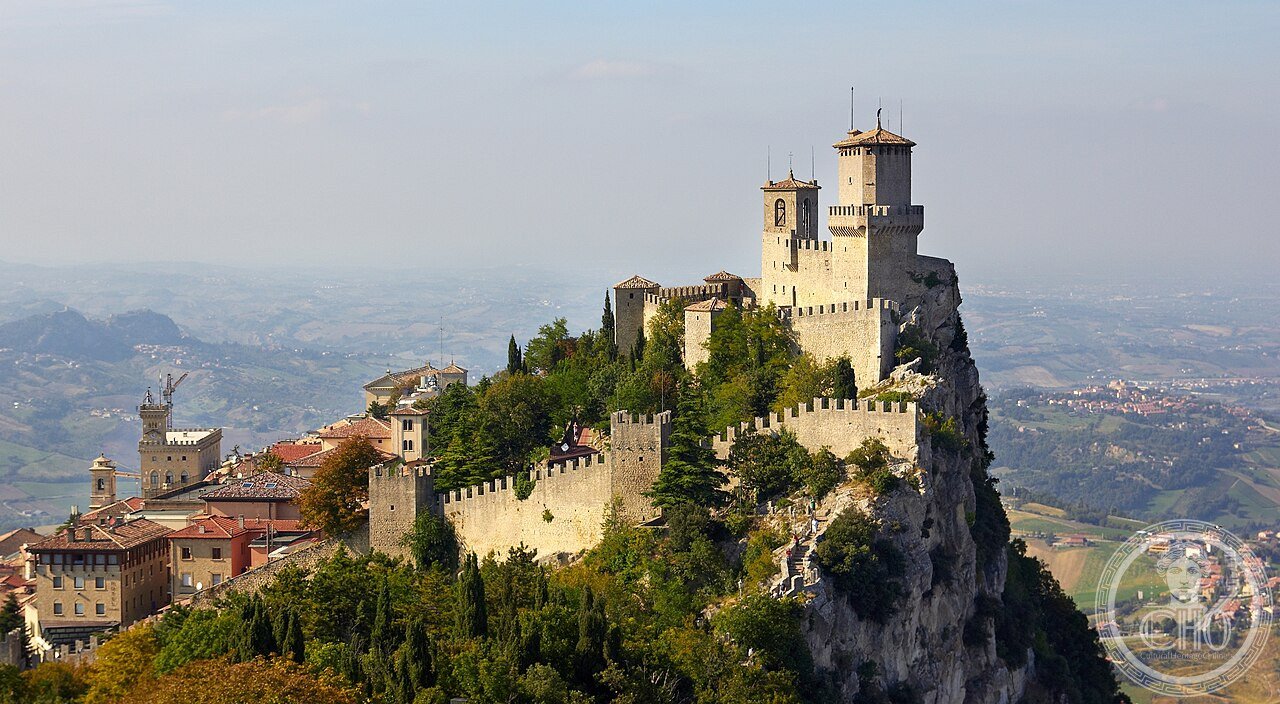
One of Europe’s smallest sovereign states, San Marino occupies a mountainous enclave in the central-northern Italian peninsula between Emilia-Romagna and Marche. Its historic capital and Mount Titano form a UNESCO World Heritage site.
At a glance
San Marino covers 61.19 square kilometers and is home to approximately 33,328 inhabitants, making it one of the least populous member states of both the Council of Europe and the United Nations. The official language is Italian. The country’s name derives from Saint Marinus, and its residents are called San Marino.
History
According to UNESCO recognition, San Marino provides evidence of the continuity of a free republic since the 13th century. The state developed as an independent entity on Mount Titano, maintaining its sovereignty through the centuries despite its location in the heart of the Italian peninsula.
What you see
The historic center of the City of San Marino crowns Mount Titano, its medieval structures commanding panoramic views across the borderlands. The settlement reflects centuries of architectural continuity, with defensive walls and civic buildings marking the republic’s development.
Cultural significance
In 2008, UNESCO designated the historic center of San Marino and Mount Titano as a World Heritage site, recognizing the republic as a unique symbol of political independence and continuity in European history. The site exemplifies the survival of a free state across more than seven centuries of political transformation.
Key facts
- Territory: 61.19 km²
- Population: approximately 33,328
- Capital: City of San Marino
- Address: Via Capannaccia, 13, 47890 San Marino
- Coordinates: 43.9350374, 12.4497505
- Official website: http://www.sanmarino.sm/on-line/home.html
- Phone: 0549 882914
- UNESCO World Heritage site: 2008
Practical information
The official website provides information about visiting and governance. Inquiries can be directed to the listed phone number during business hours.
Getting there
San Marino is located between the Italian provinces of Rimini (Emilia-Romagna) and Pesaro and Urbino (Marche). The country is accessible by road from surrounding Italian regions.
See the place
Sources & resources
Find it on the map
See this place and what’s around it →Historical events at this place (2)
📷 Become a Cultural Heritage Online photographer
Share your photos of places: they stay published under your name as the author. The more they're seen, the more you get noticed — and soon a contest will reward the most appreciated photos.
Log in or sign up free to add a photo