
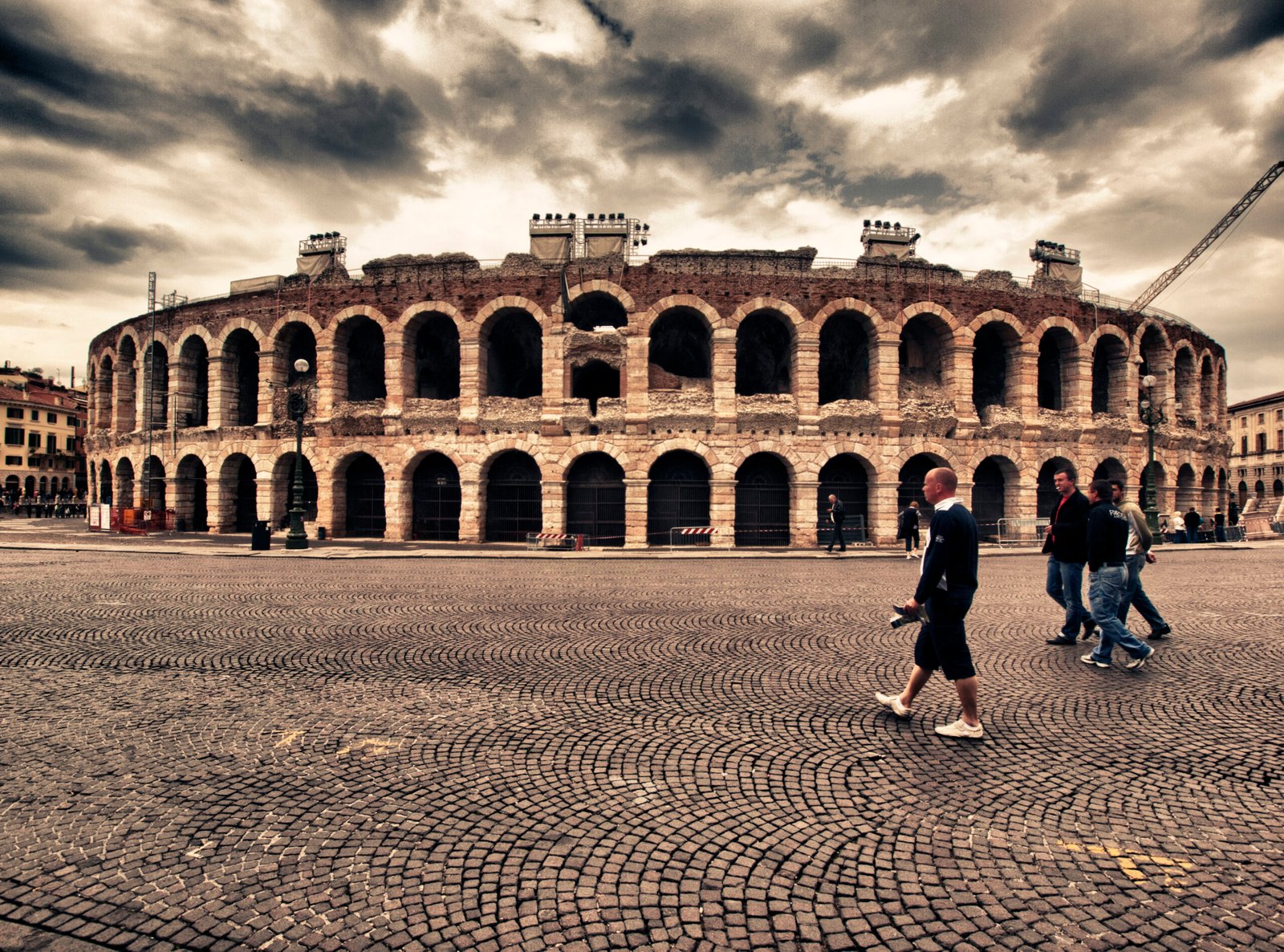
Arena di Verona
The Arena di Verona is a Roman amphitheatre in the heart of Verona, completed around AD 30 and among the best-preserved Roman structures in the world. Capable of seating approximately 22,000 spectators, it is today the setting for one of the world’s largest open-air opera festivals, held every summer since 1913.
History
Built during the reign of Emperor Augustus, the Arena originally hosted gladiatorial combat and public spectacles. Its elliptical form — 138 by 109 metres — and four-storey exterior arcade (of which only a fragment survives, the so-called Ala) place it in the same tradition as the Colosseum in Rome, though the Verona structure predates it. After centuries of use for public executions and medieval tournaments, the Arena was repurposed for opera in 1913, when Aida was staged to mark the centenary of Giuseppe Verdi’s birth.
What to See
The interior preserves 44 tiers of pink and white limestone seating, almost entirely original. The stage area is vast: summer opera productions use full-scale scenography, including live elephants for Aida. The exterior Ala fragment, two arches of the original outer wall, stands as a symbol of Verona in the Piazza Bra. The Roman Theatre Museum across the river Adige offers additional context for Verona’s classical heritage.
Getting There
Verona is on the Milan–Venice high-speed rail line (45 min from Milan, 1h from Venice). The Arena stands on Piazza Bra, 10 minutes’ walk from Verona Porta Nuova station. Opera tickets must be booked well in advance for summer performances; the amphitheatre is also open for daytime visits outside the opera season.
More photographs
Gallery
Find it on the map
See this place and what’s around it →Historical events at this place (1)
📷 Become a Cultural Heritage Online photographer
Share your photos of places: they stay published under your name as the author. The more they're seen, the more you get noticed — and soon a contest will reward the most appreciated photos.
Log in or sign up free to add a photo