
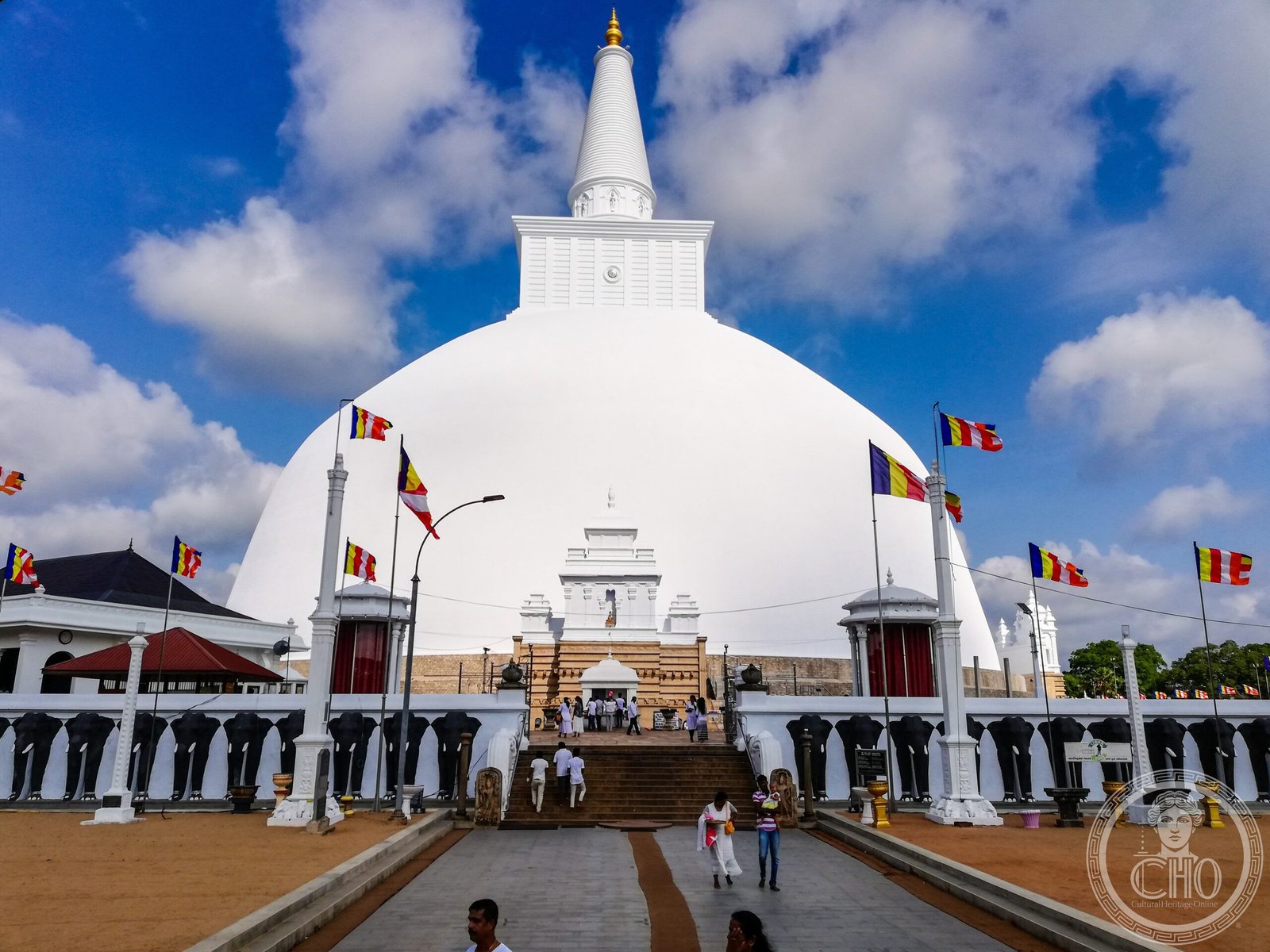
Sri Lanka’s first great capital rose as the cradle of Theravada Buddhism and the Sinhalese hydraulic civilisation. Today its vast temple complexes, spanning over 100 square kilometres, testify to nearly three millennia of spiritual and political power.
At a glance
Anuradhapura lies 205 kilometres north of Colombo on the banks of the Malwathu Oya. Founded in 437 BCE according to the Mahāvaṃsa, it served as Sri Lanka’s capital for 1,500 years before its decline following the Chola invasion of 993 CE. The city was revived under British rule in the 1870s and remains a major pilgrimage destination and archaeological centre.
History
Though traditionally founded in 437 BCE, Anuradhapura was inhabited for centuries before becoming the capital of the Sinhala Kingdom of Rajarata. It emerged as the island’s longest-serving ancient capital and the foremost centre of Theravada Buddhism for many centuries.
The city’s dominance ended abruptly in 993 CE with the Chola invasion from South India, which destroyed much of the capital and caused widespread desertion. Later Sinhalese kings attempted restoration, but Anuradhapura never fully regained its political status.
British colonial initiatives in the 1870s sparked a modern revival, introducing infrastructure and urban planning to support administration and pilgrimage. The contemporary city was largely relocated mid-20th century to preserve the archaeological site, while remaining a vital crossroads and administrative hub of northern Sri Lanka.
What you see
The ruins sprawl across more than 100 square kilometres, encompassing temples, monasteries, and hydraulic systems that showcase Sinhalese engineering prowess. The Anuradhapura Maha Viharaya stands as one of the most sacred Buddhist temples.
The Jaya Sri Maha Bodhi commands particular reverence: a descendant of the original Bodhi tree under which the Buddha attained enlightenment at Bodh Gaya, it remains the oldest continuously documented, planted tree in the world. Its presence has sustained the city’s spiritual significance across the centuries.
Cultural significance
Anuradhapura epitomises the classical Buddhist civilisation of South Asia. It was the birthplace of the hydraulic systems that sustained the Sinhalese kingdom, demonstrating sophisticated water management and urban planning from antiquity.
As a pilgrimage centre, the city retained spiritual importance even during its political decline, drawing devotees throughout the medieval period. Today it remains a destination of profound religious meaning for Buddhists across Asia.
Key facts
- UNESCO World Heritage Site
- Coordinates: 8.335°N, 80.411°E
- Country: Sri Lanka
- Oldest continuously occupied city in Asia with occupation spanning nearly three millennia
- Archaeological ruins cover over 100 square kilometres
- Home to the Jaya Sri Maha Bodhi, the oldest documented planted tree in the world
Practical information & getting there
Anuradhapura lies along a major road junction and railway line in northern Sri Lanka. The city serves as the headquarters of Sri Lanka’s archaeological survey. Tourism and pilgrimage support the contemporary economy. Consult local sources for current opening hours, entry fees, and visiting conditions for individual temple sites and monuments.
Sources & resources
Find it on the map
See this place and what’s around it →📷 Become a Cultural Heritage Online photographer
Share your photos of places: they stay published under your name as the author. The more they're seen, the more you get noticed — and soon a contest will reward the most appreciated photos.
Log in or sign up free to add a photo