
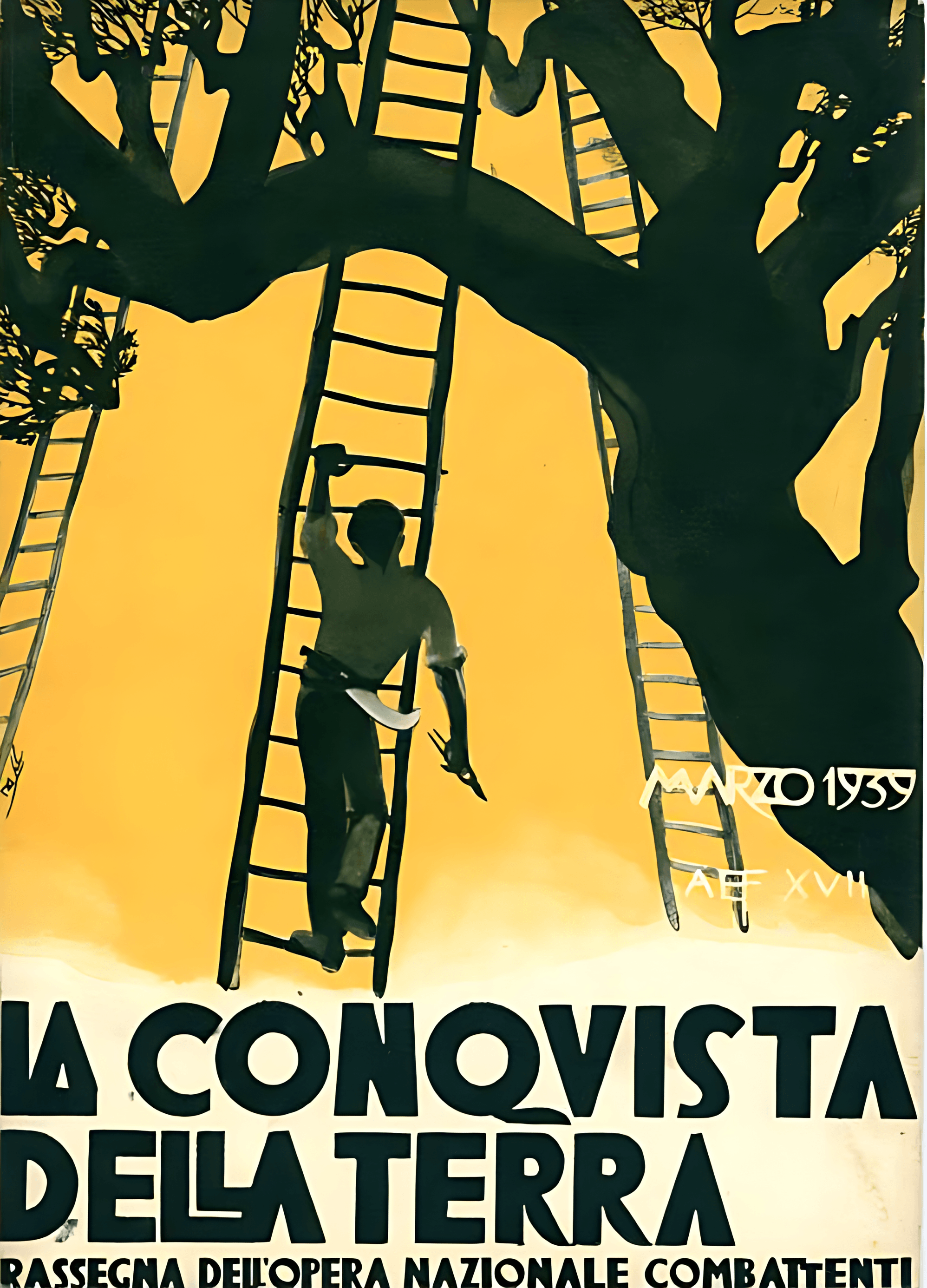
Duilio Cambellotti created this cover illustration for a magazine in 1939. The work represents the practice of an Italian applied artist whose career spanned illustration, painting, sculpture and design across multiple visual disciplines.
Cambellotti’s artistic practice was rooted in the Arts & Crafts and Art Nouveau movements. Throughout his career, he maintained a consistent focus on agrarian subjects and themes drawn from rural life. His work carried both aesthetic and social dimensions, reflecting a broader engagement with design and cultural concerns of his era.
About Duilio Cambellotti
Cambellotti was an Italian applied artist and illustrator recognized for his versatility across visual and design disciplines. His work drew on Arts & Crafts and Art Nouveau traditions while remaining attentive to agrarian imagery and rural subject matter. His influence extended beyond the aesthetic into social and political spheres.
Details
- Creator: Duilio Cambellotti
- Date: 1939
- Object type: Magazine cover illustration
- Artistic traditions: Arts & Crafts, Art Nouveau
Frequently asked questions
Who was Duilio Cambellotti?
Duilio Cambellotti was an Italian applied artist, illustrator, painter, sculptor and designer who worked within Arts & Crafts and Art Nouveau movements. He was known for his versatility across multiple visual disciplines and his consistent focus on agrarian themes.
What subjects did Cambellotti favour?
Cambellotti maintained a fidelity to agrarian themes and rural subjects throughout his career. His work drew on rural imagery and landscape, reflecting both aesthetic and social interests.
What artistic movements influenced Cambellotti’s work?
Cambellotti’s practice was rooted in the Arts & Crafts and Art Nouveau movements, which shaped his approach to applied art, design and illustration.


