
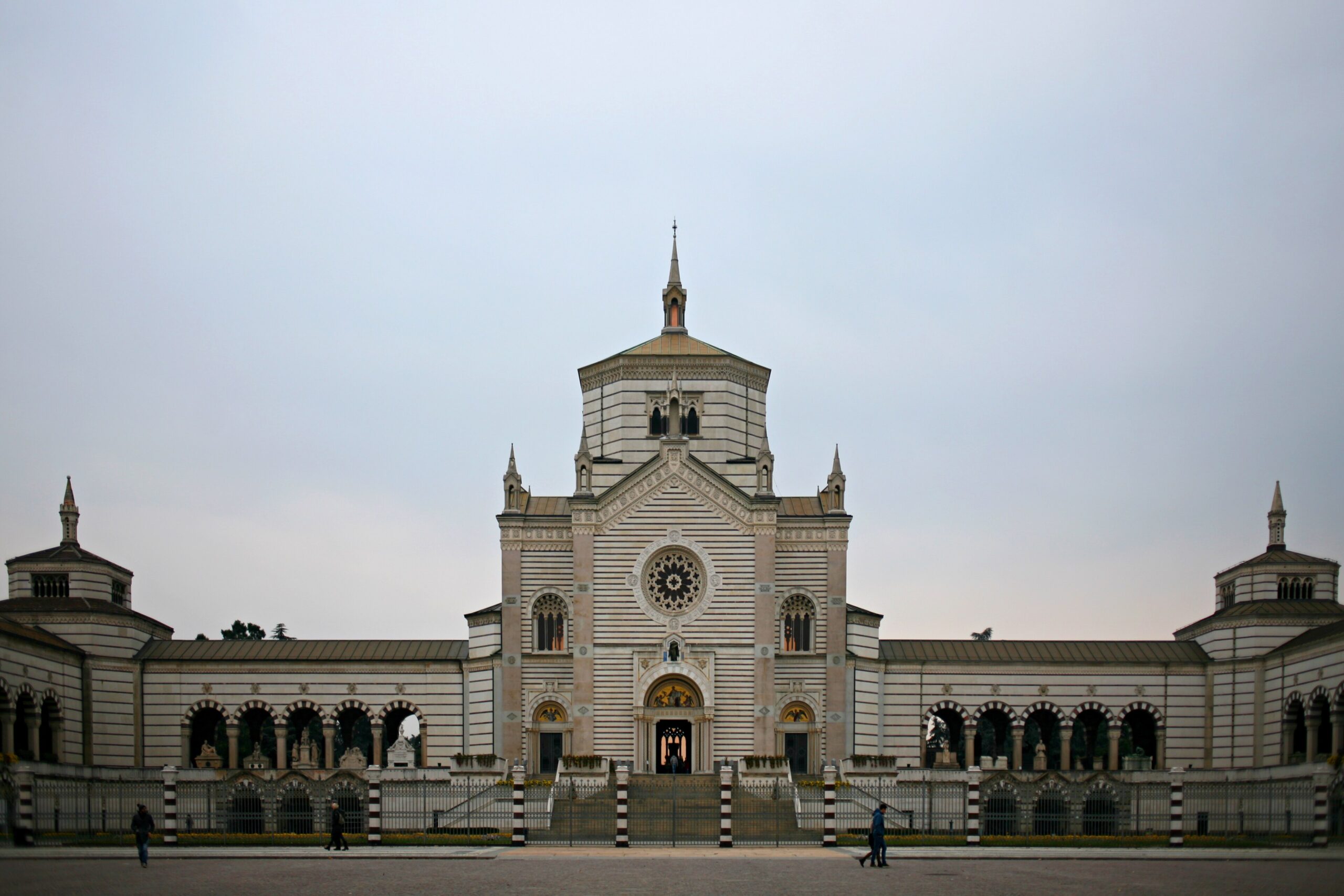
The Mausoleo Palanti is a monumental tomb designed by architect Mario Palanti in 1929 and located in the Cimitero Monumentale di Milano. The structure stands among the cemetery’s extensive collection of artistic tombs and monuments, which span contemporary and classical Italian sculptural traditions as well as architectural references ranging from Greek temples to scaled versions of classical monuments.
Palanti’s mausoleum represents a significant addition to the Cimitero Monumentale, which was officially opened in 1866 and designed by Carlo Maciachini to consolidate Milan’s scattered cemeteries into a unified location. Over its history, the cemetery has accumulated works by renowned Italian artists and architects including Adolfo Wildt, Giò Ponti, Arturo Martini, and Lucio Fontana.
About Mario Palanti
Mario Palanti (1885–1978) was an Italian architect born in Milan who became known for designing significant buildings in the capital cities of Argentina and Uruguay. After studying at the Brera Academy and the Politecnico di Milano, he gained international recognition early in his career, receiving a gold medal at the 1909 International Exhibition in Brussels.
Details
- Designer: Mario Palanti
- Year completed: 1929
- Location: Cimitero Monumentale di Milano, Milan
- Type: Monumental tomb
- Context: Part of Milan’s major artistic cemetery collection
Frequently asked questions
Who designed the Mausoleo Palanti?
The mausoleum was designed by Mario Palanti, a Milan-born architect who studied at the Brera Academy and the Politecnico di Milano and later became renowned for important commissions in Argentina and Uruguay.
When was the mausoleum built?
The Mausoleo Palanti was completed in 1929 and is located within the Cimitero Monumentale di Milano, which had been officially opened in 1866.
What makes the Cimitero Monumentale significant?
The cemetery is noted for its abundance of artistic tombs and monuments designed by renowned Italian sculptors and architects, and contains works spanning classical and contemporary sculptural traditions, from Greek temples to scaled replicas of historical monuments.


