
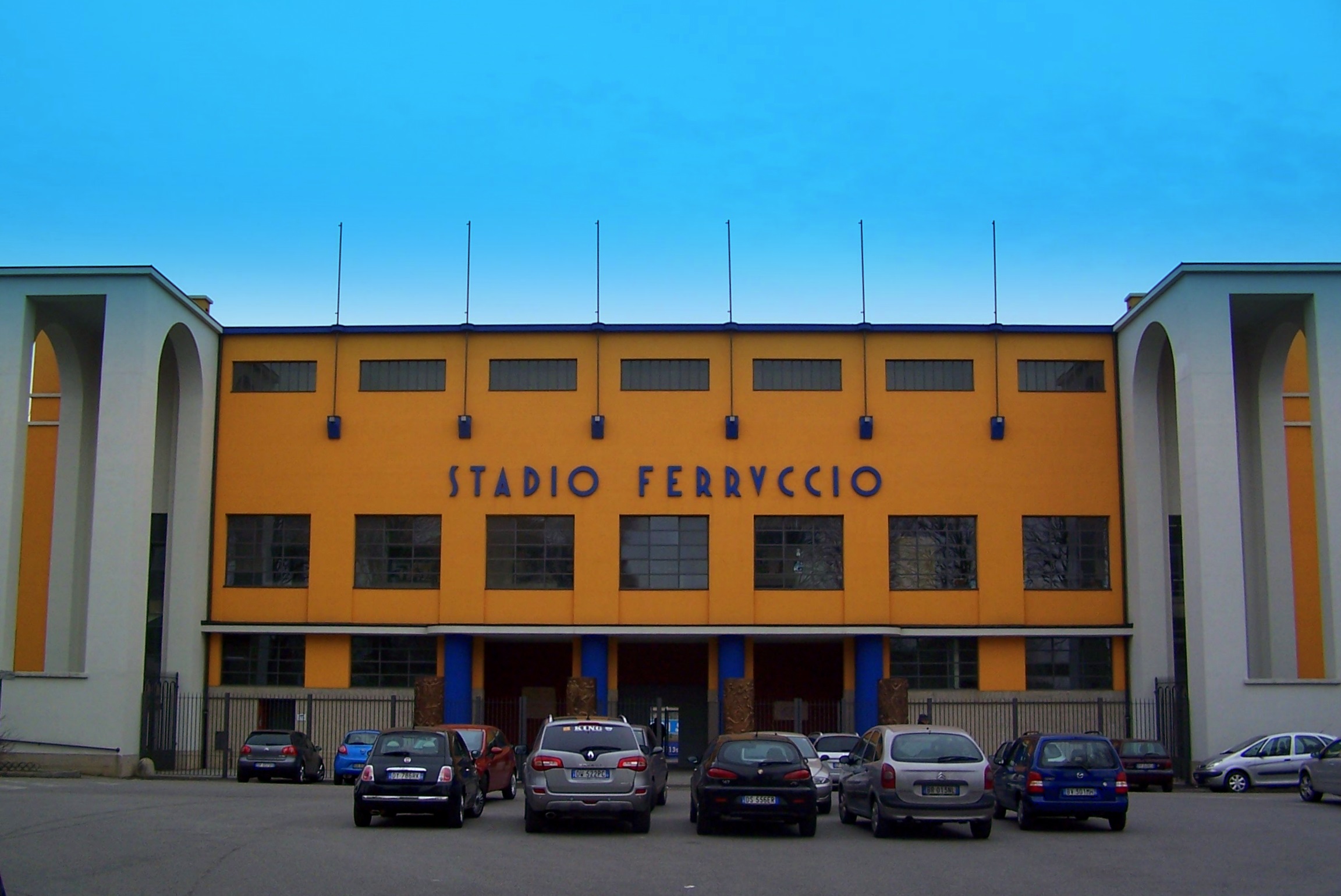
Stadio Ferruccio is a multipurpose sports facility built in 1934 in Seregno, Monza e Brianza, Lombardy, commissioned by entrepreneur Umberto Trabattoni as a memorial to his son Ferruccio, who died in an accident at the age of seven.
The stadium’s architectural style reflects the Rationalist currents prevalent in Italian design during the 1930s. Its original design included a playing field measuring 120 by 70 metres, surrounded by an athletics track and platforms for various track and field events. The facility comprised a covered grandstand, two uncovered bleachers on the opposite side, changing rooms, and a gymnasium situated beneath the main stand. Construction costs totalled 850,000 lire.
The stadium was first used in the 1935–1936 Serie C football championship by local club Seregno. Trabattoni, who served as Seregno’s mayor from 1922 to 1935, transferred ownership of the facility to the municipality of Seregno in 1937.
About Stadio Ferruccio
As a purpose-built athletic venue designed during Italy’s interwar period, the stadium documents the era’s investment in modern sports infrastructure and Rationalist architectural principles that shaped public facilities across Lombardy.
Details
- Commissioned by: Umberto Trabattoni
- Year built: 1934
- Location: Seregno, Monza e Brianza, Lombardy
- Architectural movement: Italian Rationalism
- Original field dimensions: 120 metres × 70 metres
- Construction cost: 850,000 lire
- Transferred to municipal ownership: 1937
Frequently asked questions
Why was the stadium built?
Entrepreneur Umberto Trabattoni commissioned the stadium in 1934 as a memorial to his son Ferruccio, who died in an accident at age seven.
What was its first sporting use?
The stadium was first used in the 1935–1936 Serie C football championship by Seregno Football Club.
What architectural style does it represent?
The stadium exemplifies the Italian Rationalist style of the 1930s, reflecting the modernist architectural currents of that interwar period.


