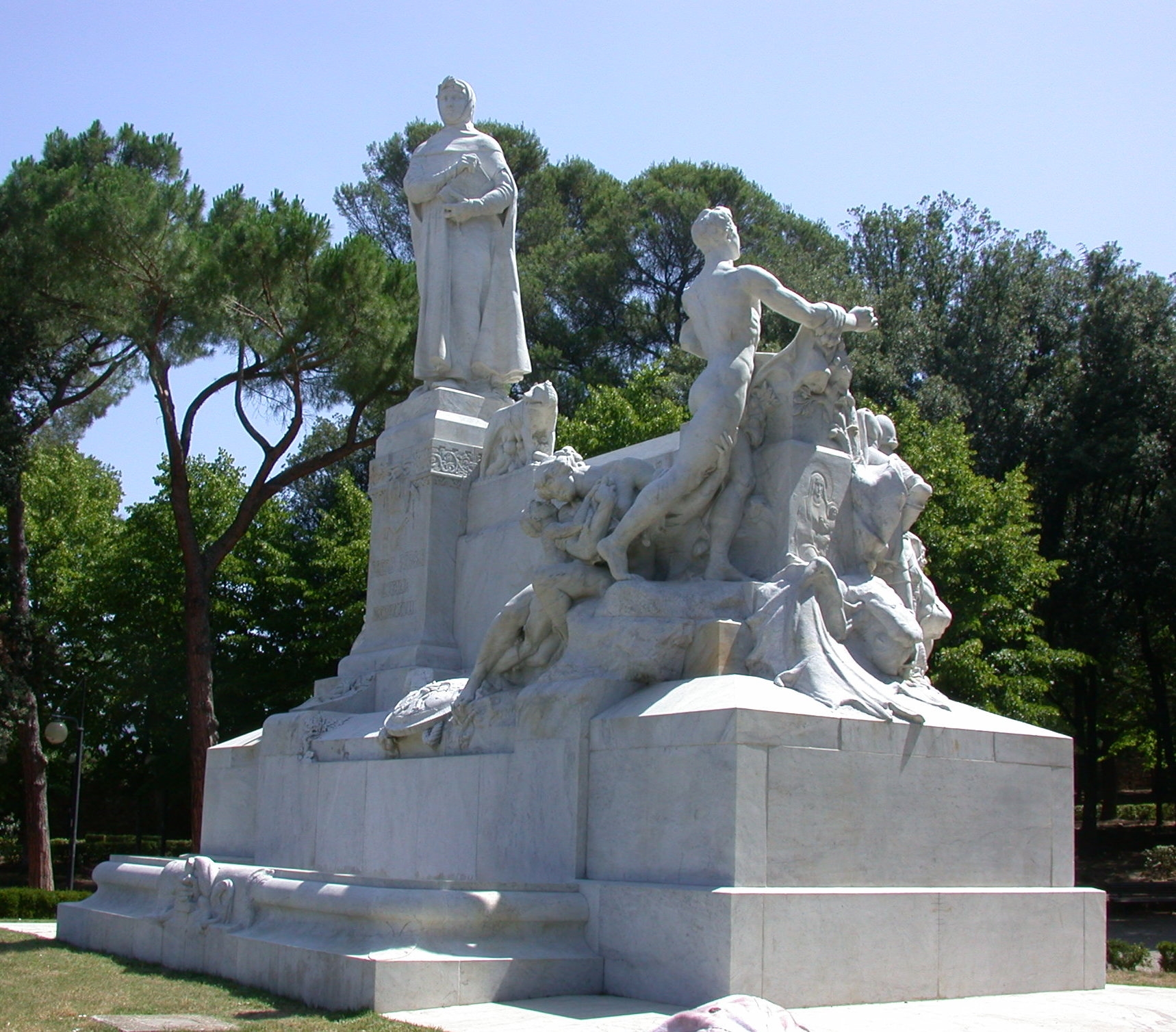
The Monument to Francesco Petrarca in Arezzo is a sculptural work by Italian artist Alessandro Lazzerini, completed in 1928. The monument commemorates the medieval poet and humanist, whose biographical and literary legacy remains central to Italian cultural history.
Lazzerini, a sculptor from Carrara, brought to this commission a career spanning decades of public and commemorative works across Tuscany and beyond. The monument exemplifies the tradition of civic sculpture in early twentieth-century Italy, honouring significant literary and historical figures through permanent public installation.
About Alessandro Lazzerini
Alessandro Lazzerini (1860–1942) was an Italian sculptor from Carrara, trained at the Accademia di Belle Arti in his native city. He established himself in Florence from 1889 onwards, where he became an active participant in the region’s artistic commissions. Lazzerini belonged to a Carrara family of sculptors and carried forward a tradition of monumental and commemorative sculpture.
Details
- Creator: Alessandro Lazzerini
- Year: 1928
- Location: Arezzo, Tuscany
- Subject: Francesco Petrarca, medieval poet and humanist
- Type: Public monument
Explore more: 6 heritage places in Arezzo
Frequently asked questions
Who created this monument?
The monument was sculpted by Alessandro Lazzerini, an Italian sculptor from Carrara (1860–1942), known for his extensive work in commemorative and civic sculpture across Tuscany.
Where is the Monument to Francesco Petrarca located?
The monument is situated in Arezzo, in the Tuscany region of Italy, and was installed in 1928.
Who is Francesco Petrarca?
Francesco Petrarca (1304–1374) was a medieval Italian poet, humanist, and scholar whose literary and intellectual contributions were foundational to Renaissance thought and Italian culture.
Sources
- S1 — Bossaglia, Rossana. Il Déco italiano: fisionomia dello stile 1925. Rizzoli, 1988. ISBN 978-88-17-24017-8.
- S2 — Pontiggia, Elena. Il Novecento Italiano. Abscondita, 2003. ISBN 978-88-8416-048-5.
Spotted an error? Write to editorial@culturalheritageonline.com and we correct it the same day.