
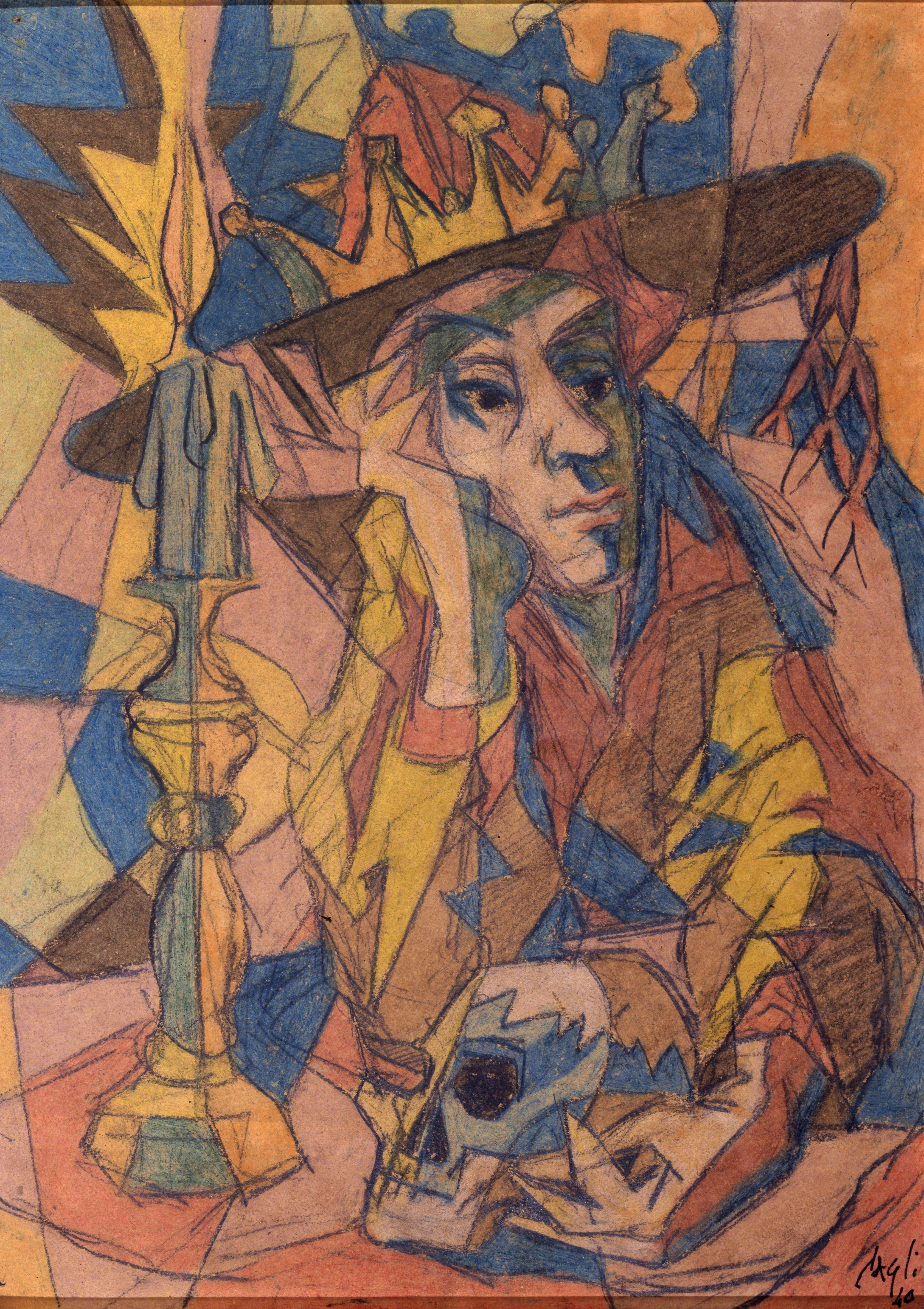
Il cranio e la candela is a painting by Corrado Cagli, created in 1940. The work presents a skull and a candle as its central subjects, executed during a pivotal moment in the artist’s career in Rome.
Cagli was a founding member of the Scuola Romana, a collective of painters that included Giuseppe Capogrossi and Emanuele Cavalli. The group emerged from Rome’s artistic milieu in the 1930s. By 1940, when this work was painted, Cagli had already established himself through exhibitions and mural commissions since his artistic debut in 1927. The following year, in 1938, he would flee Italy due to the intensification of Jewish persecution under Mussolini’s regime, eventually settling in the United States for the duration of World War II.
About Corrado Cagli
Cagli (1910–1976) was born in Ancona and moved to Rome at age five. A painter of Jewish heritage, he became a central figure in Roman modernism before his forced exile. After the war, he returned to Rome in 1948 and continued his artistic experimentation across various media.
Details
- Artist: Corrado Cagli
- Year: 1940
- Title: Il cranio e la candela (The Skull and the Candle)
- Movement: Scuola Romana
- Location: Rome
On video
Frequently asked questions
Who was Corrado Cagli?
Cagli (1910–1976) was an Italian painter of Jewish heritage and a founding member of the Scuola Romana. He fled Italy in 1938 during the persecution of Jews and lived in the United States during World War II before returning to Rome in 1948.
What was the Scuola Romana?
The Scuola Romana was a group of Roman painters including Cagli, Giuseppe Capogrossi, and Emanuele Cavalli, active in the 1930s and representing a significant modernist movement in Italian art.
When did Cagli create this work?
This painting was created in 1940, a pivotal year just before Cagli’s departure from Italy in 1938 due to antisemitic persecution.
Sources
- S1 — Pontiggia, Elena. Il Novecento Italiano. Abscondita, 2003. ISBN 978-88-8416-048-5.
- S2 — Bossaglia, Rossana. Il Novecento italiano. Electa, 1995. ISBN 978-88-435-6178-0.
Spotted an error? Write to editorial@culturalheritageonline.com and we correct it the same day.


