
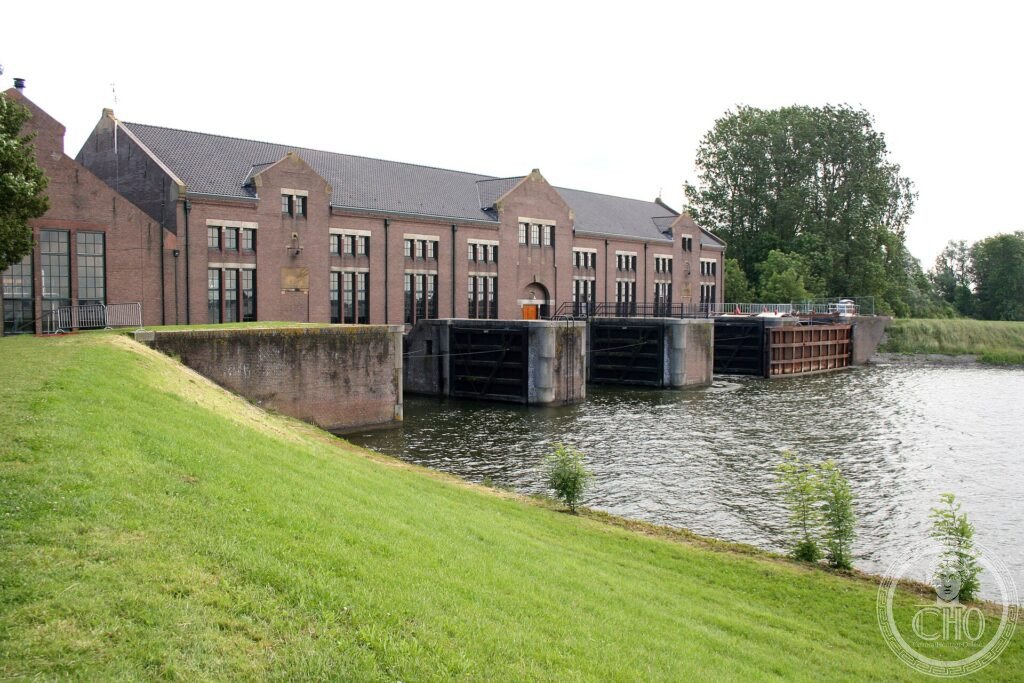
In the Netherlands, where much of the land is wrested from the water, a machine of 1920 goes on doing its job: the Woudagemaal, the largest steam pumping station ever built and still working, able to lift enormous quantities of water to protect Friesland from flooding. A feat of engineering that lasts.
At a glance
The D.F. Wouda Steam Pumping Station (Woudagemaal), at Lemmer in Friesland in the Netherlands, is the largest steam-powered pumping station ever built, and it still works. Opened in 1920, this great brick hall of steam engines and pumps was built to lift water out of the low-lying Frisian land into the sea when the level rose too high — a vital task in a country much of which lies below sea level. A monument to Dutch water management and engineering, it was inscribed by UNESCO in 1998.
Key facts
- UNESCO: World Heritage since 1998 (Ir.D.F. Woudagemaal)
- Largest of its kind: the biggest steam pumping station ever built
- Opened 1920: and still operational
- Water management: protects low-lying Friesland from flooding
- Steam power: great steam engines driving the pumps
- Still in use: fired up when water levels demand
History
Much of the Netherlands lies at or below sea level, and keeping it dry has always depended on pumping water out — first by windmills, later by steam and electric pumps. To protect the province of Friesland, the great steam pumping station at Lemmer, designed by the engineer D.F. Wouda, was opened in 1920, the largest of its kind in the world, able to lift huge volumes of water from the land into the sea.
Most such stations were later replaced by electric or diesel pumps, but the Woudagemaal was kept in working order and is still called upon at times of very high water, making it a living monument to the Dutch struggle with water. Recognised as a masterpiece of engineering and a symbol of this struggle, it was inscribed by UNESCO in 1998.
What you see
The station is a long, dignified brick building beside the water, its great hall filled with gleaming steam engines, boilers and pumps, kept in working condition. A visitor centre explains the Dutch battle against the sea and the workings of the machine, which is occasionally fired up with steam.
The sight and, when it runs, the sound of the great steam pumps still guarding the land is the wonder of the Woudagemaal.
Practical information
- Site: a working monument and visitor centre at Lemmer
- Time needed: 1–2 hours
- Note: occasionally fired up under steam; check the schedule
- Setting: in Friesland, northern Netherlands
Getting there
The D.F. Wouda Steam Pumping Station is at Lemmer, in the province of Friesland, the Netherlands, about 110 km north-east of Amsterdam, reached by road. GPS: 52.85° N, 5.70° E.
Nearby
- Lemmer — the harbour town beside the station
- IJsselmeer — the great lake into which the water is pumped
- Friesland — the lakes and meadows of the province
Sources
- UNESCO World Heritage Centre — “Ir.D.F. Woudagemaal (D.F. Wouda Steam Pumping Station)” (ref. 867)
- Woudagemaal / Wetterskip Fryslân — official body
- Encyclopaedia Britannica — Netherlands; polder
Find it on the map
See this place and what’s around it →📷 Become a Cultural Heritage Online photographer
Share your photos of places: they stay published under your name as the author. The more they're seen, the more you get noticed — and soon a contest will reward the most appreciated photos.
Log in or sign up free to add a photoIs this page about you?
This page is read by travellers and heritage enthusiasts who find it on Google. Tell us how you are connected to this place and we will take it from there.