
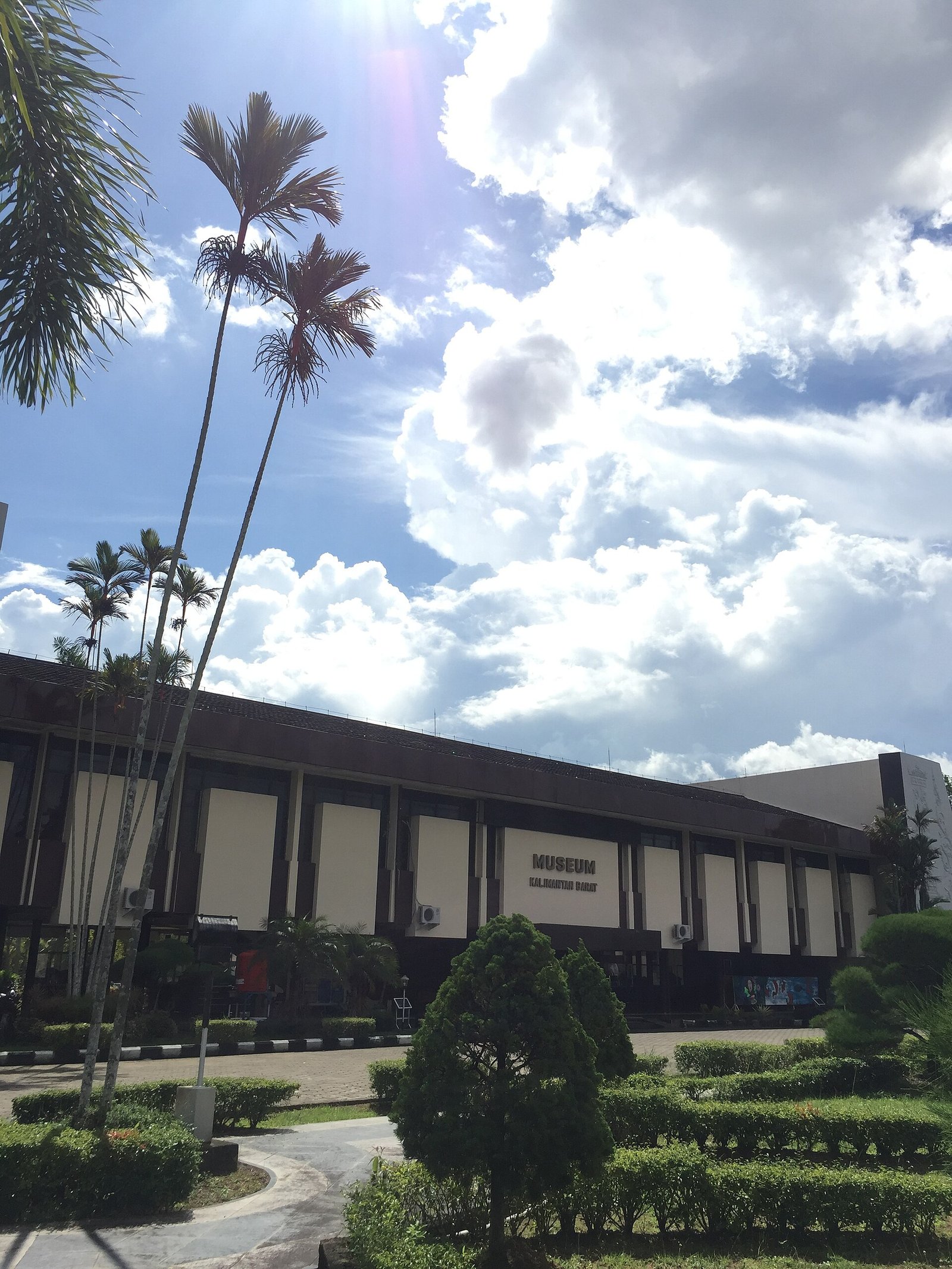
A museum dedicated to the material culture and heritage of West Kalimantan’s indigenous and ethnic communities, anchored by rare 16th-century ceramics and Dayak artifacts.
At a glance
The West Kalimantan Provincial Museum preserves the cultural identity of Indonesia’s westernmost Bornean province through ethnographic collections, decorative arts and archaeological finds. Its striking concrete exterior reliefs celebrate the region’s two largest ethnic groups: the Malay and Dayak peoples.
History
The museum was established to document and celebrate the distinct cultures of West Kalimantan. Its collections span centuries of regional trade and settlement, particularly evident in its prized ceramics from the 16th century.
What you see
Concrete reliefs on the exterior walls narrate the lifestyles and traditions of the Malay and Dayak peoples in visual form. Inside, display cases hold tribal clothing, handicrafts, and the museum’s signature collection of tempayan—large water storage vessels crafted in Thailand, China and Borneo during the 16th century. A full-scale replica of a traditional Dayak longboat stands nearby, offering insight into vernacular architecture and communal living practices.
Cultural significance
The museum serves as a vital repository for Dayak and Malay heritage at a time of rapid cultural change. Its emphasis on material culture—from ceramics to textiles to architecture—illustrates how trade networks and daily life shaped the region’s identity across centuries.
Key facts
- Location: Pontianak, West Kalimantan, Indonesia
- Nearby landmark: Tanjungpura University
- Signature collection: 16th-century tempayan from Thailand, China and Borneo
- Coordinates: -0.04836111, 109.34308333
Practical information & getting there
The museum is located in Pontianak, the capital of West Kalimantan province, near Tanjungpura University. For current opening hours, admission fees and visitor information, consult local tourism resources or contact the museum directly.
Sources & resources
Find it on the map
See this place and what’s around it →📷 Become a Cultural Heritage Online photographer
Share your photos of places: they stay published under your name as the author. The more they're seen, the more you get noticed — and soon a contest will reward the most appreciated photos.
Log in or sign up free to add a photoIs this page about you?
This page is read by travellers and heritage enthusiasts who find it on Google. Tell us how you are connected to this place and we will take it from there.