
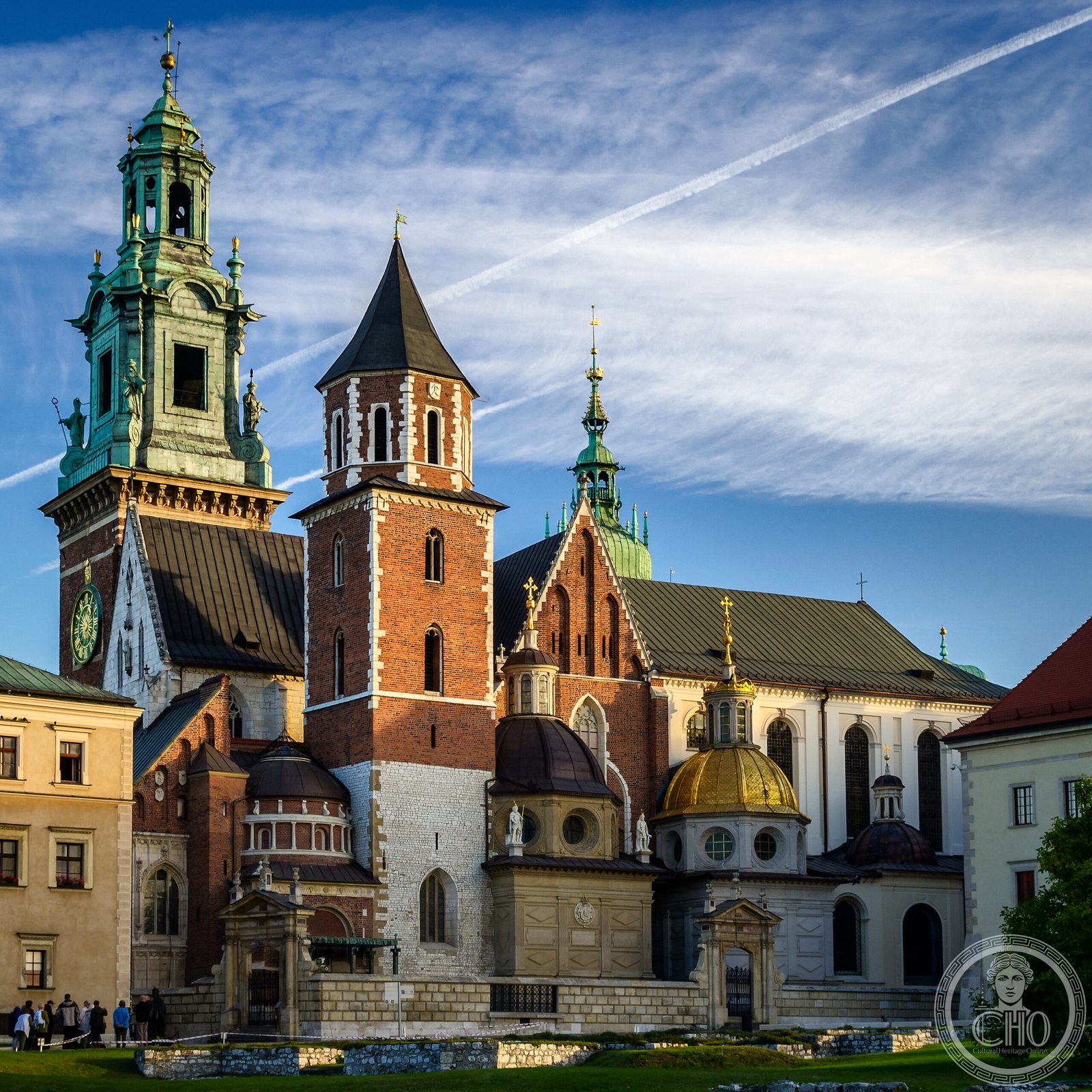
Poland’s foremost cathedral and coronation church stands on Wawel Hill as a symbol of national faith and sovereignty, its walls layered with nearly a millennium of architectural styles.
At a glance
The Archcathedral Basilica of Saint Stanislaus and Saint Wenceslaus dominates Wawel Castle Complex, serving as the official seat of Kraków’s Archbishop and Archdiocese. This venerable structure witnessed the coronations of Polish monarchs and remains central to the nation’s religious and civic identity.
History
Two cathedrals preceded the present structure. The first, built in the 11th century, was destroyed; its 12th-century successor fell to fire in 1305. Construction of the existing Gothic cathedral began in the 14th century under Bishop Nanker’s direction.
Successive Polish rulers expanded and modified the building over centuries, each adding their architectural vision. The cathedral became the site of coronations and, in modern times, witnessed the early priesthood of Karol Wojtyła, who celebrated his first Mass in the Wawel Crypt on 2 November 1946 and was ordained auxiliary bishop here on 28 September 1958, before becoming Pope John Paul II in 1978.
What you see
The cathedral’s exterior and interior form a compendium of European architectural movements. Romanesque, Gothic, Renaissance, Baroque, Neoclassical and Neogothic elements coexist across its façade and interior spaces—a visual chronicle of Polish aesthetic evolution.
Side chapels and representative mausoleums line the walls. Most striking is Sigismund’s Chapel, distinguished by its golden dome, a Renaissance jewel that stands as one of Poland’s finest architectural achievements.
Cultural significance
Wawel Cathedral embodies Polish statehood and faith. It hosts major religious events and annual celebrations that draw worshippers and pilgrims. The cathedral’s role as coronation church and sanctuary reflects its place at the heart of Polish national consciousness.
Key facts
- Location: Wawel Hill, Kraków, Poland
- Coordinates: 50.0546, 19.9354
- Construction began: 14th century
- Current religious seat: Archbishop of Kraków and Archdiocese of Kraków
- Architectural styles: Romanesque, Gothic, Renaissance, Baroque, Neoclassical, Neogothic
Practical information & getting there
The cathedral is situated within Wawel Castle Complex on Wawel Hill in central Kraków. As an active place of worship and national sanctuary, visiting hours and access may vary according to religious services and ceremonies. Check ahead before your visit.
Sources & resources
Find it on the map
See this place and what’s around it →📷 Become a Cultural Heritage Online photographer
Share your photos of places: they stay published under your name as the author. The more they're seen, the more you get noticed — and soon a contest will reward the most appreciated photos.
Log in or sign up free to add a photoIs this page about you?
This page is read by travellers and heritage enthusiasts who find it on Google. Tell us how you are connected to this place and we will take it from there.