
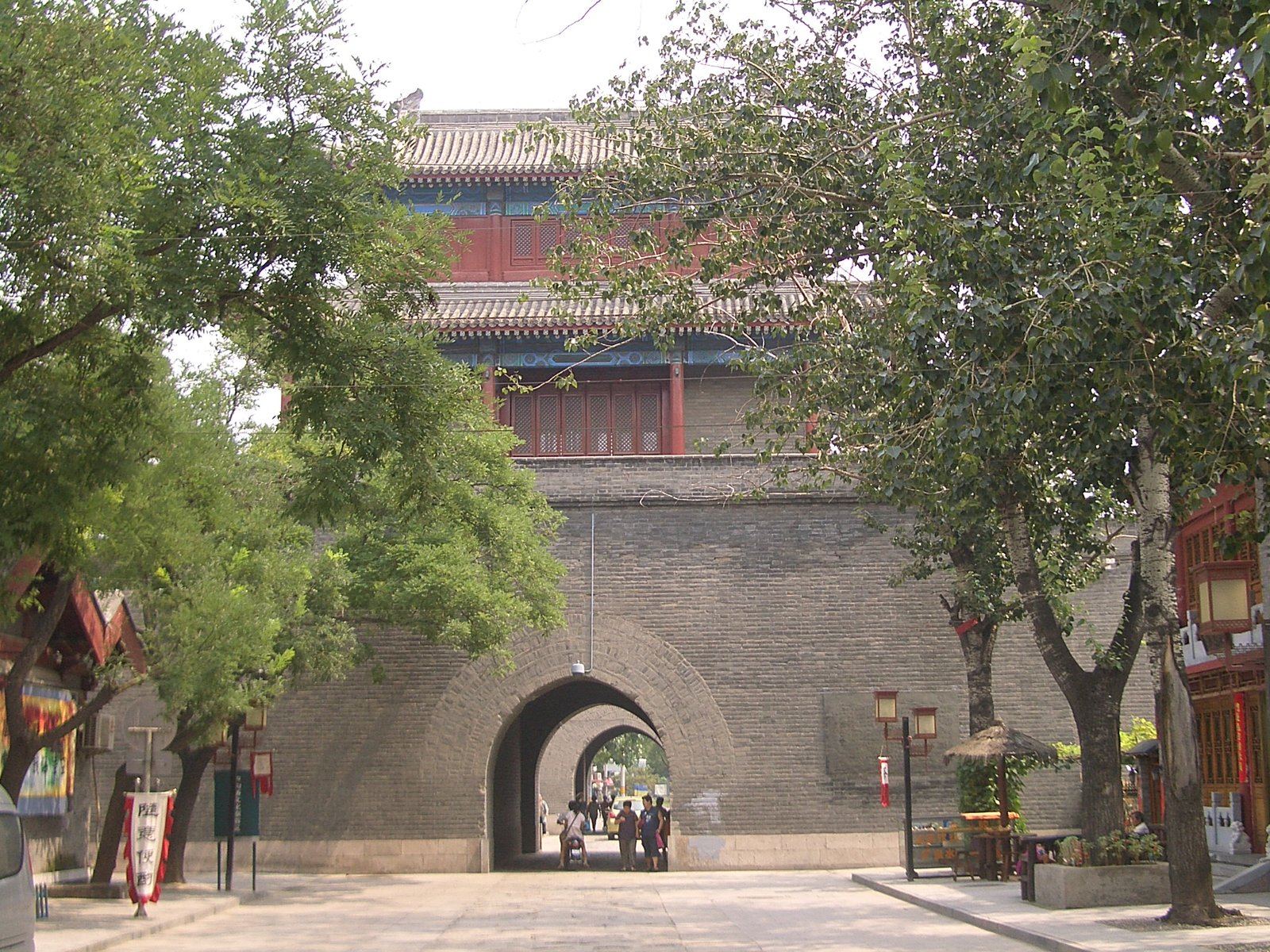
A fortified Ming Dynasty garrison town built to guard Beijing against insurgency, Wanping Fortress is remembered as the epicentre of the July 1937 incident that ignited the Second Sino-Japanese War.
At a glance
Wanping is a half-square fortress measuring 640 metres east to west and 320 metres north to south. From its inception, it served as a military installation, with two named gates—the Ever Prosperous Gate to the east and the Favorably Govern Gate to the west. The fortress stands adjacent to the Lugou Bridge (Marco Polo Bridge) and the Yongding River.
History
Constructed between 1638 and 1640, Wanping Fortress was built explicitly to defend the capital against Li Zicheng’s rebel forces during the late Ming period. On July 7, 1937, the fortress became the flashpoint for the Marco Polo Bridge Incident—also known as the Lugou Bridge Incident—when a minor dispute involving a missing Japanese soldier escalated into full-scale combat. This exchange of fire is widely recognised as the opening act of the Second Sino-Japanese War.
What you see
The fortress displays the compact, rectangular geometry typical of Ming military architecture. Its two gates retain their historical names, though the east gate was subsequently renamed from Ever Prosperous Gate to Majestic Gate. The proportions—a half-square layout—reflect the practical balance between defensive coverage and garrison capacity required for a frontier stronghold.
Cultural significance
Wanping Fortress holds immense weight in modern Chinese history as the location where regional conflict became continental war. The Museum of the War of Chinese People’s Resistance Against Japanese Aggression now occupies substantial space within the fortress walls, accompanied by commemorative sculptures and landscaping. The site thus functions as both historical monument and living memorial to wartime sacrifice.
Key facts
- Country: China
- City: Beijing, Fengtai District
- Coordinates: 39.85°N, 116.22°E
- Constructed: 1638–1640
- Dimensions: 640 metres (east–west) × 320 metres (north–south)
Practical information & getting there
The fortress is accessible to visitors and houses the Museum of the War of Chinese People’s Resistance Against Japanese Aggression. The site is situated near the historic Lugou Bridge. You can reach the fortress via public transport in Beijing; consult local tourism offices or travel resources for current hours and admission details.
Sources & resources
Find it on the map
See this place and what’s around it →📷 Become a Cultural Heritage Online photographer
Share your photos of places: they stay published under your name as the author. The more they're seen, the more you get noticed — and soon a contest will reward the most appreciated photos.
Log in or sign up free to add a photoIs this page about you?
This page is read by travellers and heritage enthusiasts who find it on Google. Tell us how you are connected to this place and we will take it from there.