

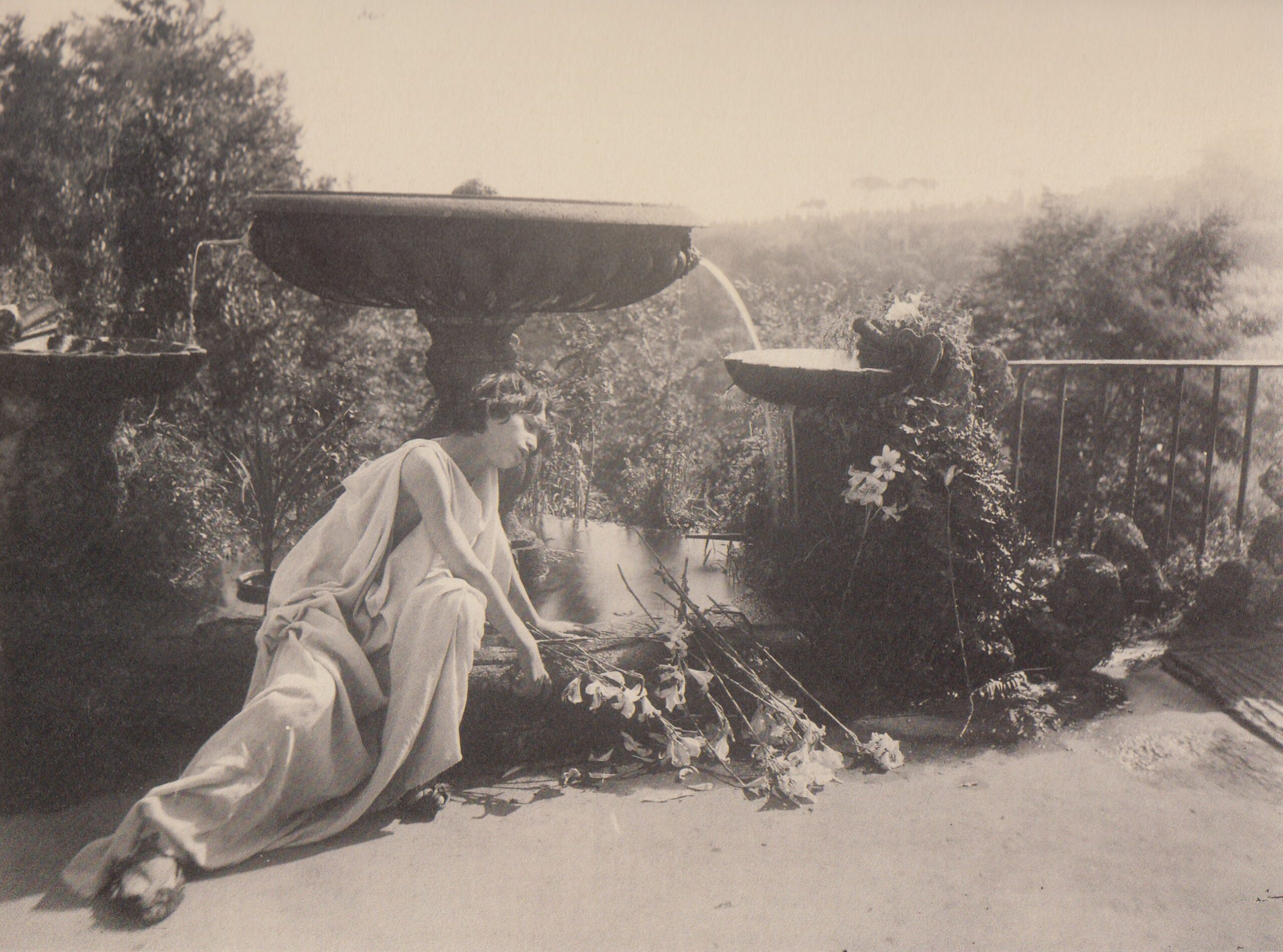
The oldest of the Tusculan villas above Rome, built for a bishop in the 1540s and remodelled a century later for the Falconieri — a remodelling long credited to Borromini, and still argued over.
At a glance
Villa Falconieri stands on the slopes below Tusculum, at the edge of Frascati, the first of the villas that Roman prelates and bankers built on these hills in the sixteenth and seventeenth centuries. It was known for most of its early life as Villa Rufina, after the bishop who commissioned it, and took the name it carries today only after 1628. The Italian State expropriated it in 1921; it is now the seat of a Latin academy, and its park is opened to visitors.
Key facts
- Built for Alessandro Rufini, bishop of Melfi, in the 1540s; sources give 1546, 1548 and a span of 1540–1549.
- Originally Villa Rufina, also called «la Maddalena» after a chapel on the grounds.
- Completed by Nanni di Baccio Bigio, a pupil of Antonio da Sangallo the Younger.
- Bought in 1628 by Orazio Falconieri, a Florentine nobleman, whose family gave it its present name.
- The seventeenth-century remodelling is traditionally attributed to Francesco Borromini; the attribution is disputed, and Camillo Arcucci has been proposed instead. The work was finished in 1668 by Francesco Massari, Borromini's assistant.
- Sold in 1905 to the German banker Ernst von Mendelssohn-Bartholdy; expropriated by the Italian State in 1921.
- Damaged during the Second World War.
- Recorded in the Italian national heritage catalogue as «Villa Falconieri a Frascati», original denomination «Villa La Rufina».
History
The villa was begun in the 1540s for Alessandro Rufini, bishop of Melfi, and the dates given by the sources differ — 1546, 1548, or a span running from 1540 to 1549. It was the first of the Tusculan villas, and for most of a century it went under the name of its builder: Villa Rufina. Nanni di Baccio Bigio, who had trained under Antonio da Sangallo the Younger, carried the work to completion. The Rufini fell into debt and gave up the property in 1563.nnIn 1628 it was bought by Orazio Falconieri, a Florentine nobleman, and the family's name stuck to it. Orazio intended the villa as a burial place for himself and his brother, Cardinal Lelio Falconieri, and commissioned a remodelling that has long been credited to Francesco Borromini. That attribution is contested: it may cover the drawings rather than the execution, and Camillo Arcucci has been put forward as the designer. What is not in question is that the work was finished in 1668 by Francesco Massari, who had worked as Borromini's assistant.nnThe villa passed in 1905 to the German banker Ernst von Mendelssohn-Bartholdy, and in 1921 the Italian State expropriated it. It was damaged in the Second World War. Today it houses the Vivarium Novum, an academy where Latin is spoken as a living language. In 1916 the grounds were used as the studios of Tespi Film, a silent-film production company, for the few years the enterprise lasted: Tespi Film and the silent cinema studios at Villa Falconieri.
What you see
The villa sits among the Tusculan hills with Rome visible below, approached through a park of cypresses and a water basin. The seventeenth-century front, whatever hand drew it, belongs to the Roman Baroque of the generation after Bernini, and the grounds keep the arrangement of terraces and avenues that made these hills the summer retreat of papal Rome.
Practical information
- Address: Viale Borromini 5, 00044 Frascati (Rome), Italy.
- Telephone: +39 06 6689034.
- Seat of the Accademia Vivarium Novum; guided visits of the grounds are offered, and access is not free to wander — check before travelling.
Getting there
Frascati is about 20 km south-east of Rome and is reached by train from Roma Termini to Frascati station, then a short walk or bus towards Villa Falconieri.
Nearby
- Villa Aldobrandini, Frascati — the best known of the Tusculan villas, about 1.5 km
- Villa Torlonia, Frascati — park open to the public, about 1.5 km
- Tusculum archaeological area — the Roman town above Frascati, about 3 km
Sources
- Villa Falconieri — Wikidata Q1628313 and English Wikipedia (identification, coordinates).
- Catalogo generale dei Beni Culturali, scheda SIGEC ICCD12272941 — «Villa Falconieri a Frascati», denominazione originaria «Villa La Rufina» (Ministero della Cultura).
- Regione Lazio, «Descrizione delle Ville Tuscolane» (regione.lazio.it).
- Rome Art Lover, «Frascati — Villa Falconieri» (romeartlover.it/Frascat3.html).
- Museionline, scheda Villa Falconieri (address, telephone, visits).
Find it on the map
See this place and what’s around it →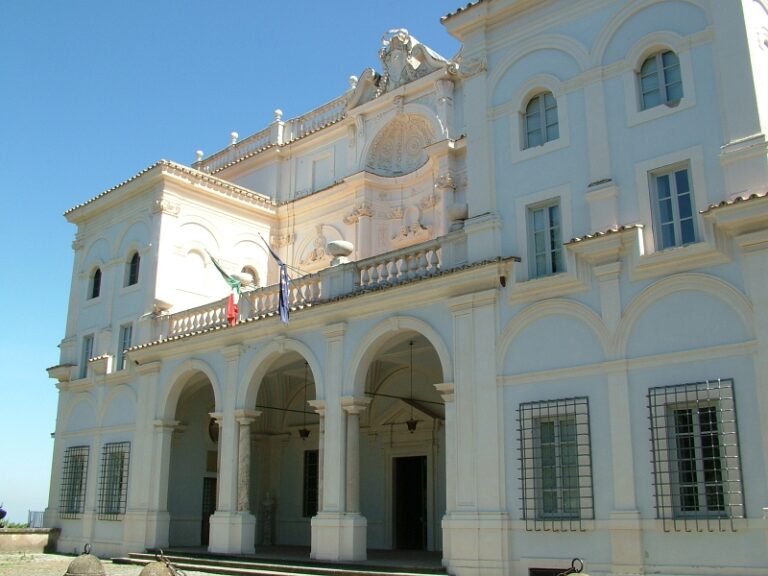
📷 Become a Cultural Heritage Online photographer
Share your photos of places: they stay published under your name as the author. The more they're seen, the more you get noticed — and soon a contest will reward the most appreciated photos.
Log in or sign up free to add a photoIs this page about you?
This page is read by travellers and heritage enthusiasts who find it on Google. Tell us how you are connected to this place and we will take it from there.