
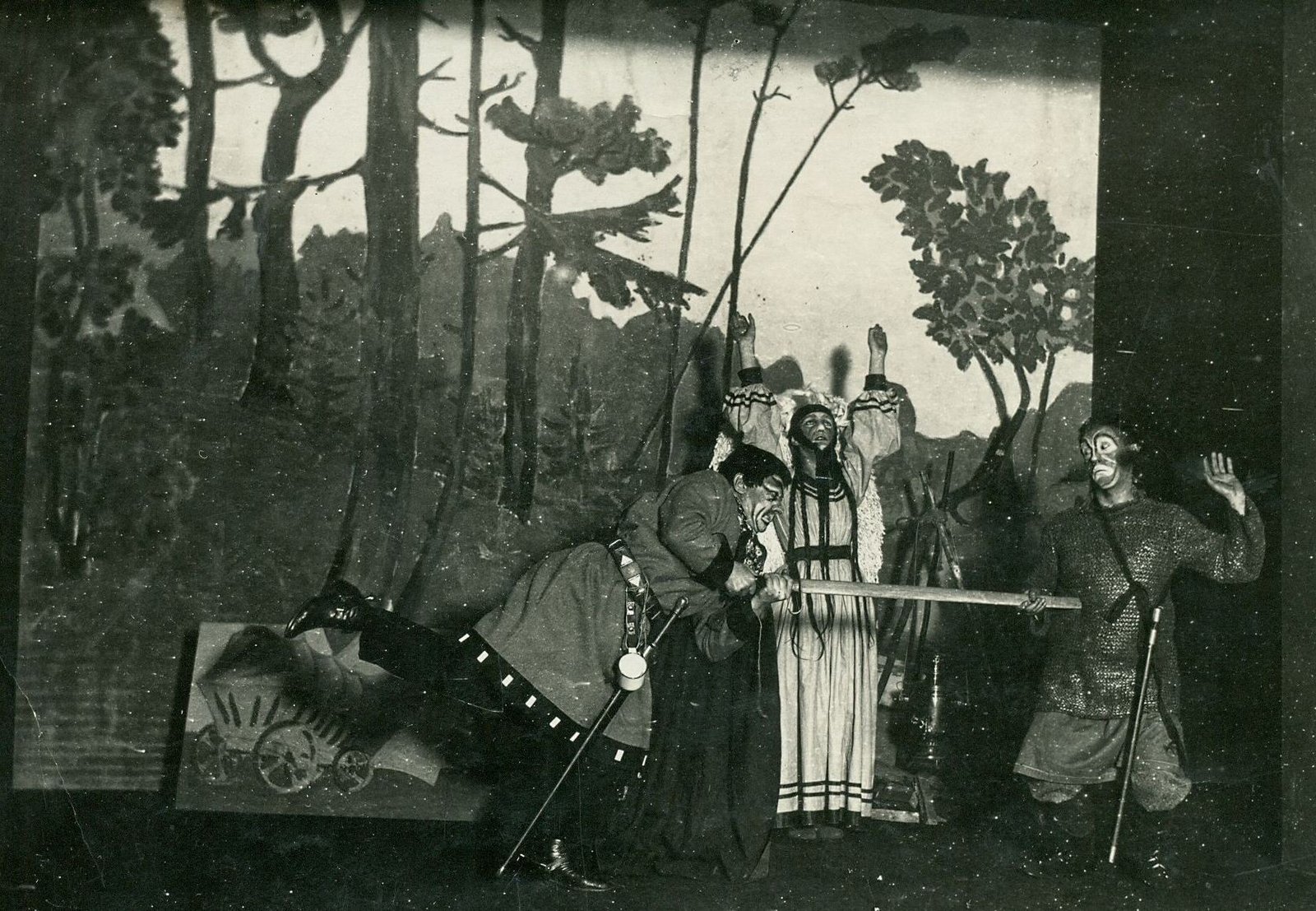
A daring experimental theater that became the epicenter of Kaunas’s avant-garde scene, Vilkolakis Theatre earned notoriety for its sharp satirical edge and fearless commentary on Lithuanian political life.
At a glance
Vilkolakis Theatre (Werewolf Theatre) was a private experimental venue that transformed from an artists’ club into one of Kaunas’s most provocative cultural spaces. Operating for just six years, it made an outsized impact on Lithuania’s interwar artistic landscape through parodies and satire.
History
Founded in 1919 as an artists’ club, the venue quickly evolved under the visionary direction of Antanas Sutkus into a full-fledged theater and cabaret house. Vilkolakis became known for its fearless staging of parodies and satirical pieces targeting current events and political figures in Lithuania. The theater’s provocative approach, however, attracted official scrutiny. Financial pressures and mounting conflicts with the government forced its closure in 1925, ending a brief but significant chapter in Kaunas’s cultural history.
What you see
Limited architectural documentation survives. The venue functioned as both cabaret and experimental theater space, designed to accommodate the intimate scale of avant-garde performance.
Cultural significance
Vilkolakis Theatre represented the artistic ferment of Kaunas during Lithuania’s interwar independence. At a moment when the city served as the nation’s temporary capital, the theater became a laboratory for experimental performance and a platform for artistic commentary on politics and society—roles that made it both celebrated by artists and controversial to authorities.
Key facts
- Country: Lithuania
- City: Kaunas
- Founded: 1919
- Closed: 1925
- Coordinates: 54.89666667, 23.90944444
- Director: Antanas Sutkus
Practical information & getting there
The theater no longer operates. Kaunas, Lithuania’s second-largest city, is well connected by rail and bus from Vilnius. For those researching interwar Lithuanian cultural history, the Kaunas Museum of Literature and Theatre and local archives hold relevant materials.
Sources & resources
Find it on the map
See this place and what’s around it →📷 Become a Cultural Heritage Online photographer
Share your photos of places: they stay published under your name as the author. The more they're seen, the more you get noticed — and soon a contest will reward the most appreciated photos.
Log in or sign up free to add a photoIs this page about you?
This page is read by travellers and heritage enthusiasts who find it on Google. Tell us how you are connected to this place and we will take it from there.