
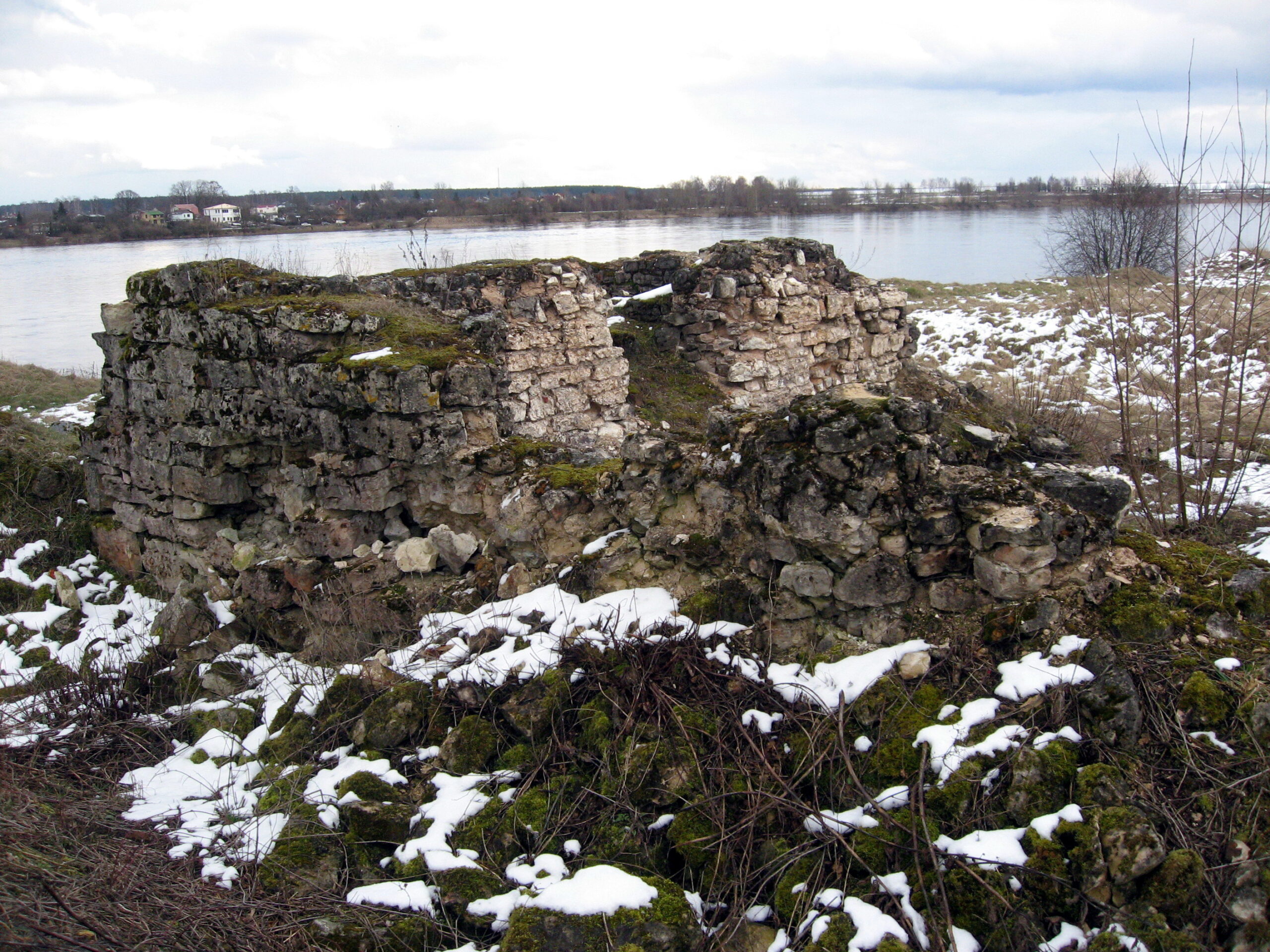
Perched on the Daugava River in Latvia’s Vidzeme region, Vecdole Castle stands as a fragmentary testament to medieval fortification along the Baltic’s most vital waterway.
At a glance
Vecdole Castle is a ruined fortification built before 1226 on the Daugava River in Salaspils Parish. Only ruins remain today, yet the castle’s riverside location and early medieval date mark it as a significant witness to the period of Crusader expansion and settlement in the region.
History
The castle was constructed before 1226, placing it among the earliest stone fortifications established during the crusading campaigns in the eastern Baltic. The Daugava River, flowing through the heart of medieval Livonia, served as a crucial highway for trade, military movement, and political control. Vecdole’s strategic position reflects the military and commercial logic that shaped settlement patterns across the region during this transformative century.
What you see
Today Vecdole survives only as ruins. The fragmentary remains offer insight into the castle’s medieval construction, though extensive damage prevents detailed architectural analysis from standing remains alone.
Cultural significance
Vecdole Castle documents the wave of fortification that accompanied Crusader settlement and the Christianization of the eastern Baltic. Though reduced to ruins, the site preserves evidence of early medieval military architecture and the Daugava River’s role as a lifeline of power and exchange in medieval Livonia.
Key facts
- Country: Latvia
- Location: Salaspils Parish, Salaspils Municipality, Vidzeme region
- Built: Before 1226
- Coordinates: 56.8606°N, 24.2522°E
- Current condition: Ruins
Practical information & getting there
Vecdole Castle is located in Salaspils Municipality along the Daugava River. Detailed visiting information, accessibility, and current site conditions are best confirmed with local heritage authorities before planning a visit.
Sources & resources
- Vecdole Castle – Wikipedia
- Cultural Heritage Online
Find it on the map
See this place and what’s around it →📷 Become a Cultural Heritage Online photographer
Share your photos of places: they stay published under your name as the author. The more they're seen, the more you get noticed — and soon a contest will reward the most appreciated photos.
Log in or sign up free to add a photoIs this page about you?
This page is read by travellers and heritage enthusiasts who find it on Google. Tell us how you are connected to this place and we will take it from there.