
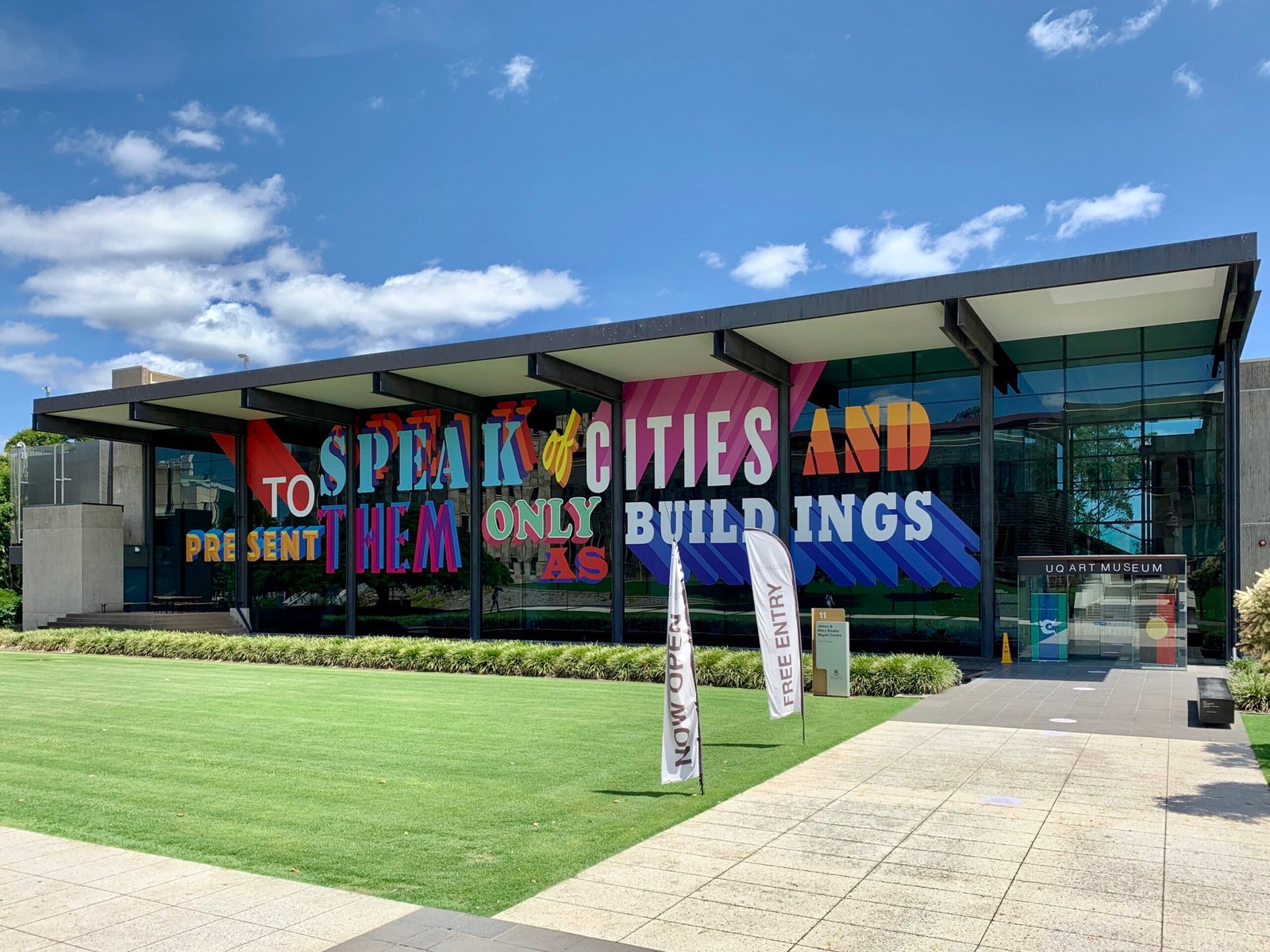
The art museum and public gallery of the University of Queensland, housing the second largest public art collection in the state.
At a glance
Located within the James and Mary Emelia Mayne Centre on the St Lucia campus, the University of Queensland Art Museum serves as both an academic resource and accessible public gallery. The collection has grown to become Queensland’s second largest public art holding.
History
The building housing the museum was formerly known as Mayne Hall before its transformation into a dedicated art museum. The collection it now contains reflects the university’s long-standing commitment to the visual arts and cultural education.
What you see
The James and Mary Emelia Mayne Centre provides a modern institutional home for the museum’s galleries. The architecture accommodates both exhibition spaces and the practical requirements of a working university collection.
Cultural significance
As Queensland’s second largest public art collection, the museum plays a vital role in regional cultural life. It bridges the academic and public spheres, making significant artworks accessible to visitors beyond the university community.
Key facts
- Location: St Lucia campus, Brisbane, Australia
- Coordinates: -27.4965, 153.012
- Collection rank: Second largest public art collection in Queensland
- Building: James and Mary Emelia Mayne Centre (formerly Mayne Hall)
Practical information & getting there
The museum is located on the University of Queensland’s St Lucia campus in Brisbane. For current hours, admission details, and exhibition information, visit the museum’s official website or contact the university directly.
Sources & resources
Find it on the map
See this place and what’s around it →📷 Become a Cultural Heritage Online photographer
Share your photos of places: they stay published under your name as the author. The more they're seen, the more you get noticed — and soon a contest will reward the most appreciated photos.
Log in or sign up free to add a photoDo you manage this place?
This page is read by travellers and heritage enthusiasts who find it on Google. Keep it accurate — and make it work for you. Free for non-profit heritage institutions.