

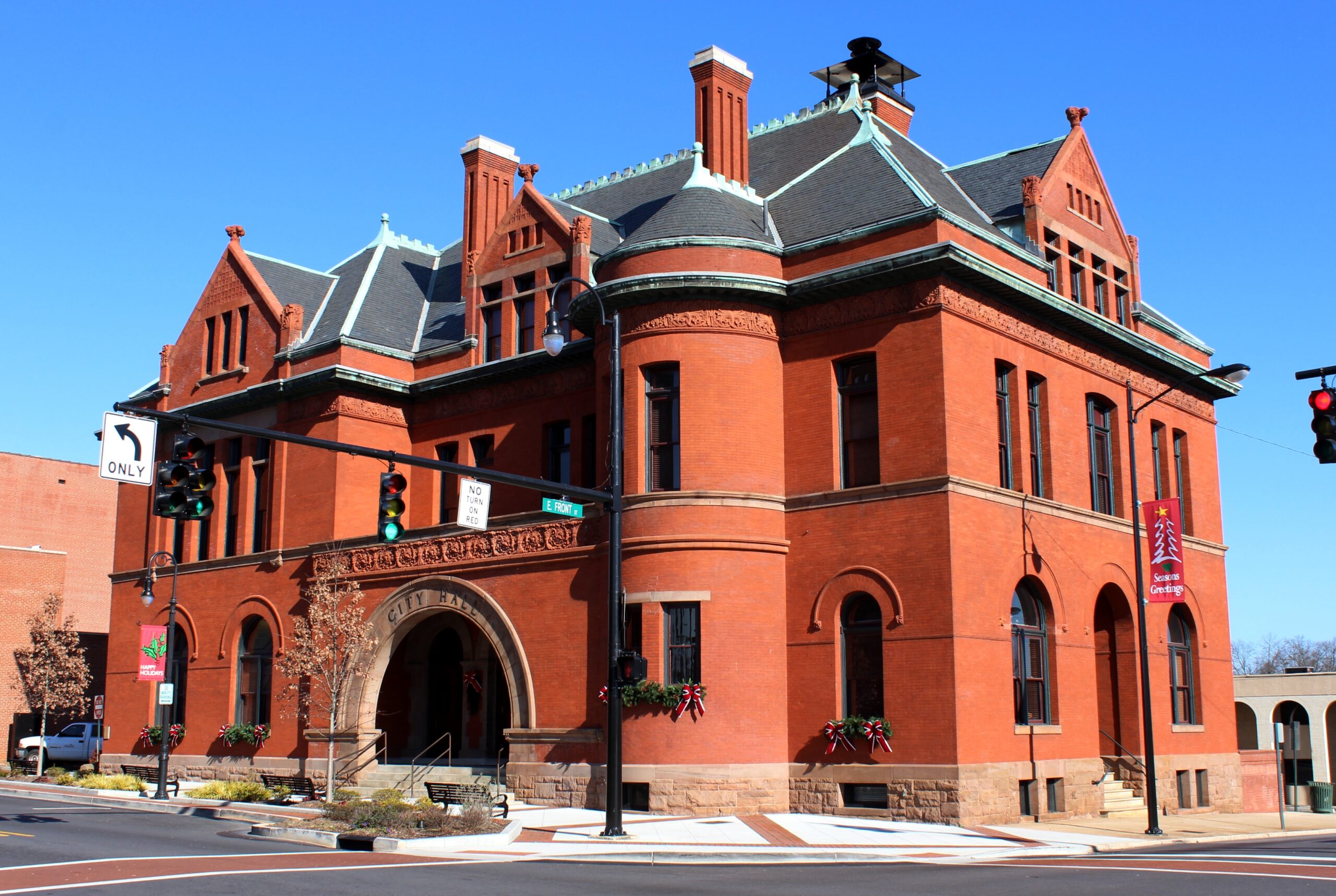
A red-brick and sandstone landmark from 1891, designed by Willoughby J. Edbrooke in the Richardsonian Romanesque style. It stands in Statesville, North Carolina, and served as both post office and courthouse.
At a glance
This rectangular, two-and-a-half-story structure is seven bays wide and three bays deep. It is also known as Statesville City Hall. Red brick and sandstone give the building its weight and color. A two-story corner tower and a tall hip roof dominate the exterior. The building sits within the Statesville Commercial Historic District.
History
The post office and courthouse was built in 1891. Willoughby J. Edbrooke designed it. In 1974, it was listed on the National Register of Historic Places.
What you see
The main entrance is set within a one-story pavilion. A central arched, recessed doorway marks the entry. Above, the two-story corner tower anchors the composition. The roof rises as a tall hip. The facade is ordered by seven bays.
Cultural significance
The building is a recognized part of Statesville’s historic fabric. Its National Register listing and its location within the Statesville Commercial Historic District confirm its local importance.
Key facts
- Name: United States Post Office and County Courthouse (Statesville, North Carolina)
- Country: United States
- City: Statesville, North Carolina
- Coordinates: 35.7831, -80.8875
- National Register of Historic Places: 1974
Practical information & getting there
The building is located in Statesville, Iredell County, North Carolina, within the Statesville Commercial Historic District. Specific visiting hours are not provided here. Check local listings for current access.
Sources & resources
Find it on the map
See this place and what’s around it →📷 Become a Cultural Heritage Online photographer
Share your photos of places: they stay published under your name as the author. The more they're seen, the more you get noticed — and soon a contest will reward the most appreciated photos.
Log in or sign up free to add a photoIs this page about you?
This page is read by travellers and heritage enthusiasts who find it on Google. Tell us how you are connected to this place and we will take it from there.