
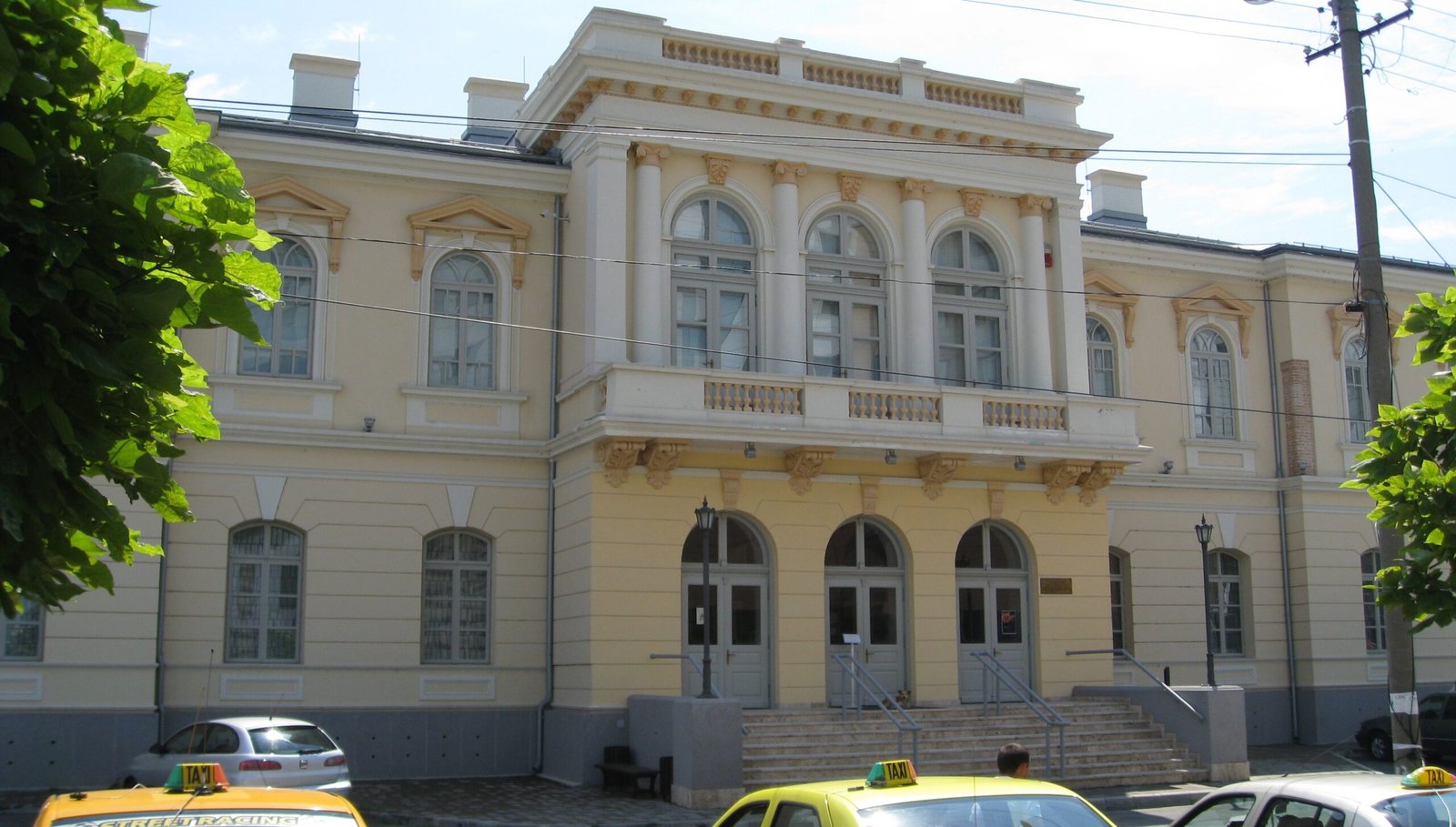
A 19th-century Ottoman administrative palace transformed into a repository of Romanian art, spanning painting, sculpture, icons, and decorative works from the modern era and beyond.
At a glance
The Tulcea Art Museum occupies a palace erected between 1863 and 1865 as the administrative center of the Tulcea sanjak under Ottoman rule. Located at 2 Grigore Antipa Street, it now houses seven distinct collections of Romanian and oriental art. The building is protected as a historic monument by Romania’s Ministry of Culture and Religious Affairs.
History
Tulcea became the capital of a sanjak in 1860, replacing Babadag as administrative hub for much of Dobruja. The palace served as headquarters of the mutasarrıfate and its nine kaza administrators. Dobrujan Circassian raiders, who settled in Northern Dobruja in 1864 after the Circassian genocide, contributed funds toward its construction alongside the nearby Azizyie Mosque.
After the Russo-Turkish War of 1877–1878 and Romania’s annexation of Northern Dobruja, the building continued as an administrative center for over a century, housing the prefecture, courthouse, and prosecutor’s office. Between 1950 and 1970, under Communist rule, it served the raion and later county councils. Following full restoration in 1893–1895 and repair after the 1940 Vrancea earthquake, the structure underwent comprehensive renovation from 2009 to 2012.
The art museum opened in 1982.
What you see
The palace reflects late Ottoman institutional design, originally conceived as a seat of provincial power. Its scale and formal arrangement accommodated the administrative machinery of a regional sanjak. Successive restorations have preserved its essential character while adapting it for cultural use.
Cultural significance
The museum documents Romanian artistic practice across two centuries. Its collections span modern and contemporary painting and sculpture, a substantial holding of icons from the 18th to 20th centuries, sketches, engraving plates, oriental art, and decorative objects. The building itself embodies the layered history of Dobruja—Ottoman, Circassian, and Romanian—within a single structure.
Key facts
- Country: Romania
- City: Tulcea
- Coordinates: 45.1802, 28.805
- Built: 1863–1865
- Museum opened: 1982
- Status: Historic monument, Ministry of Culture and Religious Affairs
Practical information & getting there
The museum is located at 2 Grigore Antipa Street in Tulcea. You can find current hours, admission details, and guided tour information through the museum’s official channels or local tourism services. Tulcea lies in southeastern Romania on the Danube, accessible by road and water transport.
Sources & resources
Find it on the map
See this place and what’s around it →📷 Become a Cultural Heritage Online photographer
Share your photos of places: they stay published under your name as the author. The more they're seen, the more you get noticed — and soon a contest will reward the most appreciated photos.
Log in or sign up free to add a photoIs this page about you?
This page is read by travellers and heritage enthusiasts who find it on Google. Tell us how you are connected to this place and we will take it from there.