
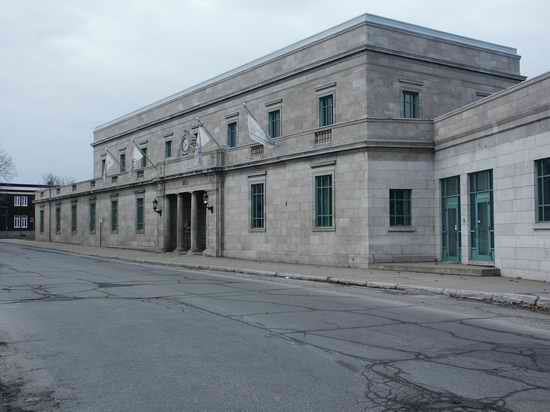
A former railway station in Trois-Rivières, Québec, recognized as a federal heritage site for its architectural and historical significance.
At a glance
Trois-Rivières station stands as a testament to Canada’s railway heritage. Designated a federal heritage site in 1990, the station reflects the region’s important connection to the national rail network.
History
The station served Trois-Rivières as part of Canada’s expanding rail infrastructure. Its recognition as a federal heritage site in 1990 acknowledged its cultural and historical value to the community and the nation’s transportation legacy.
What you see
The structure represents railway architecture of its era. As a heritage-designated building, it embodies the design principles and construction methods characteristic of Canadian railway stations from its period of operation.
Cultural significance
The station’s federal heritage designation recognizes its role in Trois-Rivières’ development and connection to the broader Canadian railway system. Such stations shaped regional commerce, travel, and community growth throughout the nineteenth and twentieth centuries.
Key facts
- Location: Trois-Rivières, Québec, Canada
- Coordinates: 46.349°N, 72.550°W
- Status: Federal heritage site (designated 1990)
- Type: Former railway station
Practical information & getting there
The station is located in Trois-Rivières, in the Mauricie region of Québec. Visitors interested in railway heritage and nineteenth-century Canadian architecture will find the site’s designation and location accessible via standard regional transportation routes.
Sources & resources
Find it on the map
See this place and what’s around it →📷 Become a Cultural Heritage Online photographer
Share your photos of places: they stay published under your name as the author. The more they're seen, the more you get noticed — and soon a contest will reward the most appreciated photos.
Log in or sign up free to add a photoIs this page about you?
This page is read by travellers and heritage enthusiasts who find it on Google. Tell us how you are connected to this place and we will take it from there.