

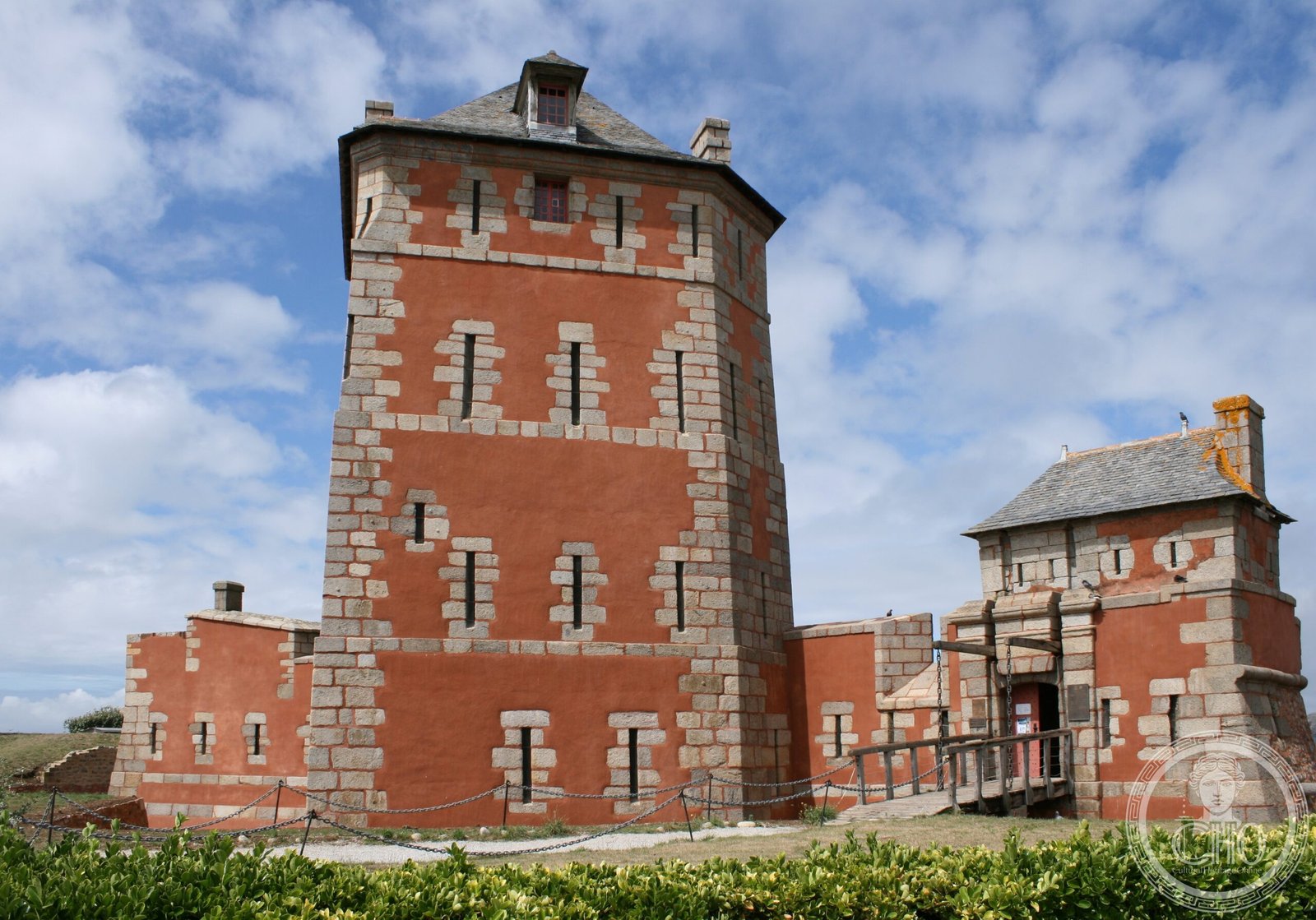
An 18-metre polygonal tower designed by the military engineer Vauban in 1689, this coastal fortress defended the approaches to Brest harbour and witnessed a decisive French victory against Anglo-Dutch forces in 1694.
At a glance
Tour Vauban is a three-level defensive tower on the Sillon at Camaret-sur-Mer, part of the fortifications guarding the goulet de Brest. The tower stands 18 metres high and is surrounded by walls, a guardhouse, and a gun battery designed to mount 11 cannons. A cannonball foundry was added during the French Revolution. The site exemplifies military architecture of the late 17th century.
History
Vauban drafted the tower’s design in 1683, finalising plans in 1689. Military engineer Jean-Pierre Traverse supervised construction from 1693 until completion in 1696. The cannons here were likely forged alongside those for other batteries defending the Brest defensive-lines.
On 18 June 1694, Vauban himself commanded the garrison when it repelled a major Anglo-Dutch assault. The battery’s nine 24-pounder cannon and three 30-centimetre mortars proved decisive. French dragoons charged invading British troops while local militia sealed the victory. The French reported 1,200 enemy casualties and 450 captured against only 45 wounded of their own; British accounts recorded 700 lost soldiers and 400 sailors killed or wounded, plus the sinking of a Dutch frigate of 20 guns.
What you see
The tower’s polygonal form reflects Vauban’s geometric approach to fortress design, a radical departure from medieval round towers. Three levels allowed tiered firing positions for greater defensive depth. The gun battery, with capacity for 11 cannon, sits alongside the main tower and is flanked by protective walls and a guardhouse. The cannonball foundry added later demonstrates the site’s evolution during revolutionary upheaval.
Cultural significance
Tour Vauban represents the apex of late-17th-century military engineering and exemplifies Vauban’s lasting influence on fortress design across three centuries. The 1694 battle proved the efficacy of his strategic positioning and artillery placement. Camaret-sur-Mer belongs to a network of major Vauban sites across France, collectively recognised for their engineering excellence and historical importance.
Key facts
- Country: France
- City: Camaret-sur-Mer, Brittany
- Designed: 1689 by Vauban; supervised by Jean-Pierre Traverse
- Completed: 1696
- Coordinates: 48.28°N, 4.59°W
- UNESCO World Heritage Site: Since 7 July 2008 (as part of 12 Vauban fortifications)
Practical information & getting there
Tour Vauban is located on the Sillon at Camaret-sur-Mer in Brittany, northwest France. The site forms part of a broader UNESCO-listed network of Vauban fortifications. Consult local tourism boards or the site’s management for opening hours, entry fees, and visitor facilities before planning your visit.
Sources & resources
Find it on the map
See this place and what’s around it →📷 Become a Cultural Heritage Online photographer
Share your photos of places: they stay published under your name as the author. The more they're seen, the more you get noticed — and soon a contest will reward the most appreciated photos.
Log in or sign up free to add a photoIs this page about you?
This page is read by travellers and heritage enthusiasts who find it on Google. Tell us how you are connected to this place and we will take it from there.