
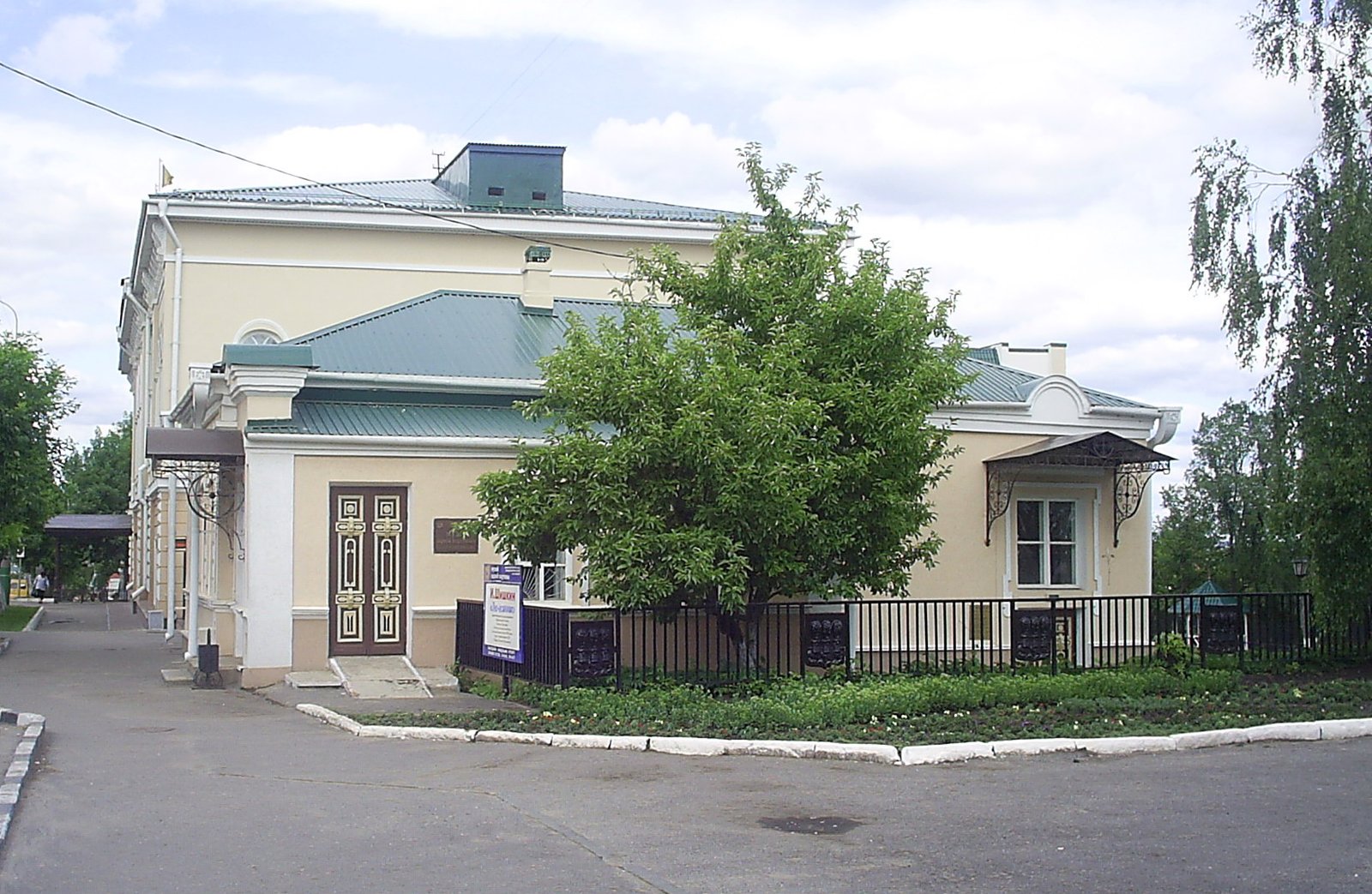
A single room, a single canvas, and a 45-minute film before you see it. Penza’s Museum of One Painting turns viewing into ceremony.
At a glance
Founded in 1983, this museum holds no permanent collection. Instead it rotates a solitary painting, borrowed for a period from major Russian institutions, and builds an entire visit around it. The building itself is listed as an architectural monument of the 19th century, giving the modern concept a historic shell.
History
The idea belonged to Georg Vasilyevich Myasnikov, then second secretary of the Penza regional committee of the CPSU. He pushed the project through in 1983, an unusual gesture for a Soviet functionary more accustomed to ideology than art. The museum took his name officially on 2 March 2002, and a memorial tablet on the façade now marks the connection. Over roughly 25 years it drew more than 400,000 visitors. Works shown have included Vasily Surikov’s Taking a Snow Town, Pavel Fedotov’s Major’s Marriage Proposal, Viktor Popkov’s The Father’s Greatcoat, Arkady Plastov’s Spring, Ivan Shishkin’s Ship Grove, Kuzma Petrov-Vodkin’s After the Battle, Titian’s Portrait of a Young Woman, Rembrandt’s Abraham and the Three Angels, and Viktor Vasnetsov’s The Magic Carpet. In 2006 the Archbishop of Penza, Philaret, proposed adding the Icon of Our Lady of Kazan from the Diocese collection to this rotation, a sign of how the format had earned trust beyond secular art circles.
What you see
There is only one exhibition hall. No corridors of minor works compete for attention. Before entering, visitors sit through a short film on the painting’s history, the painter’s life, and the cultural moment behind it. The narration has been read by celebrated Russian actors, among them Mikhail Ulyanov, Vyacheslav Tikhonov, and Oleg Yefremov. Only after the screening does the painting itself appear, framed by the anticipation the film has built. It is a deliberately slow structure. The pacing is the point.
Cultural significance
Few museums anywhere follow this model. By focusing wholly on one artwork at a time, the institution argues that sustained, unhurried attention can reveal more than a crowded gallery ever could. The choice of works, spanning Old Masters like Titian and Rembrandt alongside Russian painters from Surikov to Vasnetsov, suggests an ambition to place national art in dialogue with the European canon. The later interest from the Orthodox Church in exhibiting an icon here extended that ambition into sacred art as well.
Key facts
- Location: Penza, Russia
- Founded: 1983, on the initiative of Georg Vasilyevich Myasnikov
- Renamed in his honour: 2 March 2002
- Format: single exhibition hall, one painting shown at a time
- Building status: architectural monument of the 19th century
- Visitors: over 400,000 across roughly 25 years
Practical information & getting there
The museum sits in central Penza, a city reachable by rail and road from Moscow. Because only one work is on display at any time, you may want to check in advance which painting is currently shown. Allow time for the preliminary film; it runs about 45 minutes and is part of the intended experience, not a preamble to skip.
Sources & resources
Find it on the map
See this place and what’s around it →📷 Become a Cultural Heritage Online photographer
Share your photos of places: they stay published under your name as the author. The more they're seen, the more you get noticed — and soon a contest will reward the most appreciated photos.
Log in or sign up free to add a photoIs this page about you?
This page is read by travellers and heritage enthusiasts who find it on Google. Tell us how you are connected to this place and we will take it from there.