

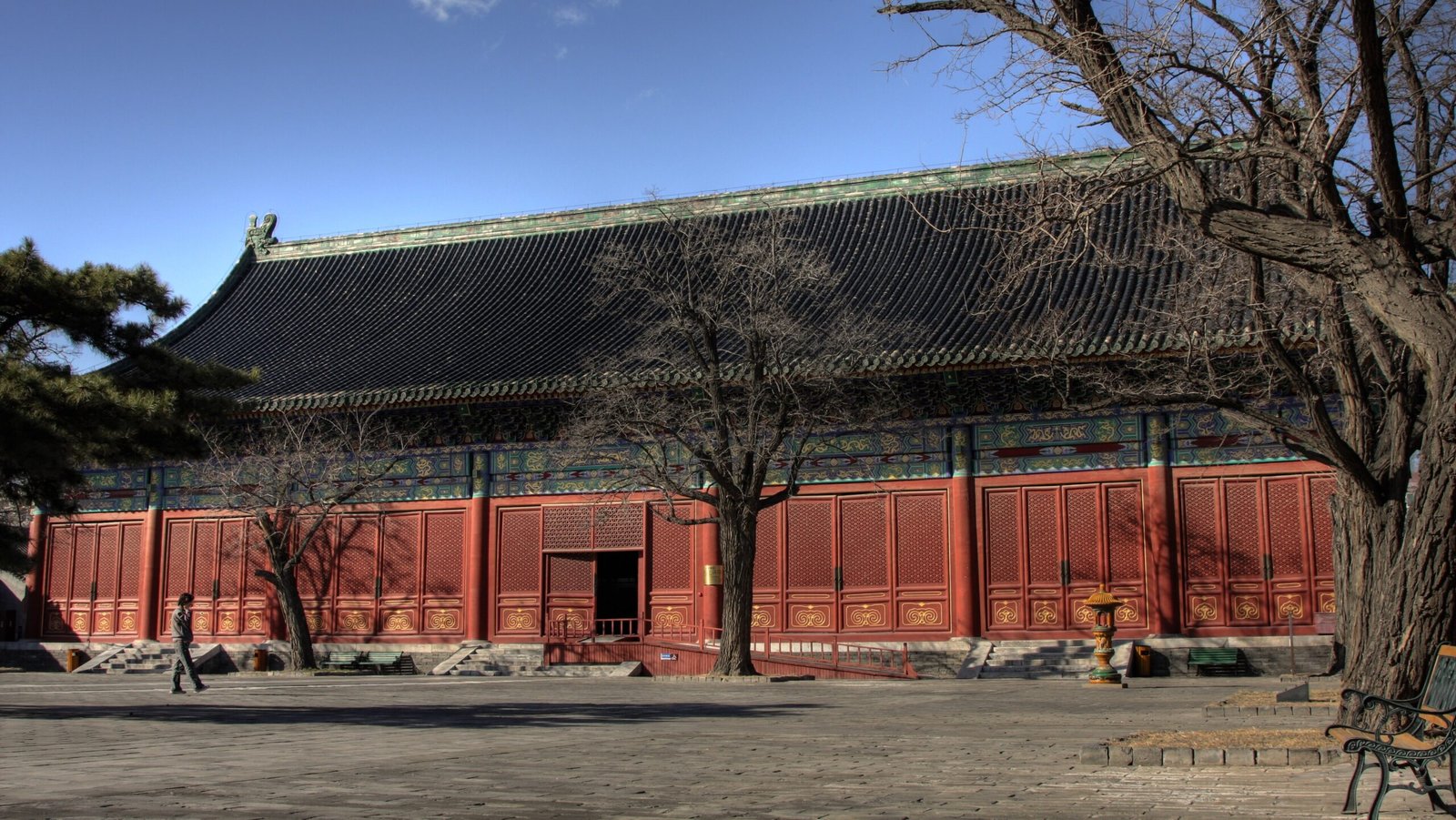
An imperial altar in Beijing’s Xicheng District, the Temple of Agriculture stands as a testament to ancient agricultural traditions and state ritual. Located near the celebrated Temple of Heaven, this historic site reflects the ceremonial importance of harvest and cultivation in traditional Chinese governance.
At a glance
The Temple of Agriculture, also known as the Altar of the God of Agriculture (Xiānnóng Tán), occupies a significant place in Beijing’s sacred geography. Positioned in Xicheng District, it remains proximate to one of China’s most iconic religious structures, the Temple of Heaven.
History
The temple served as a ritual center where imperial ceremonies honoring agricultural deities were conducted. As an altar dedicated to the God of Agriculture, it embodied the state’s ceremonial relationship with agricultural abundance and prosperity—essential concerns for a civilization dependent on seasonal harvests.
What you see
Comprehensive architectural details regarding specific structures, materials, or design elements are not available in current sources. The site warrants direct observation to understand its spatial organization and relationship to surrounding Buddhist and Taoist monuments.
Cultural significance
The temple embodies imperial China’s integration of religious practice with agricultural necessity. State sponsorship of agricultural rituals underscored the emperor’s cosmological role as mediator between heaven and earth—a responsibility extending beyond mere governance into ritual stewardship of the realm’s fertility and sustenance.
Key facts
- Country: China
- Location: Xicheng District, Beijing
- Coordinates: 39.876551°N, 116.386153°E
- Chinese names: 先农坛 (simplified), 先農壇 (traditional)
Practical information & getting there
The temple is situated in central Beijing, near the Temple of Heaven complex. For current visiting hours, admission fees, and accessibility information, consult local tourism resources or contact Beijing’s cultural heritage authorities directly.
Sources & resources
Find it on the map
See this place and what’s around it →📷 Become a Cultural Heritage Online photographer
Share your photos of places: they stay published under your name as the author. The more they're seen, the more you get noticed — and soon a contest will reward the most appreciated photos.
Log in or sign up free to add a photoIs this page about you?
This page is read by travellers and heritage enthusiasts who find it on Google. Tell us how you are connected to this place and we will take it from there.