
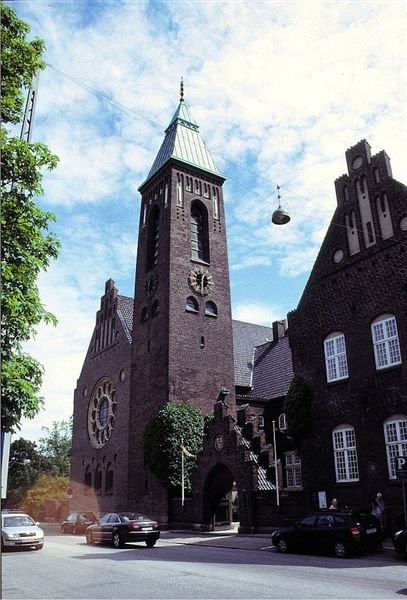
A brick church in Copenhagen designed by Swedish architect Theodor Wåhlin, serving the city’s Swedish congregation and part of the Church of Sweden Abroad.
At a glance
Swedish Gustaf’s Church stands as a tangible expression of Swedish cultural identity in Denmark’s capital. Built in the early twentieth century, it functions both as a place of worship and as a symbol of the enduring ties between Sweden and Denmark.
History
The church was constructed between 1907 and 1911 to serve Copenhagen’s Swedish community. It was named in honour of King Gustaf V of Sweden, under whose reign the building was completed. The commission to design the structure went to Theodor Wåhlin, an accomplished Swedish architect of the period.
What you see
Wåhlin’s design reflects early twentieth-century ecclesiastical architecture adapted to Scandinavian taste and materials. The building showcases brick construction typical of the era’s Nordic ecclesiastical design.
Cultural significance
As part of the Church of Sweden Abroad, Gustaf’s Church represents an important institutional presence for Swedish expatriates and descendants in Denmark. It embodies the historical and cultural connections between the two Scandinavian nations.
Key facts
- Country: Denmark
- City: Copenhagen Municipality
- Architect: Theodor Wåhlin (1864–1948)
- Completed: 1911
- Coordinates: 55.69222222, 12.59
- Denomination: Church of Sweden Abroad
Practical information & getting there
The church is located in Copenhagen Municipality. Consult the congregation’s website or contact details for service times, events, and visiting information.
Sources & resources
Find it on the map
See this place and what’s around it →📷 Become a Cultural Heritage Online photographer
Share your photos of places: they stay published under your name as the author. The more they're seen, the more you get noticed — and soon a contest will reward the most appreciated photos.
Log in or sign up free to add a photoIs this page about you?
This page is read by travellers and heritage enthusiasts who find it on Google. Tell us how you are connected to this place and we will take it from there.