
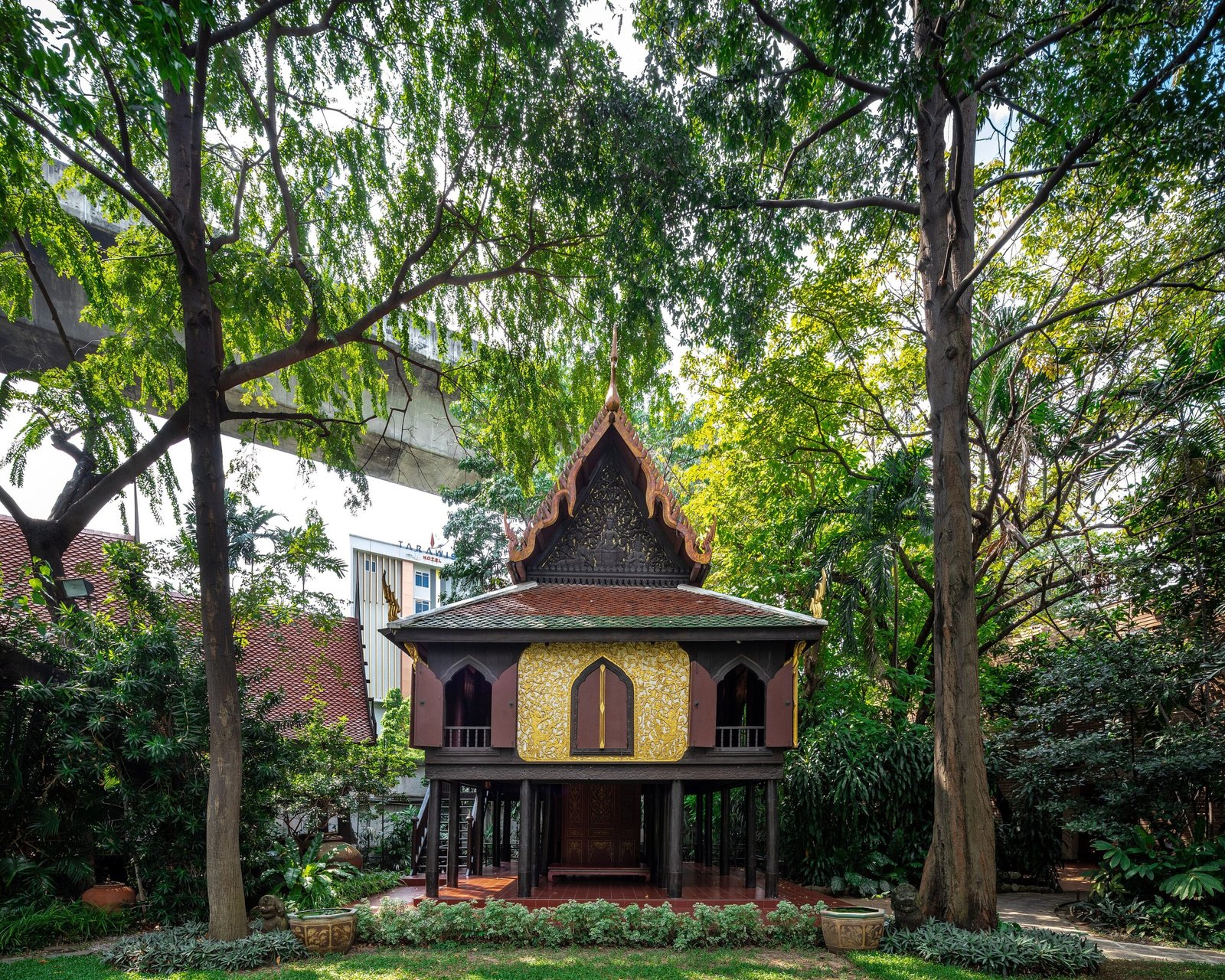
A compact museum of traditional Thai domestic architecture and antiques, housed in five interconnected pavilions on Si Ayutthaya Road.
At a glance
Suan Pakkad Palace—whose name translates as “Cabbage Patch”—showcases one of Bangkok’s finest ensembles of traditional Thai residential design. Four traditional houses with covered hallways form the core of the collection, complemented by the Lacquer Pavilion and contemporary gallery spaces. The museum opened in 1952.
History
The palace was originally the home of Prince Chumbhotbongs Paribatra (1904–1959) and his wife. The couple converted their residence into a museum, which opened to the public in 1952, preserving both the architecture and their collection of Thai art and antiquities for future generations.
What you see
Five traditional pavilions form the main architectural ensemble. The Lacquer Pavilion, over 450 years old, commands particular attention for its refined craftsmanship and age. The interconnected houses are linked by covered hallways, creating a cohesive domestic compound that demonstrates traditional Thai spatial organization and construction techniques.
Cultural significance
The collection represents some of the city’s best-preserved examples of traditional Thai domestic architecture. Among the holdings is Ban Chiang pottery dating back more than 4,000 years—a testament to the depth of Thai cultural heritage on display. The Marsi Gallery houses additional artworks alongside the historical ceramics.
Key facts
- Location: Si Ayutthaya Road, Bangkok, south of Victory Monument
- Coordinates: 13.75666667, 100.5375
- Opened: 1952
- Notable feature: Lacquer Pavilion (over 450 years old)
- Collection highlights: Ban Chiang pottery (4,000+ years old), Thai antiques
Practical information & getting there
The museum is accessible by public transport near the Victory Monument. Current opening hours and admission fees are available on the museum’s official channels. Check ahead for any seasonal closures or special exhibitions.
Sources & resources
Find it on the map
See this place and what’s around it →📷 Become a Cultural Heritage Online photographer
Share your photos of places: they stay published under your name as the author. The more they're seen, the more you get noticed — and soon a contest will reward the most appreciated photos.
Log in or sign up free to add a photoIs this page about you?
This page is read by travellers and heritage enthusiasts who find it on Google. Tell us how you are connected to this place and we will take it from there.