
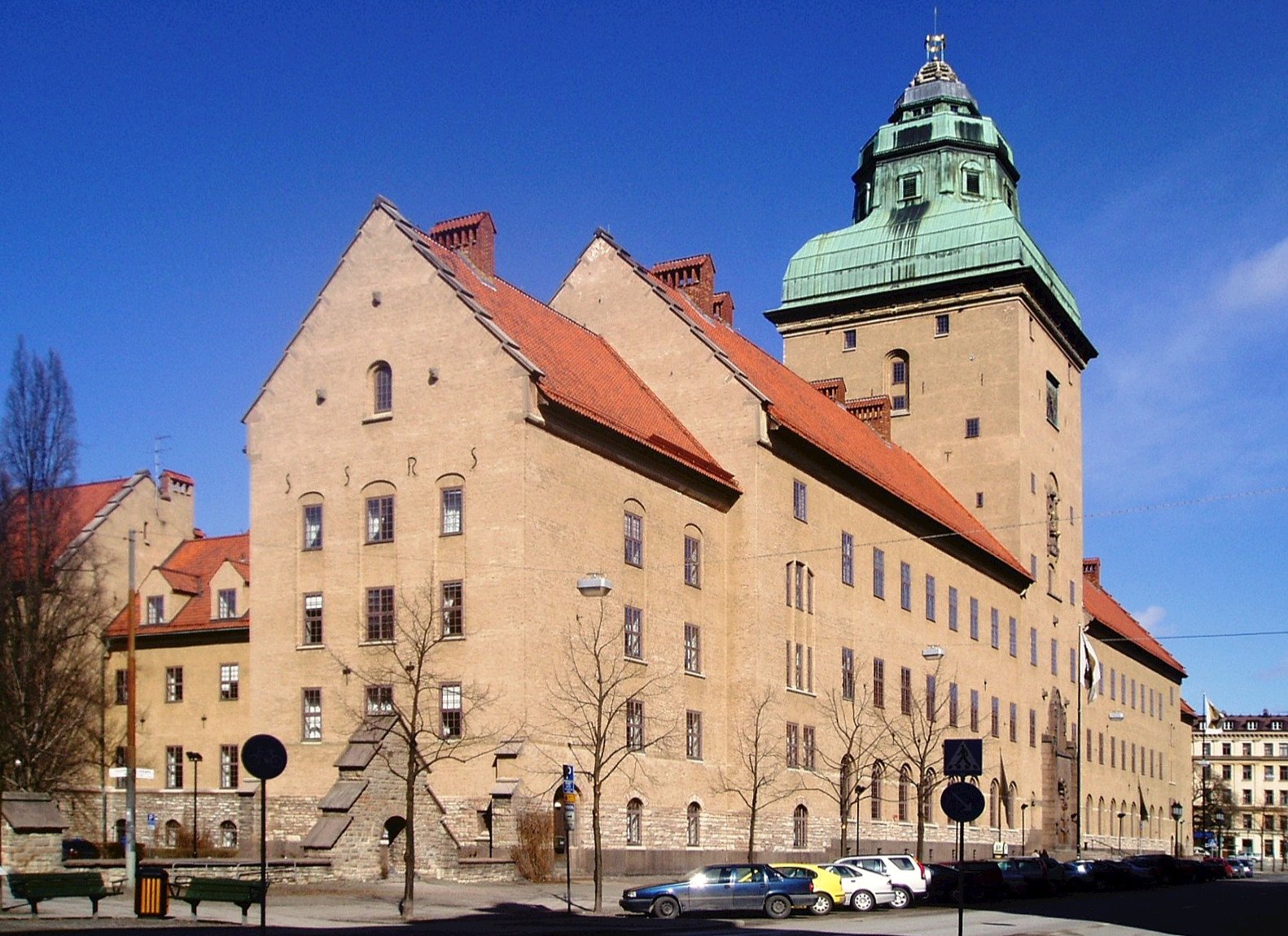
A National Romantic landmark on Kungsholmen, the Stockholm Court House combines early twentieth-century civic ambition with architectural echoes of Sweden’s castle heritage.
At a glance
This civic building houses the Stockholm District Court and stands connected to the adjacent Police House via underground passage. Its design drew inspiration from the fortified palaces of the Vasa era, most notably Vadstena Castle, conferring upon a modern courthouse the gravitas of dynastic power.
History
Construction ran from 1909 to 1915. The Stockholm City Court occupied the building from 1915 until 1971, when the District Court relocated here. In June 2008, fire damaged the third floor of the south wing, necessitating restoration work.
What you see
The building exemplifies National Romantic style, a movement that looked to medieval Nordic architecture for inspiration. Its massing and detail recall the castle aesthetic—crenellations, robust stonework, and formal symmetry—while its scale and program serve modern judicial needs. The underground connection to the Police House represents pragmatic twentieth-century urban planning.
Cultural significance
Stockholm Court House reflects Sweden’s early twentieth-century confidence in national identity and institutional permanence. By clothing a democratic courthouse in the language of royal fortifications, the building asserted that justice itself was a castle to be defended—a powerful symbolic claim made through architecture.
Key facts
- Location: Kungsholmen, Central Stockholm, Sweden
- Completed: 1915
- Architectural style: National Romantic
- Current use: Stockholm District Court
- Coordinates: 59.33°N, 18.04°E
Practical information & getting there
The Court House is located on Kungsholmen in central Stockholm. As an active court building, interior access may be restricted; verify opening hours and visitor policies before visiting. The site is reachable by public transport serving the city centre.
Sources & resources
- Stockholm Court House – Wikipedia
- Cultural Heritage Online
Find it on the map
See this place and what’s around it →📷 Become a Cultural Heritage Online photographer
Share your photos of places: they stay published under your name as the author. The more they're seen, the more you get noticed — and soon a contest will reward the most appreciated photos.
Log in or sign up free to add a photoIs this page about you?
This page is read by travellers and heritage enthusiasts who find it on Google. Tell us how you are connected to this place and we will take it from there.