
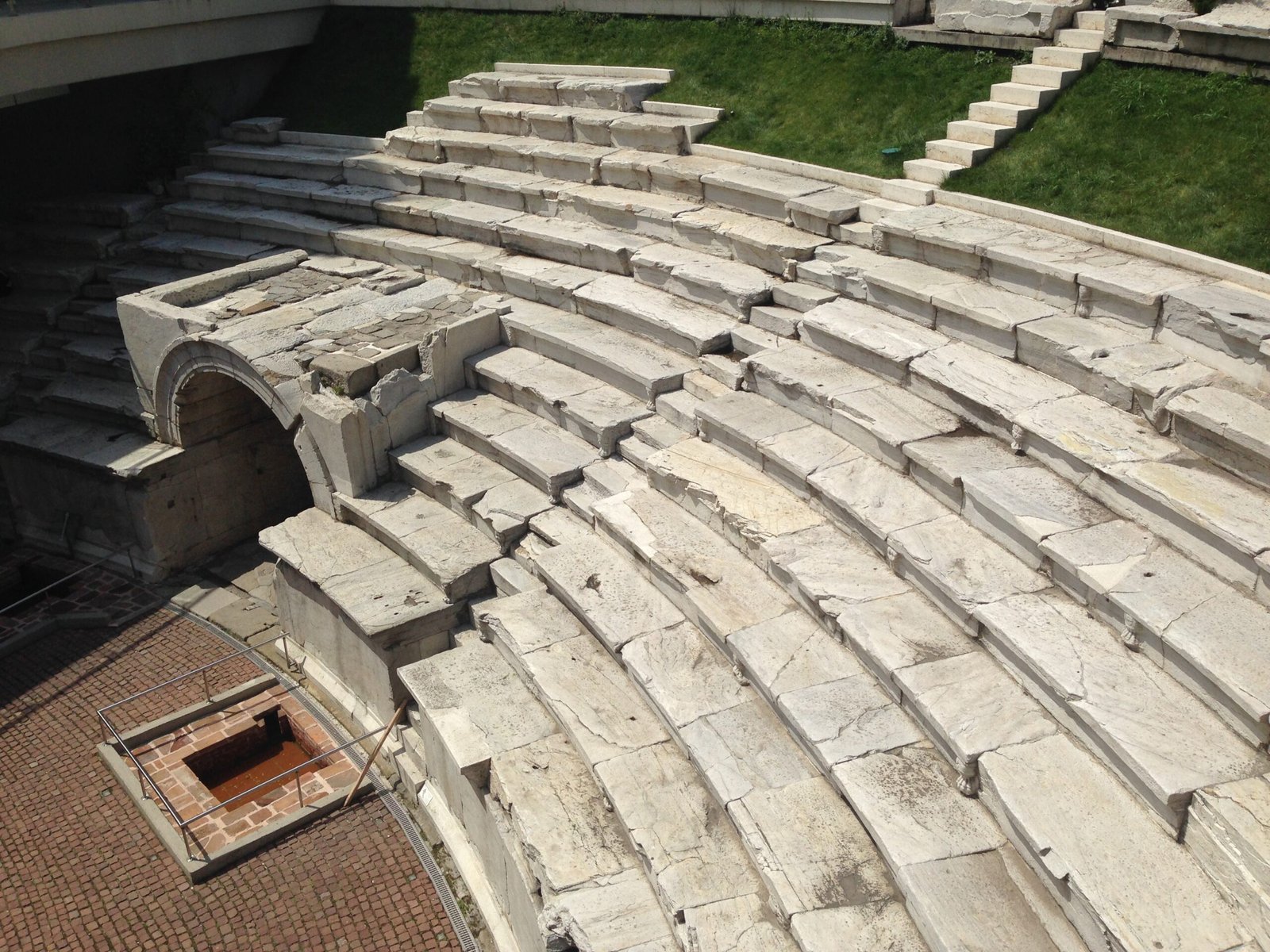
A vast Roman amphitheater built for chariot races and public spectacles, this 2nd-century stadium could hold 30,000 spectators and remains among the Balkans’ finest preserved imperial monuments.
At a glance
Built during the height of Roman power, the Stadium of Philippopolis sprawls across 250 meters in length and 50 meters in width. The northern sphendone—its curved end—survives in partial restoration today, making it one of Plovdiv’s most distinctive landmarks. When completed, the stadium served the provincial capital of Roman Thracia.
History
Constructed in the 2nd century AD, the stadium was built when Philippopolis held the status of capital of the Roman province of Thracia. It functioned as a center for public entertainment and civic life, hosting chariot races and athletic competitions. The structure endured centuries of use, decline, and eventual partial excavation in modern times.
What you see
The stadium’s impressive scale—comparable to major Roman amphitheaters elsewhere in the empire—reflected Philippopolis’s importance. The sphendone, the curved northern section, survives partially restored. This U-shaped terminus, characteristic of Roman stadium design, remains the most recognizable feature among Plovdiv’s Roman ruins. The surviving stonework demonstrates Roman engineering competence in the Balkans.
Cultural significance
The Stadium of Philippopolis stands as one of the best-preserved Roman buildings in the entire Balkan peninsula. It documents the reach of imperial urban planning into provinces far from Rome, and its survival offers rare evidence of public entertainment architecture from the 2nd century AD. Plovdiv’s Roman heritage—of which this stadium is a cornerstone—reflects the city’s continuous importance across millennia.
Key facts
- Country: Bulgaria
- City: Plovdiv (ancient Philippopolis)
- Date: 2nd century AD
- Dimensions: Approximately 250 m long × 50 m wide
- Capacity: Up to 30,000 spectators
- Coordinates: 42.1475679, 24.7480184
Practical information & getting there
The Stadium of Philippopolis lies in central Plovdiv. Today visitors can view the partially restored northern sphendone, one of the city’s most prominent Roman monuments. Plovdiv is easily reached by car, bus, or train from Sofia and other Bulgarian cities. The ruins are accessible to the public and form part of Plovdiv’s extensive Roman heritage trail.
Sources & resources
Find it on the map
See this place and what’s around it →📷 Become a Cultural Heritage Online photographer
Share your photos of places: they stay published under your name as the author. The more they're seen, the more you get noticed — and soon a contest will reward the most appreciated photos.
Log in or sign up free to add a photoIs this page about you?
This page is read by travellers and heritage enthusiasts who find it on Google. Tell us how you are connected to this place and we will take it from there.