
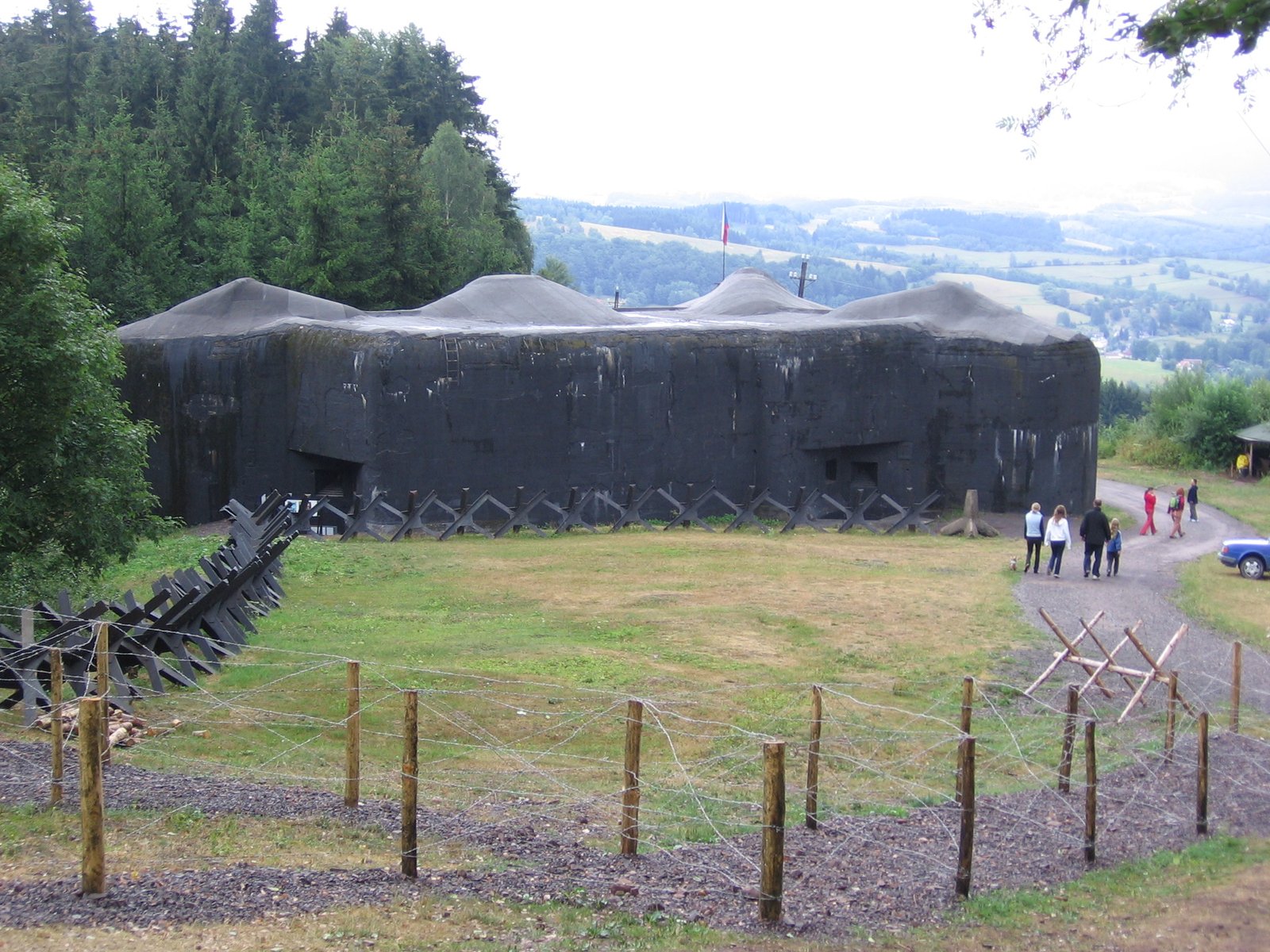
An unfinished fortress of twelve bunkers, begun during Czechoslovakia’s interwar rearmament and abandoned when geopolitical crisis overtook the nation.
At a glance
Stachelberg—also known as Ježová hora—ranks among the largest fortresses in the Czech Republic, despite never reaching completion. Construction began in 1937 as part of Czechoslovak defensive preparations. The Munich Agreement of 1938 halted all work, leaving the complex permanently unfinished.
History
In the 1930s, Czechoslovakia fortified its borders against growing regional instability. Stachelberg was conceived as a major stronghold, its construction commencing in 1937. Work proceeded on a twelve-bunker complex throughout 1938 until the Munich Agreement—signed in September that year—forced abandonment of the project. The fortress never returned to active development.
What you see
The site preserves the partial remains of twelve bunkers arranged as a coordinated fortification system. The bunkers represent interwar Czech military engineering, designed for mutual defensive support across the complex. Incomplete construction means many planned structures survive only partially or as earthworks.
Cultural significance
Stachelberg embodies a pivotal moment in Central European history: the brief interval between Czechoslovak independence and Nazi occupation. The unfinished fortress serves as physical testimony to how swiftly geopolitical circumstances could render military preparations obsolete. It remains a document in concrete and earth of Czechoslovakia’s final years of sovereignty.
Key facts
- Country: Czechia
- Coordinates: 50.63052778°N, 15.91188889°E
- Construction: 1937–1938 (incomplete)
- Configuration: Twelve-bunker complex
Practical information & getting there
The site is situated in the Liberec Region of northern Czechia. Visitors should verify current access conditions before traveling, as fortification ruins may have restricted areas. The nearest significant town is Liberec.
Sources & resources
Find it on the map
See this place and what’s around it →📷 Become a Cultural Heritage Online photographer
Share your photos of places: they stay published under your name as the author. The more they're seen, the more you get noticed — and soon a contest will reward the most appreciated photos.
Log in or sign up free to add a photoIs this page about you?
This page is read by travellers and heritage enthusiasts who find it on Google. Tell us how you are connected to this place and we will take it from there.