
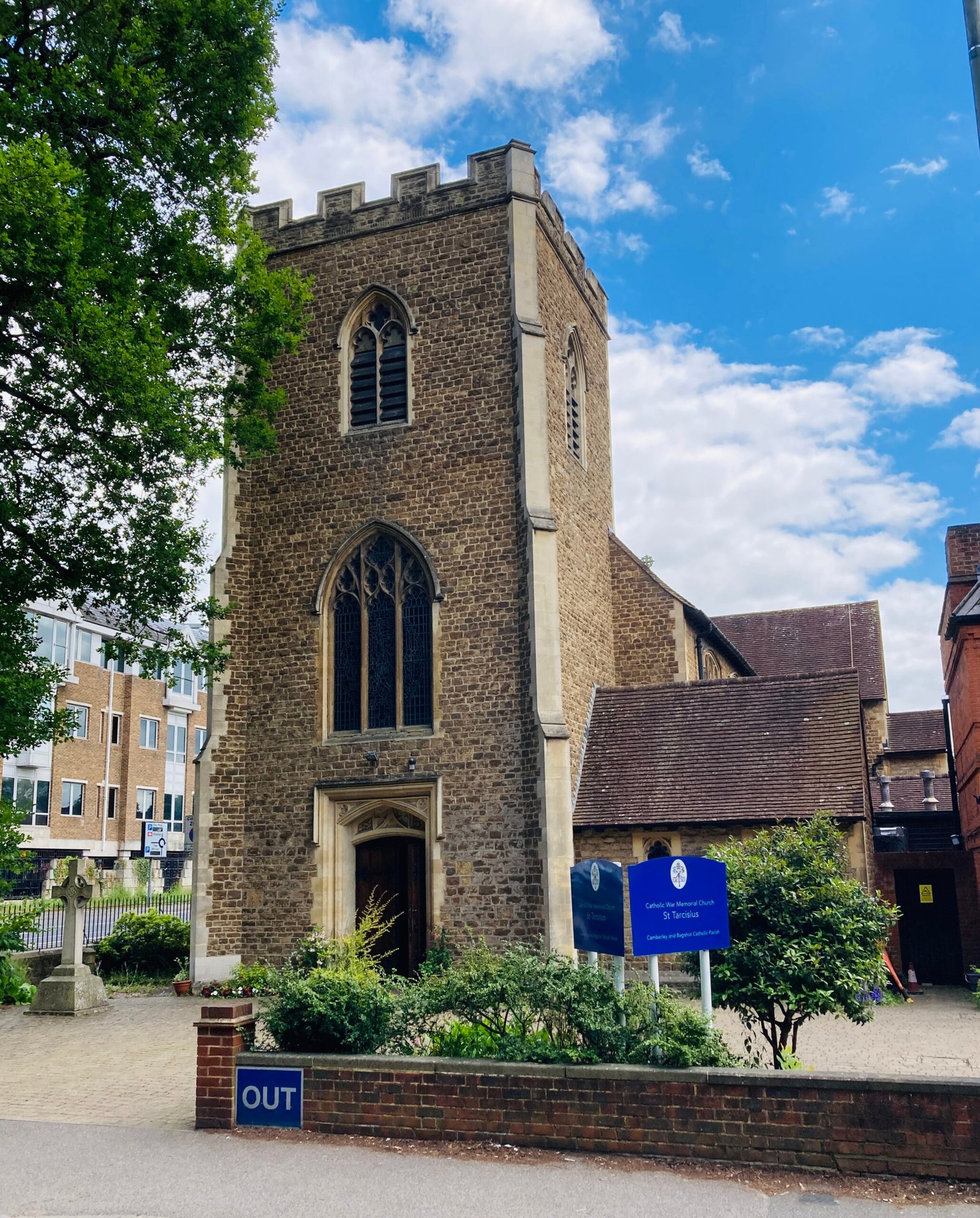
A Grade II listed Roman Catholic parish church designed by Frederick Walters and completed in 1924, St Tarcisius stands as a twentieth-century addition to Camberley’s architectural landscape.
At a glance
St Tarcisius Church serves the Catholic community of Camberley. Built in the early 1920s on London Road north of the town centre, the church reflects the period’s architectural sensibilities and remains an active parish church today.
History
The church was constructed between 1923 and 1924 under the direction of architect Frederick Walters. Its completion marked a significant moment in Camberley’s religious infrastructure during a period of suburban growth and development in Surrey.
What you see
The building’s design reflects early twentieth-century ecclesiastical practice. Its location on London Road, adjacent to the modern Atrium Shopping Centre, illustrates how Camberley’s urban fabric has evolved around this established structure.
Cultural significance
As a Grade II listed building, St Tarcisius Church holds recognized historical and architectural value within the local heritage context. It continues to serve as both a spiritual centre and a material record of interwar development in Surrey Heath.
Key facts
- Designed by Frederick Walters
- Built 1923–1924
- Grade II listed
- Located in Surrey Heath, United Kingdom
- Coordinates: 51.3383, -0.7505
Practical information & getting there
St Tarcisius Church is situated on London Road in the northern part of Camberley town centre, near the Atrium Shopping Centre. You can find current service times and visitor information through the parish office.
Sources & resources
Find it on the map
See this place and what’s around it →📷 Become a Cultural Heritage Online photographer
Share your photos of places: they stay published under your name as the author. The more they're seen, the more you get noticed — and soon a contest will reward the most appreciated photos.
Log in or sign up free to add a photoIs this page about you?
This page is read by travellers and heritage enthusiasts who find it on Google. Tell us how you are connected to this place and we will take it from there.