
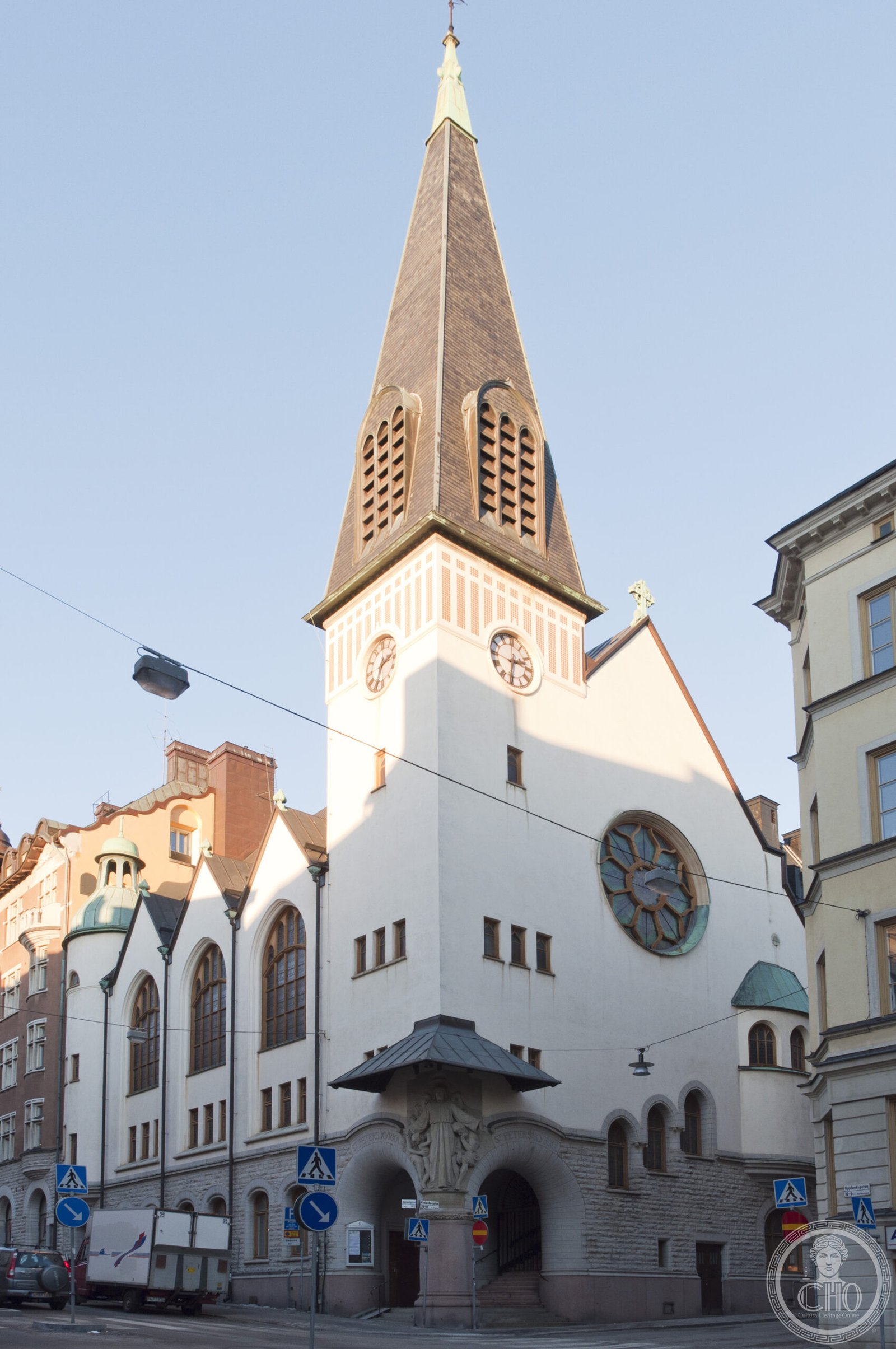
An Art Nouveau church in Stockholm’s Norrmalm district, designed by Erik Lallerstedt and completed in 1901.
At a glance
St. Peter’s Church stands as a distinctive example of early twentieth-century Swedish architecture. Built at the turn of the century, the church embodies the flowing lines and decorative principles of the Art Nouveau movement that swept through Europe during this period.
History
The church was constructed between 1900 and 1901 in Stockholm’s Norrmalm district. Designed by architect Erik Lallerstedt, it emerged during a transformative period for Swedish architecture, when modernist aesthetics began to challenge traditional church design conventions.
What you see
The building displays characteristic Art Nouveau features typical of Lallerstedt’s practice. Decorative elements and structural forms reflect the style’s emphasis on organic shapes and integrated ornamentation.
Cultural significance
St. Peter’s Church represents an important moment in Swedish ecclesiastical architecture when modernist design first entered religious spaces. The commission of an established architect like Lallerstedt to create a contemporary place of worship reflected the cultural confidence of Stockholm at the century’s turn.
Key facts
- Location: Norrmalm, Stockholm, Sweden
- Coordinates: 59.337°N, 18.054°E
- Architect: Erik Lallerstedt
- Completed: 1901
- Style: Art Nouveau
Practical information & getting there
The church is located in central Stockholm’s Norrmalm district, easily accessible by public transport. Visitors can consult local tourism information for current opening hours and any restrictions on photography or services.
Sources & resources
Find it on the map
See this place and what’s around it →📷 Become a Cultural Heritage Online photographer
Share your photos of places: they stay published under your name as the author. The more they're seen, the more you get noticed — and soon a contest will reward the most appreciated photos.
Log in or sign up free to add a photoIs this page about you?
This page is read by travellers and heritage enthusiasts who find it on Google. Tell us how you are connected to this place and we will take it from there.